USAID DEC
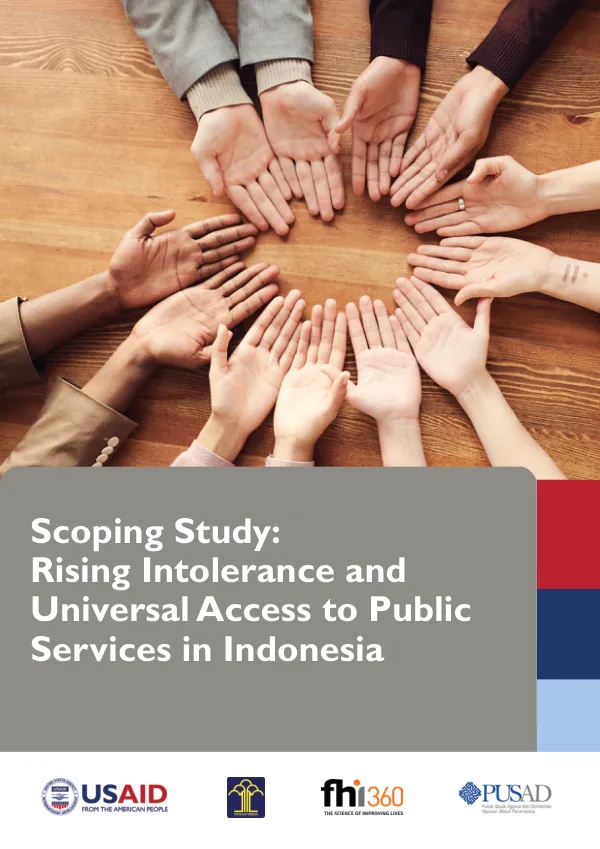
Scoping Study: Rising Intolerance and Universal Access to Public Services in Indonesia
Sign inFAMILY HEALTH INTERNATIONAL
Scoping Study: Rising Intolerance and Universal Access to Public Services in Indonesia
Rising intolerance and universal access to public services in Indonesia have been significant concerns in recent years.
2021 · 32 pages
Sign in to readA free account is required to download.
Abstract
The relationship between these two issues remains complex and understudied. This scoping study aimed to add conceptual and methodological clarity to the understanding of the dynamics between rising intolerance and universal access to public services in Indonesia. The study was designed to help plan a broader national study on barriers to universal access to public services. The study used mixed methods, including a quantitative method (survey) with purposively selected households, in-depth interviews and focus group discussions with government officials, representatives from civil society organizations, and researchers, case studies of intolerance and public services at the district level, and a systematic review of the existing literature pertinent to the research questions. The target population of the scoping study was households, civil society, and government representatives located within MADANI's project locations. The survey was conducted in six cities/districts in the province of West Kalimantan and West Java, with a total of 120 households and 475 household members. The majority of the respondents, as well as the Indonesian population, are Muslim. The study found early indication that the rise of religious conservatism tends to be positively related to narrowing access to public services in Indonesia. This has taken place on different scales in different sectors and/or regions across the country. The study found that increasing levels of Islamic devoutness and fundamentalism were positively related to restrictive attitudes toward women accessing public services, the perception that Muslims should be given priority over non-Muslims when it comes to accessing public services, and the perception that followers of mainstream Islam should be given priority over followers of non-majority religious groups when it comes to accessing public services. However, the study also found that these forms of religious intolerance can be contained through counter-narratives at the community level or through legal action, media advocacy, or personal action to formally complain against intolerant service providers. The study's findings suggest that the relationship between rising intolerance and universal access to public services in Indonesia is complex and multifaceted. The study's results have implications for the design of a larger study on barriers to universal access to public services and highlight the need for further research on this topic. The study's methodology included a survey of 120 households, in-depth interviews and focus group discussions with government officials, representatives from civil society organizations, and researchers, case studies of intolerance and public services at the district level, and a systematic review of the existing literature pertinent to the research questions. The study's findings suggest that the rise of religious conservatism in Indonesia is associated with narrowing access to public services, particularly for women and minority religious groups.