USAID DEC
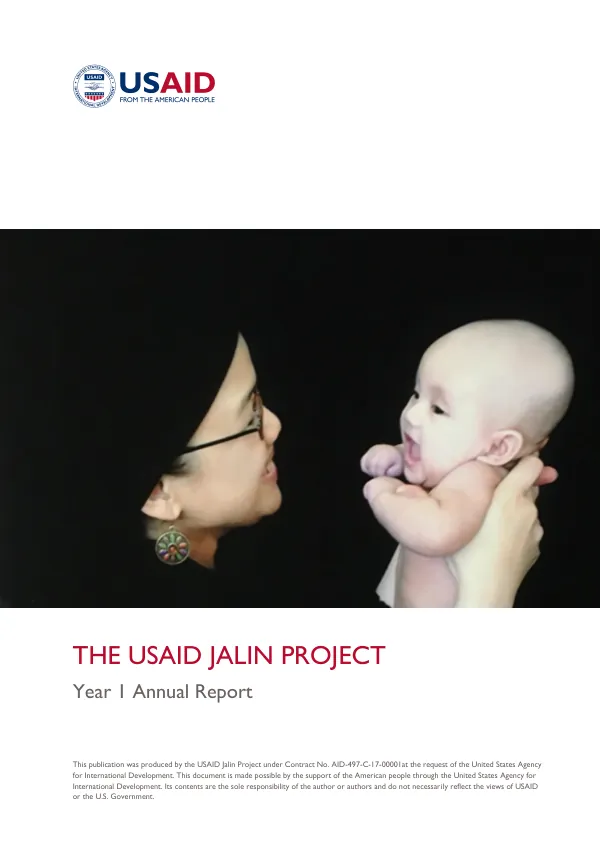
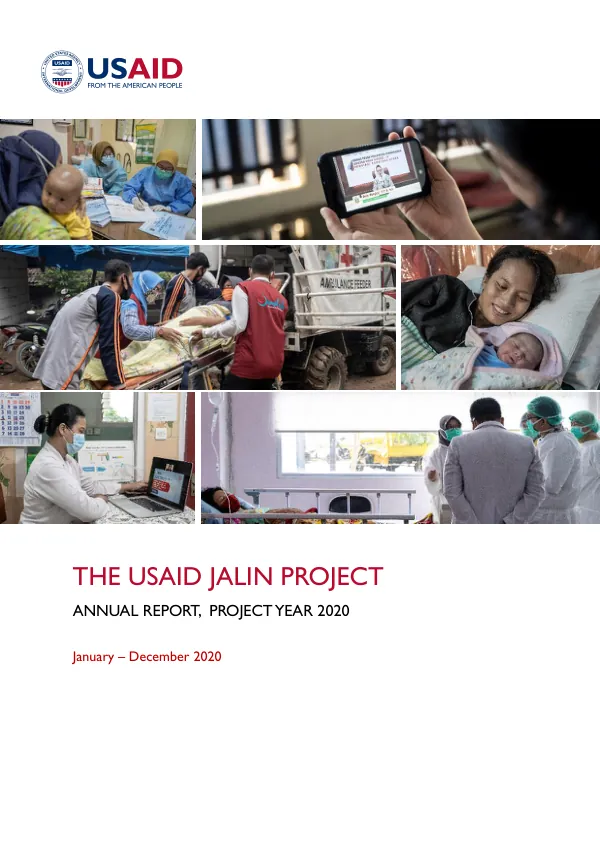
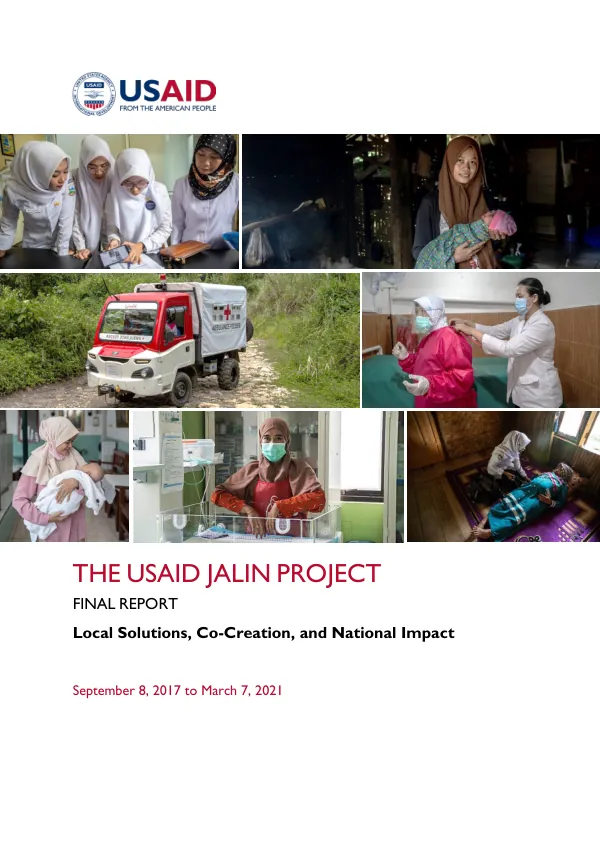
USAID JALIN PROJECT - FINAL REPORT: LOCAL SOLUTIONS, CO-CREATION AND NATIONAL IMPACT
Sign inDAI GLOBAL, LLC
USAID JALIN PROJECT - FINAL REPORT: LOCAL SOLUTIONS, CO-CREATION AND NATIONAL IMPACT
The USAID Jalin Project was a five-year initiative implemented from September 8, 2017, to March 7, 2021, with the primary goal of improving maternal and newborn health in Indonesia.
2021 · 80 pages
Sign in to readA free account is required to download.
Abstract
The project was funded by the United States Agency for International Development (USAID) and was implemented by DAI Global, LLC. The project's design was divided into two phases: Phase One focused on co-creation, local solutions, and evidence generation, while Phase Two transitioned to a national focus and sustained local solutions. During Phase One, the project engaged with various stakeholders, including government agencies, civil society organizations, and private sector entities, to co-create solutions to address maternal and newborn health challenges. The project also conducted extensive research and generated evidence to inform policy and programming decisions. Key achievements during this phase included the development of a comprehensive results framework, the establishment of a multi-stakeholder advisory body, and the implementation of a maternal perinatal audit – surveillance and response system. In Phase Two, the project transitioned to a national focus, with a focus on scaling up successful local solutions and sustaining them over time. The project worked closely with the Government of Indonesia to optimize existing initiatives and strengthen processes and systems for national impact. Key achievements during this phase included the development of a national maternal and newborn health strategy, the establishment of a national maternal perinatal death surveillance and response system, and the implementation of a maternal death notification system. Throughout the project, the USAID Jalin Project employed a multi-sector and whole-of-market approach, engaging with a wide range of stakeholders, including government agencies, civil society organizations, private sector entities, and community-based organizations. The project also placed a strong emphasis on knowledge management, monitoring and evaluation, and learning and adaptation. The project's achievements were significant, with notable improvements in maternal and newborn health outcomes, including a 27% reduction in maternal mortality rate and a 30% reduction in newborn mortality rate. The project also contributed to the development of a national maternal and newborn health strategy and the establishment of a national maternal perinatal death surveillance and response system. The USAID Jalin Project's approach to co-creation, local solutions, and national impact was highly effective in improving maternal and newborn health outcomes in Indonesia. The project's emphasis on stakeholder engagement, knowledge management, and monitoring and evaluation ensured that the project's achievements were sustained over time and had a lasting impact on the country's health system. The project's success was also attributed to its ability to adapt to changing circumstances, including the COVID-19 pandemic. The project's timely response to the pandemic ensured that essential health services continued to be delivered, and the project's efforts to strengthen the health system helped to mitigate the pandemic's impact on maternal and newborn health outcomes. In conclusion, the USAID Jalin Project was a highly successful initiative that made significant contributions to improving maternal and newborn health outcomes in Indonesia. The project's approach to co-creation, local solutions, and national impact was highly effective, and its emphasis on stakeholder engagement, knowledge management, and monitoring and evaluation ensured that the project's achievements were sustained over time.