DAI GLOBAL, LLC
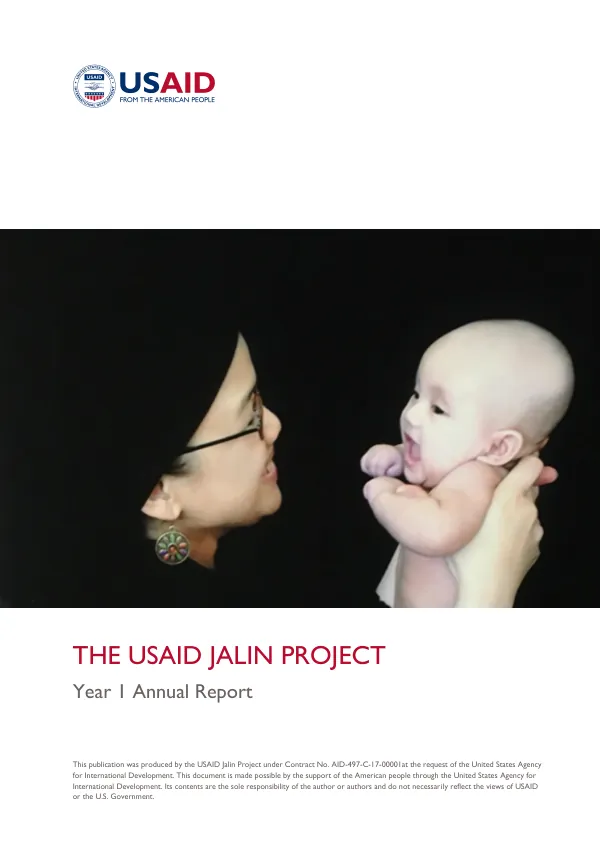
USAID Jalin Project Year 1 Annual Report
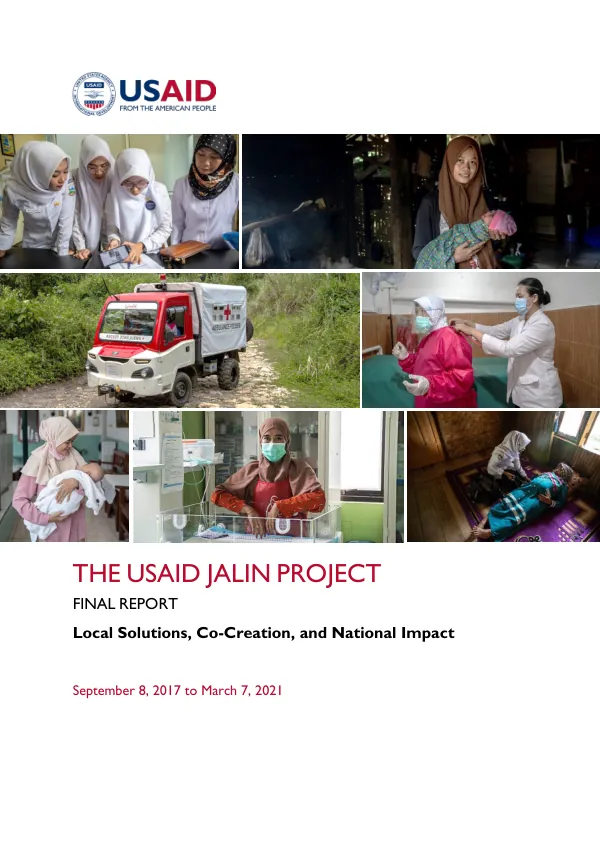
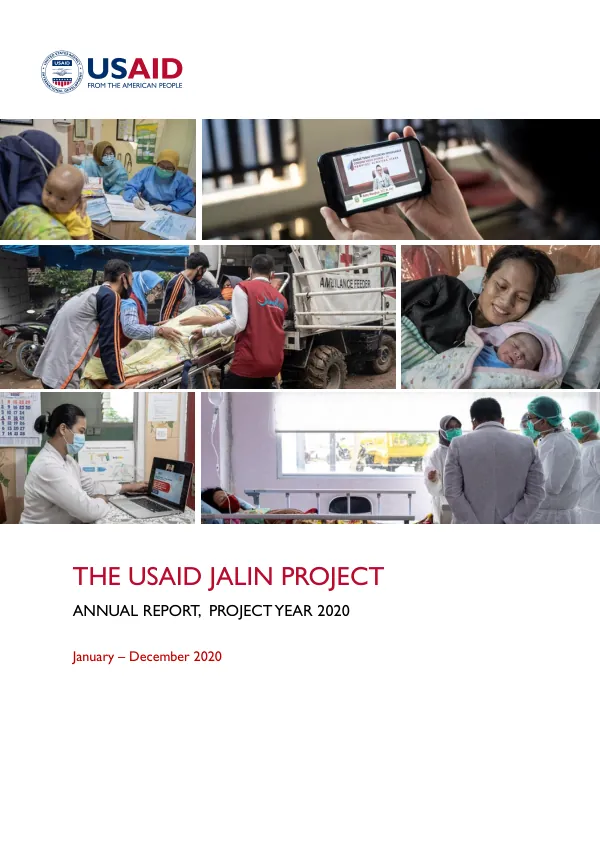
The USAID Jalin Project is a five-year activity initiated in September 2017 by the United States Agency for International Development (USAID)/Indonesia.
2019 · 64 pages
Sign in to readA free account is required to download.
Abstract
The project aims to reduce preventable maternal and newborn deaths, particularly among the poorest and most vulnerable, by weavng together Government of Indonesia (GOI), private sector, civil society, and other stakeholders to use evidence to co-define, co-create, and co-finance sustainable and scalable local solutions to improve maternal and newborn health (MNH). The project is organized into three components: Partnership Process Managed to Generate, Implement, Evaluate, and Scale Successful Local Solutions and Utilize Critical Evidence to Result in Sustainable MNH Impact; Technical Assistance Deployed Effectively to Support Impact at Scale; and Catalytic Financing Efficiently Disbursed to Support the Incubation and Implementation of Local Solutions. The project's sequencing and layering of activities are designed to ensure a clear progression from one component to the next. During Year 1, which spanned from January to December 2018, the project established a physical office presence in Jakarta and six provinces, hired and trained 70 staff members, and launched activities in eight provinces. The project also made significant strides towards collaborative implementation, including publishing or holding events around 275 evidence-dissemination activities, engaging 196 entities in partnership activities, developing 65 tailored problem statements, and holding 39 co-creation design sessions. The project's evidence synthesis framework is designed to identify and synthesize existing evidence on maternal and newborn health in Indonesia, with a focus on local solutions and partnerships. The framework involves simultaneous problem definition and partner engagement, partnership/solution definition with co-investment, learning from local solutions/partnerships, and preparation to generate evidence. The project's technical assistance component has also begun implementation, with a focus on supporting impact at scale. The catalytic financing component will provide funding to support the incubation and implementation of local solutions. The project's progress towards achieving its expected results is detailed in the report, which presents successes and challenges. The report also highlights lessons learned from the project's first year of implementation. In terms of geographic focus, the project is implemented in Indonesia, with a focus on reducing preventable maternal and newborn deaths among the poorest and most vulnerable populations. The project's timeframes are outlined in the report, with a five-year implementation period from 2017 to 2022. The project's recommendations for future implementation are not explicitly stated in the report, but the report does highlight the importance of continued collaboration and partnership among stakeholders to achieve sustainable and scalable local solutions to improve maternal and newborn health in Indonesia.