USAID DEC
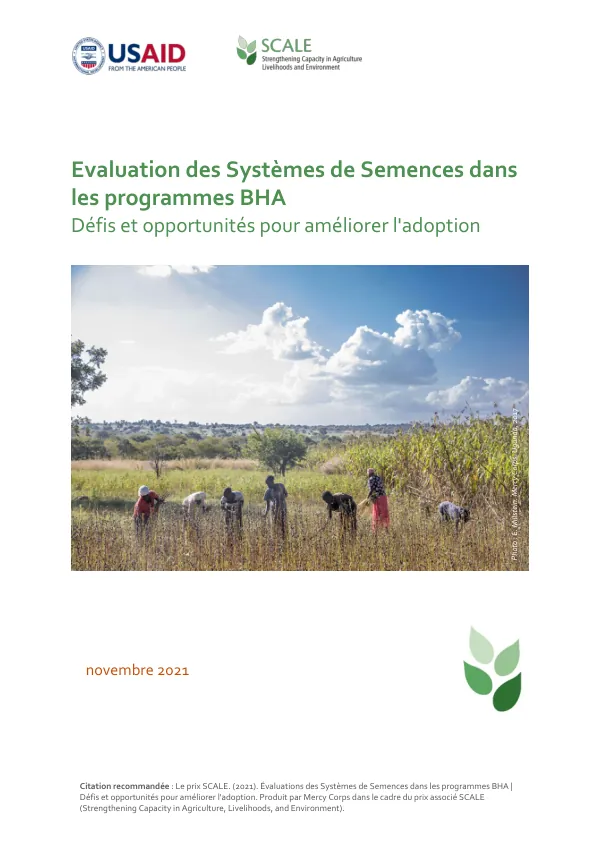
Seed System Assessments in BHA Programs | Challenges and Opportunities for Enhancing Uptake
Sign inMERCY CORPS INTERNATIONAL
Seed System Assessments in BHA Programs | Challenges and Opportunities for Enhancing Uptake
Seed system assessments are critical to inform seed interventions in humanitarian assistance programs.
2021 · 9 pages
Sign in to readA free account is required to download.
Abstract
The USAID Bureau for Humanitarian Assistance (BHA) expects implementing partners to conduct Seed System Security Assessments (SSSAs) for applications including seed provision by the same organization in the same location for more than three consecutive years. However, many applications fail to include an SSSA or show an inaccurate understanding of its purpose. Applications often reference SSSAs as 'needs assessments' or a means to determine which seeds to distribute to community members. This misunderstanding is due to a lack of awareness about the multi-stakeholder capacity-building effort that characterizes and identifies systemic issues in seed systems. As a result, SSSAs are not frequently used to guide design and implementation of seed sector interventions. Implementing partners face several challenges when it comes to conducting SSSAs. These include achieving multi-agency coordination, limited expertise and capacity of staff in understanding the purpose of SSSA tools and methods, potential strain on resources, and difficulties assessing informal seed market systems. Additionally, programs often focus on the formal seed sector, overlooking the significant informal sector. Limited awareness and/or availability of tools, resources, and research related to the analysis of data also hinder the effective use of SSSAs. Implementing partners may be aware of multiple tools for data collection, but they are often less experienced with analyzing data and translating findings into pragmatic recommendations to inform seed interventions. To address these barriers, BHA and implementing partners recommend clarifying the guidelines and expectations for assessments in ongoing programs. This includes integrating SSSAs into program workplans after three consecutive years of programming and making them part of ongoing program cycles. Clarification of SSSA guidelines and expectations through additional consultations with implementing partners could also improve uptake and usage. Furthermore, supporting more socialization on information and resources is essential. This includes revisiting earlier SSSA and other seed sector/seed system diagnostic studies and reports, as well as co-creating additional trainings or lighter touch support to help partners access, navigate, and use the tools and e-training available on SSSA/SSAs. The BHA-funded SCALE Award hosted two implementing partner consultations in March 2021 to better understand the challenges and opportunities for enhancing SSSA uptake. The consultations gathered insights from BHA staff and implementing partners, which have been summarized in this document. The analysis and recommendations presented in this document aim to address the barriers to SSSA uptake and enhance the effective use of SSSAs in humanitarian assistance programs. The document concludes that making SSSAs part of ongoing program workplans could make it easier for programs to coordinate and share SSSA findings, ensuring that SSSAs are conducted within a systems framework with multiple stakeholders providing valuable information and services. This approach also reduces disincentives for competing IPs to share information and efforts, making it more likely that the resulting SSSA report will be shared publicly. In addition, the document highlights the importance of clarifying SSSA guidelines and expectations through additional consultations with implementing partners. This could include additional clarification/discussion with IPs on the timing of when an SSSA is expected, what is the criteria for which an SSSA is expected, and what an application assessment must contain to meet BHA's expectations. Overall, the document emphasizes the need for a more effective and efficient use of SSSAs in humanitarian assistance programs. By clarifying guidelines and expectations, supporting socialization on information and resources, and making SSSAs part of ongoing program workplans, implementing partners can enhance the effective use of SSSAs and improve the design and implementation of seed sector interventions.