USAID
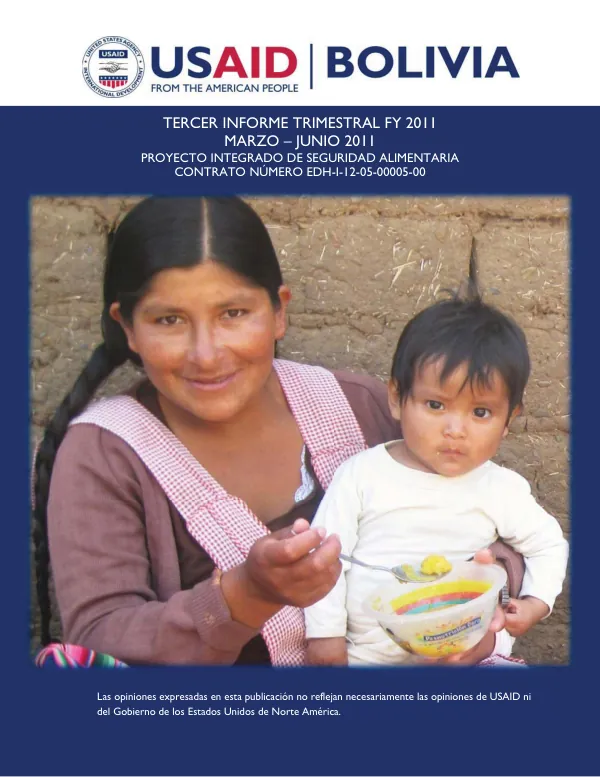
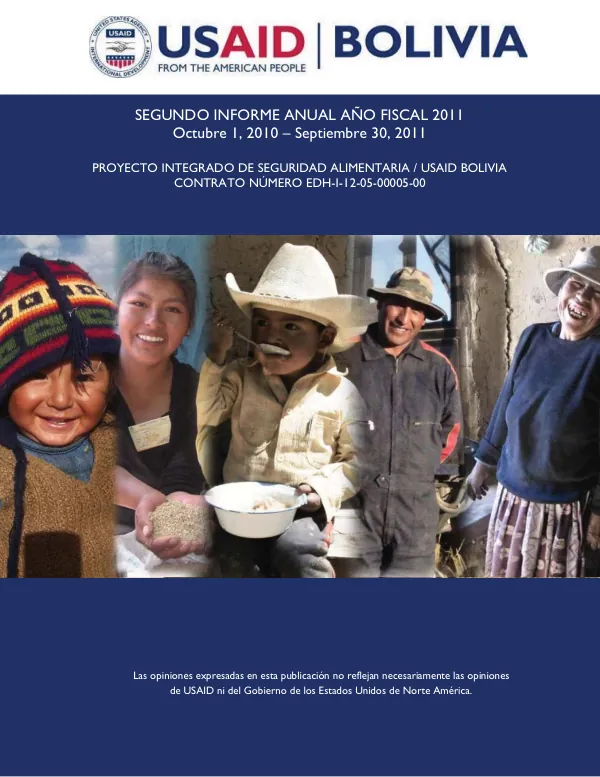
Segundo Informe Trimestral AF2011 - Proyecto Integrado de Seguridad Alimentaria
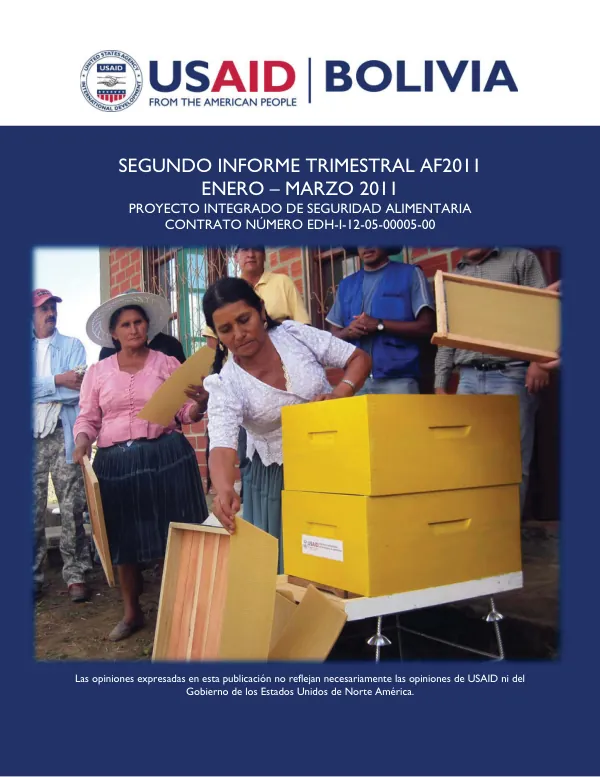
The Proyecto Integrado de Seguridad Alimentaria (Proyecto ISA) is a project implemented by USAID/Bolivia, with the goal of improving food security and reducing chronic malnutrition in rural areas.
2011 · 62 pages
Sign in to readA free account is required to download.
Abstract
The project's strategy is based on the design of integrated actions to address the four fundamental pillars of food security: increasing food availability, increasing access to markets, promoting the balanced use of food, and mitigating vulnerability to climate change. The project has implemented 10 new productive activities, including Micro and Small Enterprises (MyPES), and initiated 5 subcontracts for infrastructure development. However, the prolonged period of rainfall has made it difficult for the project to operate and access rural areas and beneficiary communities. The project received two official visits during the quarter: one from the RIG/USAID audit team to assess the project's progress in increasing food security and reducing chronic malnutrition, and another from John Lamb, an expert in food security and agribusiness from Abt assoc., to provide technical assistance to USAID/Bolivia in evaluating and analyzing the project's structure. Additionally, there was a change in the Contracting Officer's Technical Representative (COTR) from USAID/Bolivia, with Ricardo Roca ceasing his functions in January and Jorge Calvo assuming the technical management of the project. The financial execution for the first quarter of Year 2 showed an execution equivalent to 49.12% of the total execution of the first year. The expenditure for the second quarter was approximately USD 450,000, and the accumulated expenditure almost reached USD 3,670,000, equivalent to 31.79% of the obligated amount. The project has made progress in implementing its activities, despite the challenges posed by the weather conditions. The project's focus on increasing food availability, access to markets, and promoting the balanced use of food has shown positive results, with the implementation of new productive activities and the initiation of infrastructure development subcontracts. The project's indicators for the quarter show a significant increase in the number of beneficiaries, with 10 new productive activities implemented and 5 subcontracts initiated. The project's financial execution has also shown a positive trend, with an execution rate of 49.12% of the total execution of the first year. The project's next steps will focus on continuing to implement its activities, despite the challenges posed by the weather conditions. The project will also continue to work with the local governments and communities to ensure the successful implementation of its activities and the achievement of its goals. The project's lessons learned during the quarter highlight the importance of coordination with local governments and the active participation of community members in the implementation process. The project also learned the need to adapt to changing weather conditions and to have contingency plans in place to ensure the continuity of its activities. The project's future plans include continuing to implement its activities, with a focus on increasing food availability, access to markets, and promoting the balanced use of food. The project will also continue to work with the local governments and communities to ensure the successful implementation of its activities and the achievement of its goals. The project's geographic focus is on rural areas, with a focus on increasing food security and reducing chronic malnutrition. The project's timeframes are quarterly, with a focus on implementing its activities and achieving its goals within the specified timeframe. The project's recommendations include continuing to implement its activities, despite the challenges posed by the weather conditions. The project also recommends continuing to work with the local governments and communities to ensure the successful implementation of its activities and the achievement of its goals.