USAID DEC
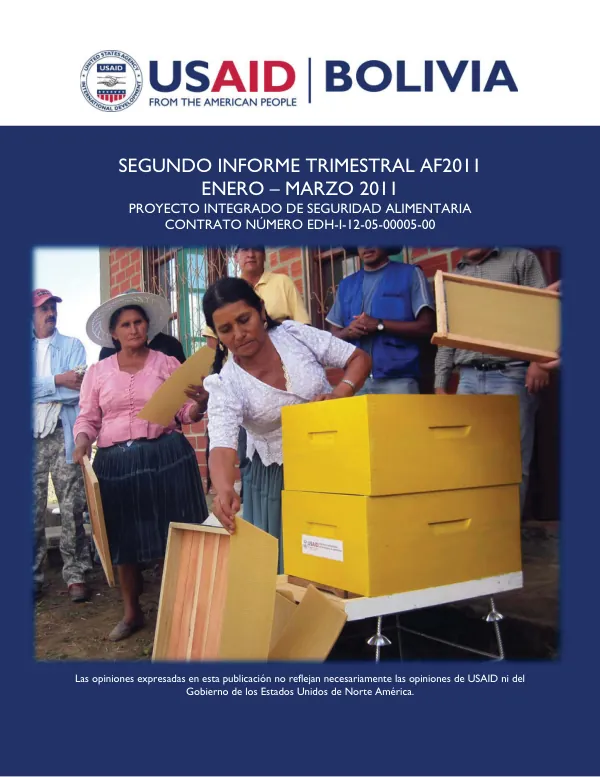
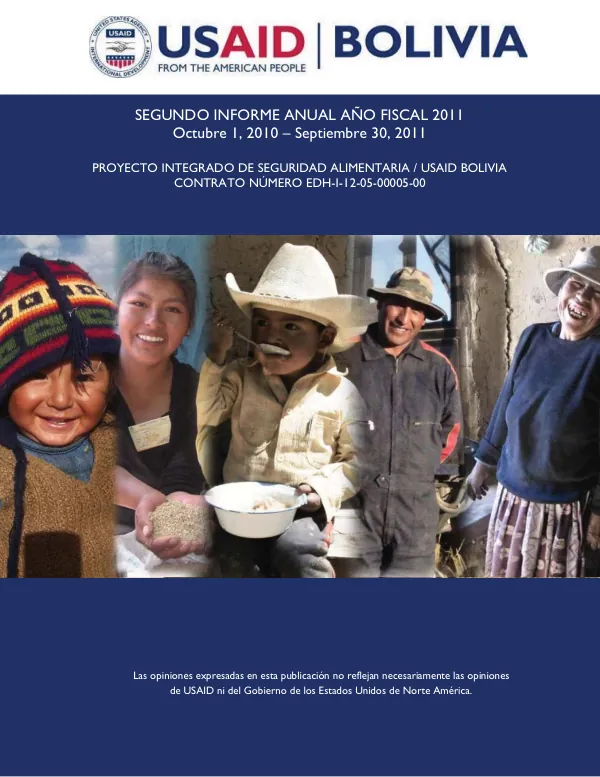
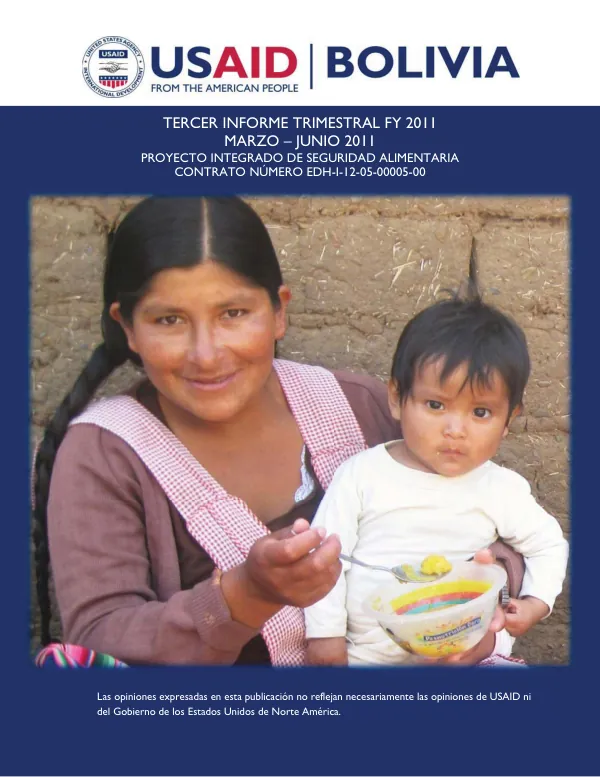
Tercer informe trimestral 2011 - Proyecto Integrado de Seguridad Alimentaria / USAID Bolivia
Sign inABT ASSOCIATES
Tercer informe trimestral 2011 - Proyecto Integrado de Seguridad Alimentaria / USAID Bolivia
The Proyecto Integrado de Seguridad Alimentaria (ISA) is a USAID-funded project in Bolivia aimed at improving food security and nutrition.
2011 · 33 pages
Sign in to readA free account is required to download.
Abstract
The project focuses on five municipalities: Quime, Ravelo, Mizque, Caracollo, and Torotoro. The project's main objective is to strengthen the capacity of local organizations and communities to manage and implement sustainable agriculture practices. The project has made significant progress in consolidating the integral nature of its actions, advancing with the development of Municipal Food Security Strategies (ESMA) and supporting the gradual implementation of Municipal Nutrition Councils (COMAN). The project has also strengthened local organizations and developed their capacity to transform and add value to primary materials, which is essential for achieving sustainability. In the development of community projects, the project has prioritized the attention to processes of community development that allow for the sustainability of systems through accompaniment in irrigation projects and the strengthening of associations of irrigators. The project has also had active participation from local governments, who have reaffirmed their commitment and support for the project, attending to the payment of counterpart funds, which amount to over $610,000. The project has also made significant progress in coordination with implementers, who are mostly local institutions still in the process of strengthening. As a result, the project has made adjustments to the scope of work with the Centro de Promoción de Tecnologías Sostenibles (CPTS) to make adjustments related to the Quinua productive sector of Objective 7. The project has also made significant progress in monitoring, with significant advances in the System of Monitoring (SIMON) allowing for the establishment of the next implementation of SIMON, a system being developed through a donation agreement with Fundación Valles. The project has also assigned new roles to technical staff to strengthen the integral nature of all activities carried out by the project in each municipality. Additionally, the project has formed a Committee of Projects within the project to plan new activities and strengthen the integration process, as well as evaluate needs and propose innovations. The project has also initiated monthly supervision visits to municipalities and areas of work, coordinated with USAID Bolivia, which are carried out systematically and based on participatory meetings. The project has also received recognition for its exemplary history of success, presented at the annual event, and has been awarded the "Technical Excellence in International Development" prize to Ing. Boris Fernandez, specialist in climate change and biodiversity of the ISA project. The project has also made significant progress in the development of community projects, with a focus on the attention to processes of community development that allow for the sustainability of systems through accompaniment in irrigation projects and the strengthening of associations of irrigators. The project has also made significant progress in the coordination with implementers, who are mostly local institutions still in the process of strengthening. As a result, the project has made adjustments to the scope of work with the CPTS to make adjustments related to the Quinua productive sector of Objective 7. The project has also initiated monthly supervision visits to municipalities and areas of work, coordinated with USAID
Related documents