CARE
Semi Annual Progress Report: October 2013-March 2014
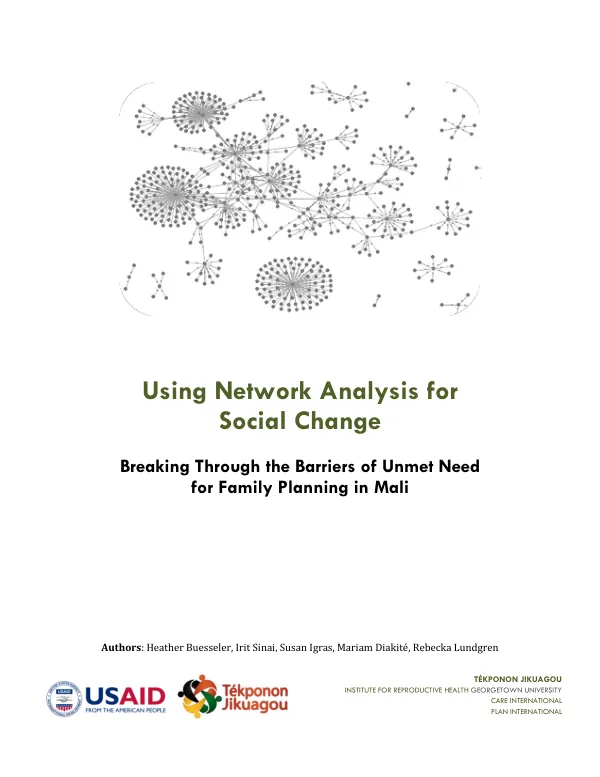
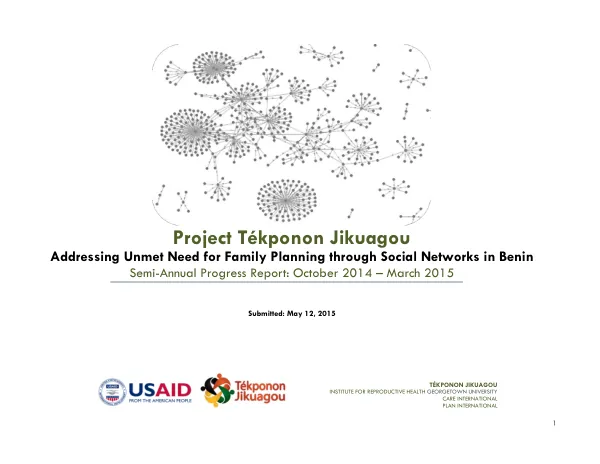
The Tékponon Jikuagou (TJ) Project, led by Georgetown University's Institute for Reproductive Health (GU/IRH) in collaboration with CARE-International and Plan-International, aims to address unmet need for family planning (FP) through social networks in Benin.
2014 · 96 pages
Sign in to readA free account is required to download.
Abstract
The project was initially launched in Mali in 2010 but relocated to Benin in 2012 due to the coup d'état in Mali. The TJ intervention package leverages social networks to diffuse information and ideas, creating an environment where women and men can exercise their desire to space or limit births. The TJ package includes community-identified influential social groups and opinion leaders, radio programs, and linkages between health services and influential individuals and groups. Rigorous monitoring and evaluation allow the project to test the effectiveness of the TJ package in changing FP attitudes, FP efficacy, and couple communication. Related research investigates the impact of social networks on FP and the dynamic nature of unmet need for FP. During the six-month period from September 2013 to March 2014, the project continued implementation, testing, and refinement of components of the TJ package. Materials for remaining TJ social network components were finalized, including pre-recorded TJ group discussion sessions and infographics of key baseline survey findings. TJ's interactive radio programs have been broadcast since December, and the 'influential individuals' component will be implemented starting in April. An assessment of the TJ package was conducted in March, providing insights from TJ catalyzers, influential individuals, health providers, and other community perspectives about the package, its ease of implementation, perceptions of community interest, and sustainability of group and individual diffusion activities. The project has made significant progress in the first half of year 4, with key accomplishments including the completion of the baseline household research findings, the sharing of these findings with the DSME, and the holding of a 'learning reflection' session to document pilot implementation, lessons learned, and recommendations for package adjustments. The mid-year PAG meeting was held in March 2014, where the group focused on the different elements of the TJ package, analyzing what was working/not working well, and questions and issues arising from implementation. The TJ project has also made progress in planning for scale-up, with research continuing on the nature of unmet need, the role of social networks in unmet need, and the effects of the TJ intervention. Analysis of Round-2 of the cohort in-depth interviews will inform development of the question guide for Round-3. Planning for scale-up will deepen, with the project aiming to identify 'user organizations' in the TJ expansion phase and plan how staff will support new organizations and projects integrating the TJ package into their existing programs. The TJ project has also made progress in implementing the TJ package, with all 90 pilot villages implementing the complete TJ package as of April. The project has also made progress in testing the effectiveness of the TJ package, with preliminary results indicating continued and growing community interest in the TJ package, continued outward diffusion by those involved, and continued appreciation of what TJ activities offer communities. The project will continue to refine the TJ package and plan for scale-up, with the goal of expanding the TJ package to new areas and increasing access to family planning services in Benin.