BATANGAS PROVINCE CHAMBER OF COMMERCE AND INDUSTRY, INC.
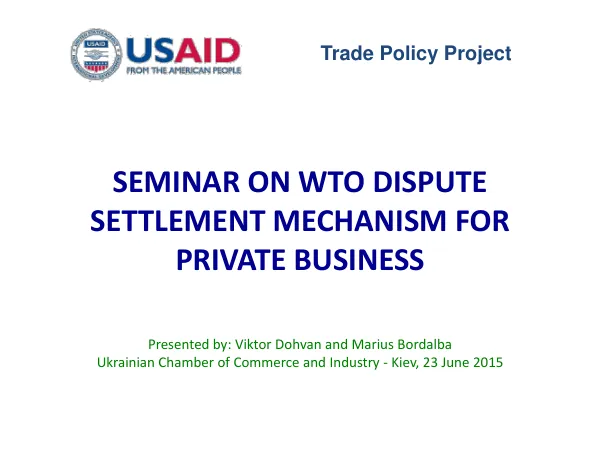
Seminar on WTO Dispute Settlement Mechanism for Private Business
The World Trade Organization (WTO) Dispute Settlement Mechanism (DSM) is a critical component of the multilateral trading system.
2015 · 60 pages
Sign in to readA free account is required to download.
Abstract
The DSM aims to secure a positive solution to disputes between WTO Members, with the preferred outcome being a mutually agreed solution. If a mutually agreed solution is not reached, the DSM proceeds to a panel proceeding, followed by an Appellate Body review, and in some cases, arbitration under Article 25 of the Dispute Settlement Understanding (DSU). The DSM provides security and predictability to the multilateral trading system by preserving the rights and obligations of Members under the WTO Agreement. It also clarifies the rights and obligations of Members through interpretation and facilitates the prompt settlement of disputes. The DSM serves as a tool that dissuades Members from acting inconsistently with WTO obligations, and if a violation is proven, the complainant does not need to show separately that it causes nullification or impairment. The DSM is a compulsory and exclusive jurisdiction for violations of WTO obligations, with prospective effect of WTO rulings. The participants in the DSM include the Dispute Settlement Body (DSB), the Secretariat, the Ministerial Conference, Committees, and the Appellate Body. Other participants in the DSM include the Parties (complainant, defendant, and third parties), the panel, experts, and the WTO Secretariat. Non-governmental actors also play a role in the DSM, although their specific roles are not clearly defined. The WTO DSM is based on the Dispute Settlement Understanding (DSU), which is an integral part of the WTO Agreement. The DSU sets out the procedures and rules for the DSM, including the establishment of panels, the conduct of proceedings, and the role of the Appellate Body. The DSU also provides for the use of arbitration under Article 25, which allows for the settlement of disputes through binding arbitration. Ukraine is a party to several regional and bilateral trade agreements that contain provisions on dispute settlement. For example, the Agreement on the Free Trade Zone and the Free Trade Agreement between Russia and Ukraine contain provisions on dispute settlement. These provisions are based on the WTO DSM and provide for the establishment of panels, the conduct of proceedings, and the role of the Appellate Body. The private sector plays a critical role in the use of the WTO DSM, particularly in cases involving trade remedies and subsidies. The private sector can participate in the DSM as complainants, defendants, or third parties, and can also provide expertise and advice to governments on WTO law and procedures. The use of the WTO DSM by the private sector can help to promote transparency and predictability in international trade, and can also provide a mechanism for the resolution of trade disputes in a fair and impartial manner. The WTO DSM has undergone significant changes since its establishment in 1995. The DSU has been amended several times, and the Appellate Body has been reconstituted to reflect changes in the WTO membership and the global trading environment. The DSM has also been used to settle a wide range of trade disputes, including cases involving trade remedies, subsidies, and intellectual property rights.
Related documents