USAID DEC
Sentinel site active surveillance of safety of first-line antiretroviral medicines in Namibia
Sign inGEORGE WASHINGTON UNIVERSITY CIBER
Sentinel site active surveillance of safety of first-line antiretroviral medicines in Namibia
The active surveillance pharmacovigilance system in Namibia was implemented at two sentinel sites, the Windhoek Central Hospital and the Katutura Intermediate Hospital, in August 2012.
2016 · 9 pages
Sign in to readA free account is required to download.
Abstract
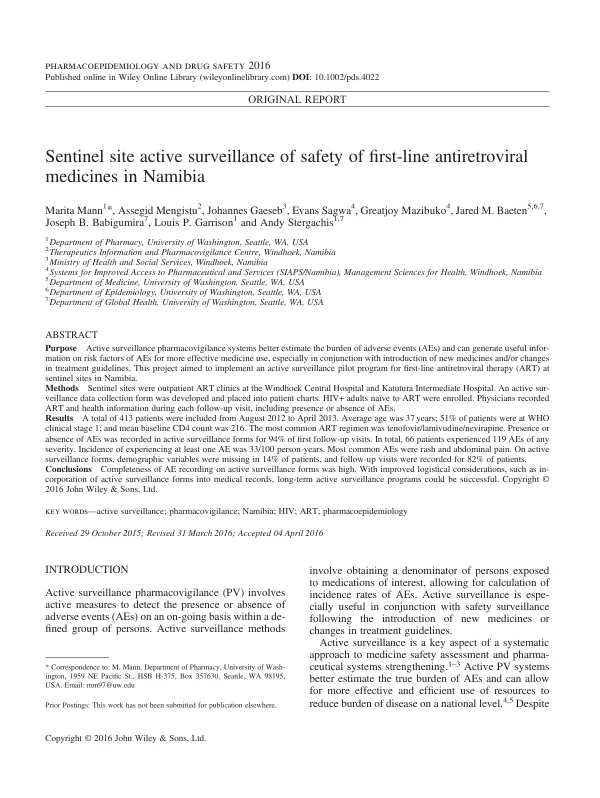
The system aimed to detect the presence or absence of adverse events (AEs) in patients receiving first-line antiretroviral therapy (ART). Eligible patients were HIV-positive adults naïve to ART who were newly placed on an ART regimen and were actively followed during routine care visits over a 12-month period. The active surveillance data collection form was developed and placed into patient charts. The form included demographic and clinical information, as well as the presence or absence of AEs. Physicians recorded ART and health information during each follow-up visit, including the current ART regimen and other medicines, and changes in medicines, outcome of the AE, and any new lab values. The form stayed with the medical record throughout the pharmacovigilance activity. A total of 413 patients were included in the study from August 2012 to April 2013. The average age was 37 years, and 51% of patients were at World Health Organization (WHO) clinical stage 1. The most common ART regimen was tenofovir/lamivudine/nevirapine. Presence or absence of AEs was recorded in active surveillance forms for 94% of first follow-up visits. In total, 66 patients experienced 119 AEs of any severity, with an incidence of experiencing at least one AE of 33/100 person-years. The most common AEs were rash and abdominal pain. The completeness of AE recording on active surveillance forms was high, with 14% of patients having missing demographic variables and 82% of patients having follow-up visits recorded. The study aimed to determine the incidence of, and risk factors for, adverse medicine events in persons receiving first-line ART at the two sentinel sites. The sentinel site activity also aimed to determine the quality of data collected through the active surveillance program and identify any gaps in quality that may occur. The active surveillance system was implemented in conjunction with the introduction of new ART regimens and changes in treatment guidelines. The system offered the opportunity for efficiently performing active surveillance throughout a defined population. The study was conducted in collaboration with the Therapeutics Information and Pharmacovigilance Centre (TIPC) within the Ministry of Health and Social Services (MoHSS) in Namibia. The TIPC coordinator visited each of the two sentinel sites on a regular basis to reinforce the importance of following the procedures set forth for the active surveillance pharmacovigilance activity and collect information for data entry. The study demonstrated the feasibility of implementing an active surveillance pharmacovigilance system in a low-income country setting. The system provided valuable information on the incidence of AEs and risk factors for AEs in patients receiving first-line ART. The study's findings highlighted the importance of active surveillance in monitoring the safety of ART regimens and identifying potential adverse events. The results of the study can inform the development of pharmacovigilance systems in other low-income countries.