USAID. MISSION TO ZAIRE
Shaba refugee health project
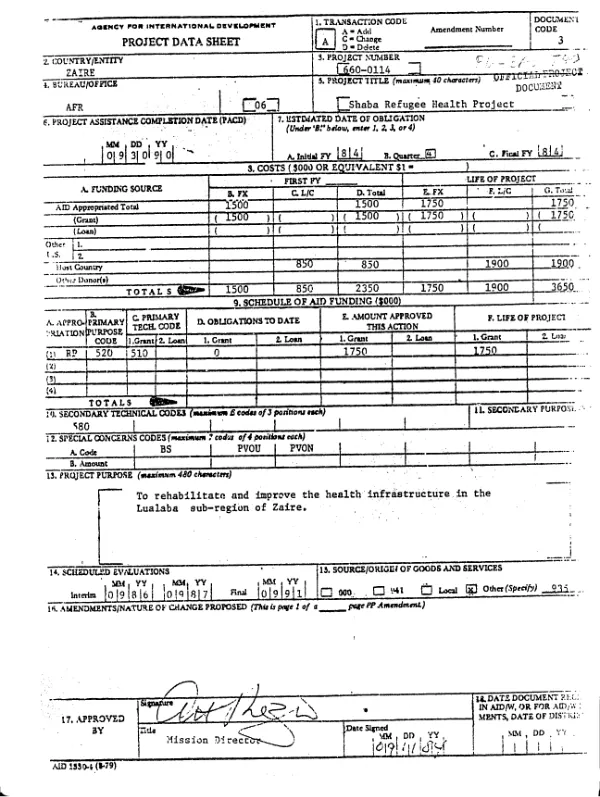
Project to meet increased demand for health care resulting from the resettlement of refugees in the Lualaba subregion of Zaire, primarily by rehabilitating existing medical infrastructure.
1984
Sign in to readA free account is required to download.
Abstract
Various PVO"s will implement the project under the coordination of the Southern Zaire Annual Conference of the United Methodist Church (UMC). The project will repair/upgrade and re-equip 75 mostly church-sponsored health care facilities (60 rural dispensaries, 13 referral centers, and 2 hospitals). Facilities constructed of nondurable materials will be replaced with durably constructed facilities; community participation will be enlisted whenever possible. In addition, the project will: replace health facility equipment that was lost during the war or is worn out; make consumables (drugs, bandages, fuel stocks) available at central supply points; and convert petroleum-based energy technologies at the facilities to technologically appropriate solar-based systems (e.g., solar lighting and refrigerators at rural dispensaries). Use of less expensive solar technology should eliminate a major strain on facilities" self-financing. Medical referrals and cooperation among health facilities will be improved through repair of airstrips at major medical centers and other appropriate points, upgrading of the UMC central aviation maintenance facility at Lwena, and provision of single-side band radios (with solar power sources at most locations) to key facilities which lack them. Finally, health outreach to remote villages will be strengthened. In selected pilot areas, village health representatives (VHR"s) will be chosen by their local communities and then trained to encourage preventive medicine in their communities and to refer villagers requiring professional medical attention to rural dispensaries; the dispensary nurses will oversee the VHR"s during their periodic visits to villages, e.g., for vaccination campaigns. The project will provide VHR"s with bicycles and will provide the nurses with bicycles, motorcycles, or, in a few strategic locations, with 4-wheel-drive vehicles.
Related documents