USAID DEC
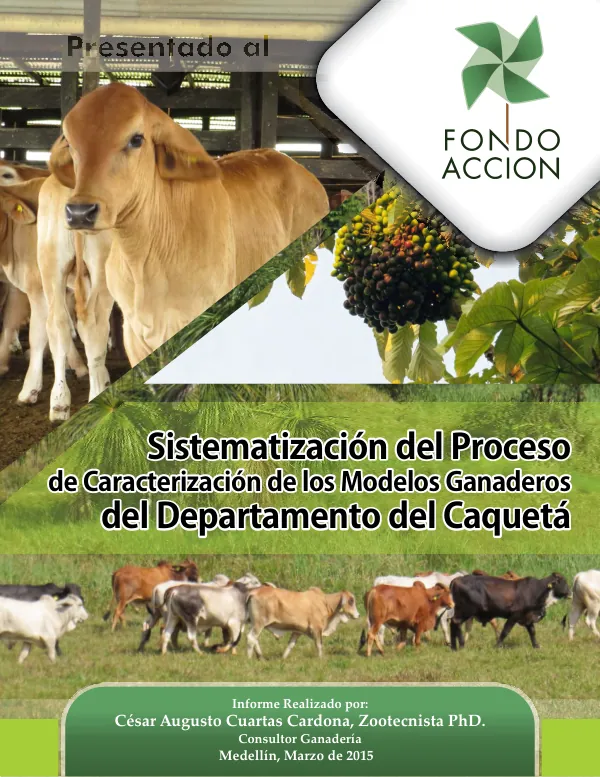
Sistematización Modelos Ganaderos Caquetá
The agricultural development initiative in the Caquetá department of Colombia began in 2014 with the goal of characterizing the different types of producers and livestock management systems in the region.
2015 · 34 pages
Sign in to readA free account is required to download.
Abstract
A mixed-methods approach was used to collect and analyze quantitative and qualitative data. Encuestas and focus groups were conducted with producers, who are mostly owners of the properties, to gather information on their productive, environmental, and economic activities. The study identified several challenges faced by small-scale producers in the Belén de los Andaquíes municipality. One of the main issues is the lack of technical assistance and support from the state and other institutions to improve their productive capacities, data management, and options for conversion in the region. Most producers acquired their knowledge through their own experience, communication with neighbors, trial and error, and techniques inherited from their parents and grandparents. The study also found that small-scale producers in the region lack access to credit and have limited economic resources. They are often forced to participate in projects that do not respond to their needs, problems, and interests. In some cases, producers rent a portion of land from a neighbor to participate in a project, as the project's interests do not align with their own. The region's productive environment is characterized by extensive farming practices, with bovine livestock of double purpose and degraded grasslands. The study highlights the impact of coca cultivation on the region's productivity, as fumigations have affected not only conservation areas but also the productivity of livestock. The degradation of native forests has been imminent in the region, changing the land use from forest to grasslands for cattle grazing, and in some cases, affecting crops due to soil erosion. The study also notes that many producers have abandoned coca cultivation due to the strong fumigations, and instead, colonos (coca cultivators) invade a small area of the producer's property, clear it, cultivate it, and benefit from it. The study concludes that the region's producers face significant challenges, including lack of technical assistance, limited economic resources, and the impact of coca cultivation on their productivity. The study's findings have implications for agricultural development initiatives in the region. To address the challenges faced by small-scale producers, it is essential to provide technical assistance, support, and access to credit. Additionally, initiatives should focus on promoting sustainable agriculture practices, conserving natural resources, and addressing the impact of coca cultivation on the region's productivity. The study's methodology involved a mixed-methods approach, combining quantitative and qualitative data collection and analysis. Encuestas and focus groups were conducted with producers to gather information on their productive, environmental, and economic activities. The study's findings highlight the need for a more nuanced understanding of the challenges faced by small-scale producers in the region and the importance of addressing these challenges to promote sustainable agricultural development.
Related documents
Documents in this collection
 2015
2015USAID DEC
INFORME PARCIAL DEL ESTADO DE IMPLEMENTACIÓN DEL PROYECTO Implementación de sistemas silvopastoriles que favorezcan la conectividad ecológica, así como la provisión de servicios ecosistémicos y el fortalecimiento de las cadenas de valor de los productores de Belén de los Andaquíes, San José del Fragua y Albania (Caquetá)
Open record 2018
2018USAID DEC