USAID DEC
Social and Behavior Change-Market-Based Sanitation Strategy for Isoko y'Ubuzima Project
Sign inUSAID
Social and Behavior Change-Market-Based Sanitation Strategy for Isoko y'Ubuzima Project
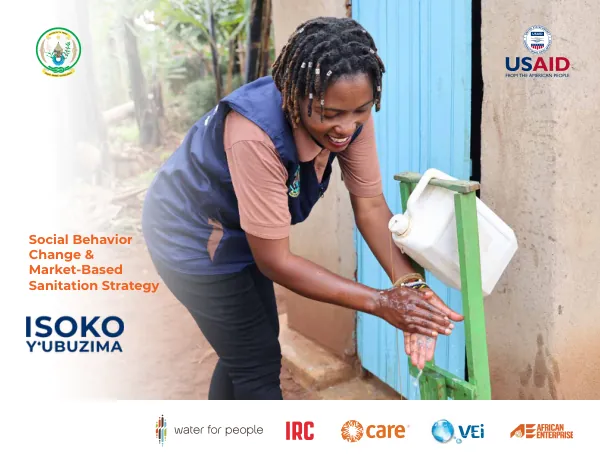
The Social Behavior Change-Market-Based Sanitation Strategy for Isoko y'Ubuzima Project aims to improve sanitation and hygiene practices in Rwanda.
2023 · 74 pages
Sign in to readA free account is required to download.
Abstract
The project focuses on demand activation and demand fulfillment to increase access to sanitation goods and services. Demand activation involves direct sales and marketing activities to persuade customers to purchase sanitation products, while demand fulfillment refers to the delivery of these products and services by businesses in response to successful demand activation. The project targets households and communities in Rwanda, with a focus on improving sanitation and hygiene practices. Key stakeholders involved in the project include community health workers, community hygiene clubs, and financial services providers. The project also involves the use of interpersonal communication, human-centered design, and go-to-market strategies to promote sanitation and hygiene practices. A key concept in the project is demand creation, which involves transforming the transactional sale into a conversation that creates behavior change in customers. This approach is referred to as DQ selling, which leads customers through a four-step conversation about the problem, cost, solution, and value. The project also emphasizes the importance of an enabling environment, which includes interrelated functions that allow governments and public and private partners to engage in a sustained and effective WASH service delivery development process. The project has identified several supply chain bottlenecks that need to be addressed, including high costs of sanitation products and limited availability of quality hygiene and water-related products. To address these bottlenecks, the project proposes several options, including reducing the cost of sanitation products and increasing their availability. The project also recommends strengthening the supply chain through activities such as capacity building, financial access, and gender, equity, and social inclusion. The project's implementation process involves several key activities, including district-level capacity building, improving financial access, and promoting gender equity and social inclusion. The project also emphasizes the importance of monitoring and evaluation, including the use of targeted indicators to track progress and identify areas for improvement. The project's exit strategy involves a feedback mechanism to ensure that lessons learned are captured and used to inform future projects. Overall, the Social Behavior Change-Market-Based Sanitation Strategy for Isoko y'Ubuzima Project aims to improve sanitation and hygiene practices in Rwanda by promoting demand activation and demand fulfillment, addressing supply chain bottlenecks, and strengthening the enabling environment. The project's implementation process involves several key activities, including capacity building, financial access, and gender, equity, and social inclusion.