USAID DEC
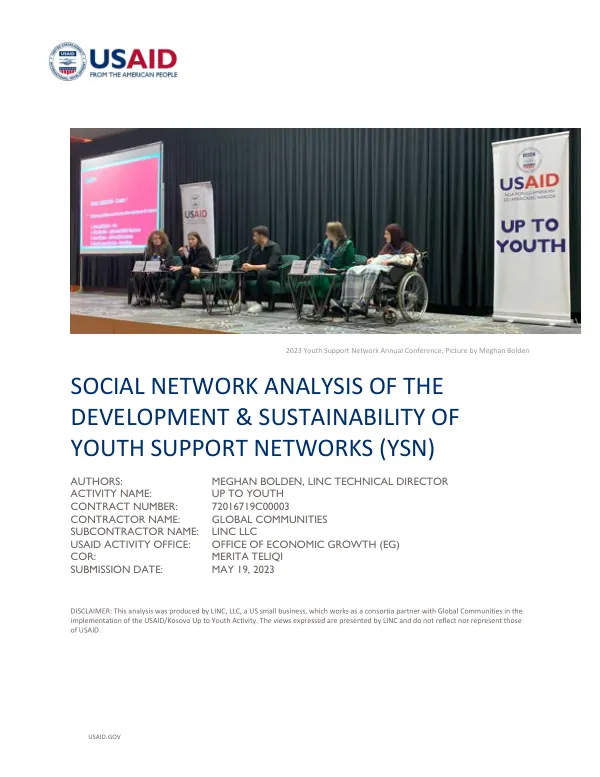
Social Network Analysis of the Development & Sustainability of Youth Support Networks (YSN)
Sign inGLOBAL COMMUNITIES
Social Network Analysis of the Development & Sustainability of Youth Support Networks (YSN)
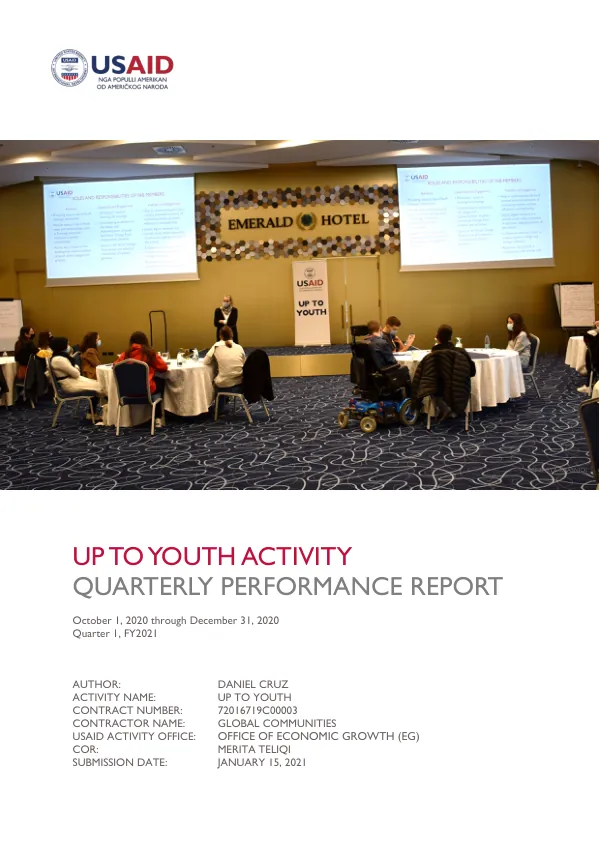
The Up to Youth Activity is a USAID-funded initiative in Kosovo, led by Global Communities in partnership with LINC LLC, Moonshot CVE, and local organizations, Peer Educators Network (PEN) and NGO LENS.
2023 · 26 pages
Sign in to readA free account is required to download.
Abstract
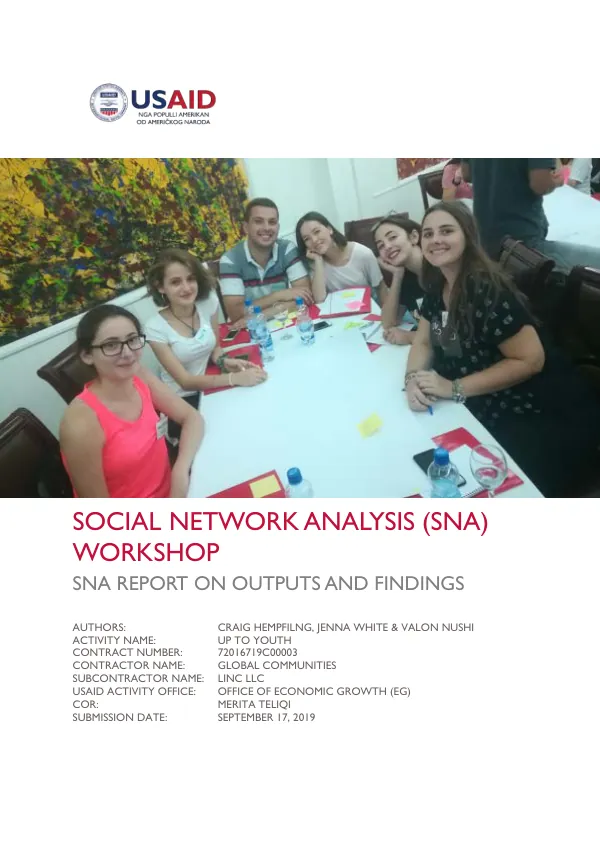
The activity addresses the concerns of youth aged 15 to 24 years, with a Theory of Change that aims to increase youth resilience to social exclusion and extremism by mobilizing and empowering vulnerable youth to effect positive change. The activity's lead, LINC, engages formal and informal actors to address youth challenges through Youth Support Networks (YSN) developed to increase responsiveness to youth and engagement with youth on their concerns. To identify youth development stakeholders in nine target municipalities plus Pristina/Prishtine, LINC used Social Network Analysis (SNA) in August 2019. Following the initial SNA, additional workshops were held with youth and regional service providers to discuss the findings and map real-life youth concern scenarios and challenges for youth resilience. Social Network Analysis (SNA) is a valuable tool for analyzing the relationships among actors in a system, providing insights into their connections and interactions. SNA is built on the premise that an actor's position within a network influences the opportunities and constraints they face. The analysis provides a "sociogram" visual diagram as well as "metrics" to quantify the strength of actors' relationships, how central they are to a network, and the roles they serve as facilitators of information or resource exchange within a network or sub-networks. Key terminology used in the analysis includes nodes, edges, density, reciprocity, average degree, degree centrality, closeness centrality, and betweenness centrality. These metrics are used to understand the structure of the network and identify the constraints and opportunities that actors may encounter based on their position within the network. The SNA process followed by LINC is a six-step process, which includes defining the purpose, establishing the boundary, collecting data, cleaning and analyzing the data, and using the results to generate meaningful views. The purpose of the SNA was to better understand and strengthen the Youth Support Networks (YSN) by assessing who works together to support youth in and across municipalities, what kinds of information or resources flow among the members, and what kind of impact the members associate with their participation in the YSNs. The analysis was conducted in March 2023, following up with some of the youth and selected resilience partners that helped form and continue to participate in YSNs, which were developed in 2020. The findings of the analysis are presented in the following sections, including overall development, cluster level, municipal level, and whole of network level. Overall, the Up to Youth Activity aims to increase youth resilience to social exclusion and extremism by mobilizing and empowering vulnerable youth to effect positive change. The activity uses Social Network Analysis (SNA) to understand the relationships among actors in the system and identify the constraints and opportunities that actors may encounter based on their position within the network. The analysis provides insights into the structure of the network and identifies the key actors and relationships that are critical to the success of the activity. The findings of the analysis indicate that the Youth Support Networks (YSN) have improved the ability of the members to serve youth, with a significant increase in the number of actors working together to support youth in and across municipalities. The analysis also identifies key actors and relationships that are critical to the success of the activity, including the role of resilience partners in facilitating information and resource exchange within the network. The conclusions of the analysis highlight the importance of Social Network Analysis (SNA) in understanding the relationships among actors in a system and identifying the constraints and opportunities that actors may encounter based on their position within the network. The analysis provides insights into the structure of the network and identifies the key actors and relationships that are critical to the success of the activity. The recommendations of the analysis include continuing to support the development of Youth Support Networks (YSN) and strengthening the relationships among actors in the network. The analysis also recommends continuing to use Social Network Analysis (SNA) to monitor the progress of the activity and identify areas for improvement.
Related documents