USAID DEC
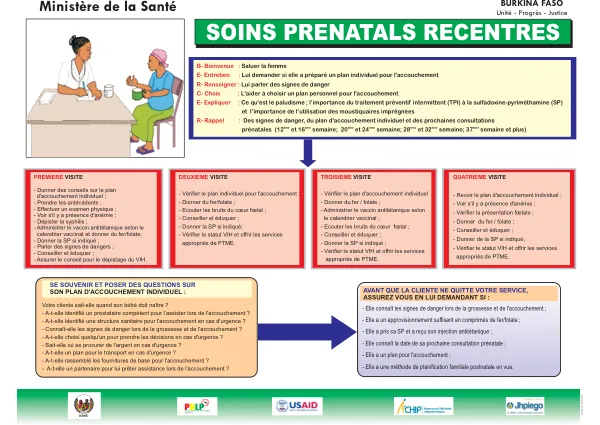
SOINS PRENATALES RECENTRES
The prenatal care program in Burkina Faso is implemented by the Programme National de lutte contre le Paludisme (PNLP) in collaboration with the Ministère de la Santé.
1 pages
Sign in to readA free account is required to download.
Abstract
The program focuses on providing comprehensive prenatal care to pregnant women, with a primary emphasis on preventing malaria through the use of sulfadoxine-pyriméthamine (SP) and promoting the use of insecticide-treated bed nets. The prenatal care program consists of a series of visits, with the first visit typically occurring at 12 weeks of gestation. During this visit, healthcare providers counsel the woman on developing a birth plan, take a medical history, perform a physical examination, and screen for anemia and syphilis. The woman is also administered the SP if indicated, and receives a tetanus toxoid vaccination and iron/folate supplements. Subsequent visits occur at 16, 20, 24, 28, 32, and 37 weeks of gestation. During these visits, healthcare providers review the birth plan, administer iron/folate supplements, listen to the fetal heartbeat, and counsel the woman on signs of danger during pregnancy and childbirth. The woman is also offered HIV testing and counseling, and provided with SP and tetanus toxoid vaccinations as indicated. A key component of the prenatal care program is the development of a birth plan, which is reviewed and updated at each visit. The birth plan includes information on the woman's preferred place of delivery, the presence of a birth attendant, and the availability of emergency transportation. Healthcare providers also counsel the woman on the importance of having a plan for emergency situations, including access to financial resources and a support partner. Throughout the prenatal care program, healthcare providers emphasize the importance of malaria prevention, including the use of SP and insecticide-treated bed nets. The program also promotes the use of iron/folate supplements and tetanus toxoid vaccinations to prevent anemia and tetanus. The prenatal care program in Burkina Faso is designed to provide comprehensive care to pregnant women, with a focus on preventing malaria and promoting healthy pregnancy outcomes. By providing regular prenatal visits and counseling, healthcare providers can help women develop a birth plan, identify potential risks, and prepare for a safe and healthy delivery.
Related documents