USAID DEC
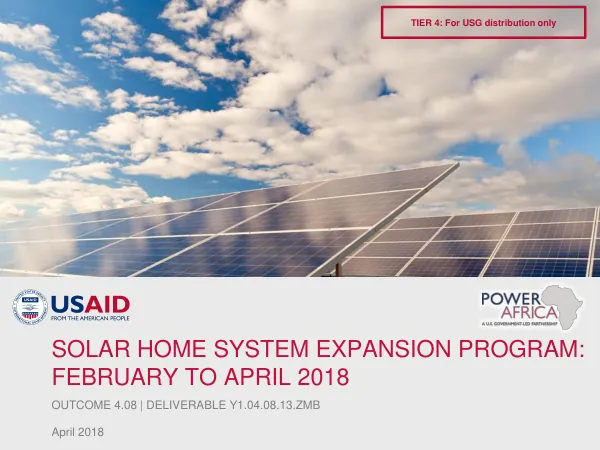
Solar Home System Expansion Program: Q1 Progress
The Solar Home System Expansion Program in Zambia aimed to increase access to solar home systems (SHS) and solar mini-grids, particularly in rural areas.
2018 · 71 pages
Sign in to readA free account is required to download.
Abstract
The program was supported by the United States Agency for International Development (USAID) through the Sustainable Energy for All (SEforALL) initiative. The program's primary objective was to facilitate the growth of the SHS sector in Zambia, with a focus on increasing the number of connections and improving the overall efficiency of the sector. Key findings from the sector diagnostic and prioritization process identified several barriers to the growth of the SHS sector, including limited access to finance, inadequate infrastructure, and a lack of awareness about SHS products. To address these challenges, the program implemented several initiatives, including the formation of the Solar Industry Association of Zambia (SIAZ), which aimed to provide a single point of contact for the solar industry and facilitate sector-wide initiatives. The SIAZ was established in 2018, with the support of USAID, to promote the growth of the SHS sector in Zambia. The association's primary objectives were to provide a platform for the solar industry to share information, coordinate sector-wide initiatives, and advocate for policies that support the growth of the sector. The SIAZ has been actively engaged with various stakeholders, including government agencies, development partners, and private sector companies, to promote the growth of the SHS sector. The program has made significant progress in supporting the growth of the SHS sector in Zambia. Key achievements include the establishment of the SIAZ, the development of a sector-wide diagnostic and prioritization report, and the implementation of several initiatives to address the identified barriers to growth. The program has also facilitated the growth of the SHS sector through the provision of technical assistance and support to SIAZ members. The program's impact on connections has been significant, with a total of 13,000 new connections made in the first year of the program. The program has also improved the overall efficiency of the sector, with a reduction in the cost of connections and an increase in the number of SHS providers. The program's success has been attributed to the strong partnership between USAID, SIAZ, and other stakeholders, which has facilitated the growth of the SHS sector in Zambia. Going forward, the program will continue to support the growth of the SHS sector in Zambia, with a focus on increasing the number of connections and improving the overall efficiency of the sector. The program will also continue to engage with various stakeholders, including government agencies, development partners, and private sector companies, to promote the growth of the SHS sector.