TETRA TECH
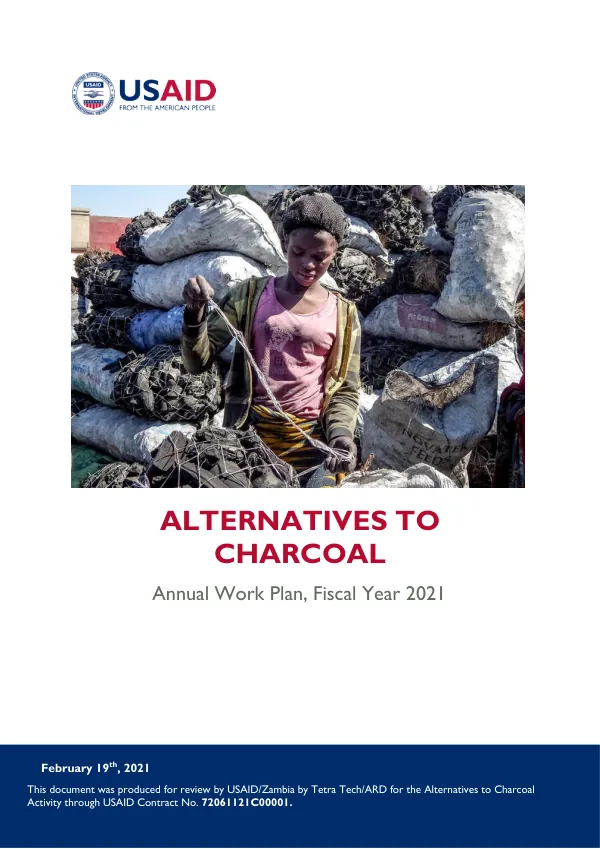
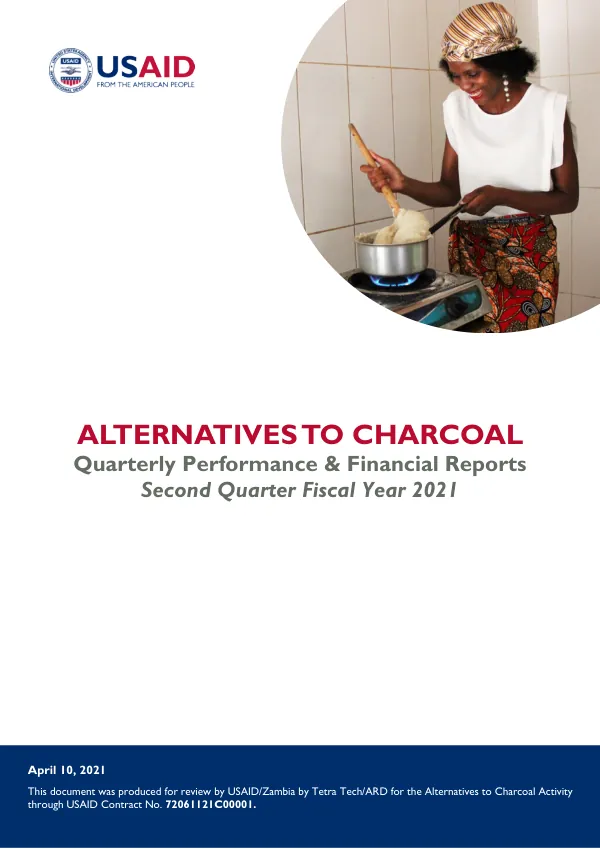
Alternatives to Charcoal Quarterly Performance and Financial Reports, FY21, Q2
The USAID Zambia Alternatives to Charcoal Activity began on January 5, 2021, and will conclude on January 4, 2026.
2021 · 24 pages
Sign in to readA free account is required to download.
Abstract
The project aims to increase the use of alternative technologies and fuels, improve the business enabling environment, promote social behavior change and communications, and support alternative livelihoods. The activity is being implemented by Tetra Tech ARD, with a total award amount of $24,999,557. The project's objective is to increase household use of alternative technologies and/or fuels by 38%. To achieve this, the project has been conducting various activities, including training farmers in sustainable agriculture techniques, establishing demonstration plots, and promoting the use of liquid petroleum gas (LPG) stoves. As of the second quarter of fiscal year 2021, more than 2,500 farmers had received training, and demonstration plots had shown yield improvements of 60% when applying the recommended practices. The project has also been working to improve the business enabling environment by supporting the development of a market for alternative technologies and fuels. This includes providing technical assistance to private sector companies and promoting the use of alternative fuels in industries such as cooking and heating. The project has also been working to promote social behavior change and communications, with a focus on increasing awareness about the benefits of using alternative technologies and fuels. In terms of progress, the project has made significant strides in achieving its objectives. As of the second quarter of fiscal year 2021, the project had achieved a 27% increase in household income among program participants compared to the control group. The project has also been working to support alternative livelihoods, with a focus on promoting the use of alternative technologies and fuels in rural areas. This includes providing training and technical assistance to farmers and small-scale entrepreneurs, as well as promoting the use of alternative fuels in industries such as cooking and heating. In terms of challenges, the project has faced several obstacles, including the COVID-19 pandemic, which has disrupted project activities and delayed the implementation of some interventions. The project has also faced challenges in terms of accessing funding and resources, particularly in rural areas where the project is being implemented. Looking ahead, the project plans to continue its efforts to increase the use of alternative technologies and fuels, improve the business enabling environment, and promote social behavior change and communications. The project will also continue to support alternative livelihoods, with a focus on promoting the use of alternative technologies and fuels in rural areas. The project's next quarter's deliverables and activities include the submission of quarterly indicator performance tables, quarterly financial reports, and a monitoring, evaluation, and learning plan. The project will also continue to work with its partners, including the Government of the Republic of Zambia, to promote the use of alternative technologies and fuels and support alternative livelihoods. In terms of geographic focus, the project is being implemented in Zambia, with a focus on rural areas where the use of charcoal is prevalent. The project is also working to promote the use of alternative technologies and fuels in urban areas, where the demand for energy is high. Overall, the USAID Zambia Alternatives to Charcoal Activity is making significant progress in achieving its objectives, despite facing several challenges. The project's efforts to increase the use of alternative technologies and fuels, improve the business enabling environment, and promote social behavior change and communications are critical to reducing the demand for charcoal and promoting sustainable development in Zambia.