INTERNATIONAL BUSINESS AND TECHNICAL CONSULTANTS, INC.
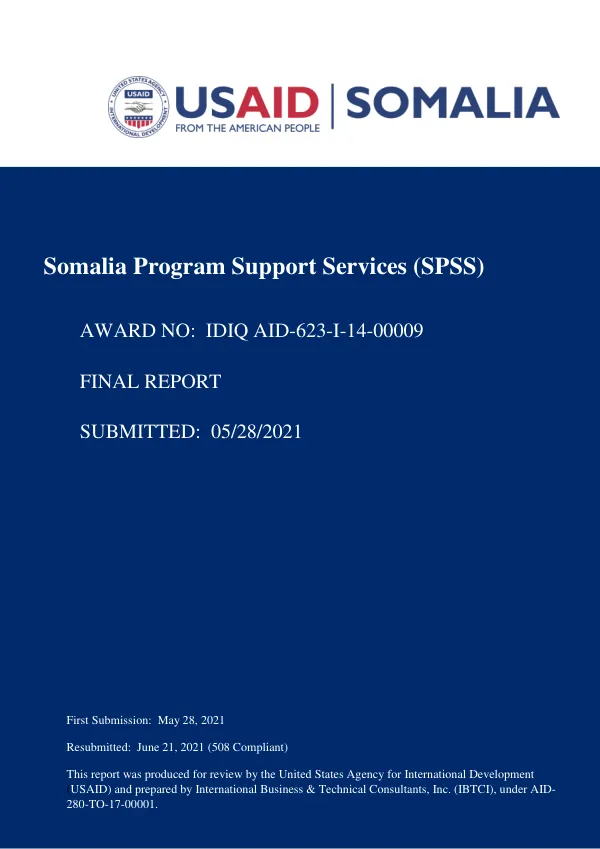
Somalia Program Support Services (SPSS) FINAL CONTACT COMPLETION REPORT
SOMALIA COUNTRY CONTEXT The country of Somalia has faced significant challenges in recent years, including conflict, poverty, and economic instability.
2021 · 146 pages
Sign in to readA free account is required to download.
Abstract
The government has been working to establish a stable and secure environment, with a focus on rebuilding and developing the country's infrastructure. The Somalia Country Context report highlights the importance of addressing the root causes of poverty and promoting economic growth, with a focus on agriculture, livestock, and livestock products. The report emphasizes the need for a comprehensive approach to addressing the country's challenges, including the development of a national strategy for economic growth and poverty reduction. The strategy should focus on promoting private sector development, improving infrastructure, and enhancing the business environment. Additionally, the report highlights the importance of addressing the country's security challenges, including the threat posed by terrorist groups such as Al-Shabaab. The report also emphasizes the need for a coordinated approach to addressing the country's humanitarian needs, including the provision of food assistance, shelter, and shelter-related services. The report highlights the importance of working with local authorities and local organizations to ensure that assistance reaches those who need it most. Furthermore, the report emphasizes the need for a long-term approach to addressing the country's humanitarian needs, with a focus on building the capacity of local organizations and promoting self-reliance. The report highlights the importance of addressing the country's environmental challenges, including the impact of climate change on agriculture and livestock production. The report emphasizes the need for a comprehensive approach to addressing the country's environmental challenges, including the development of a national strategy for environmental protection and sustainable development. Additionally, the report highlights the importance of promoting sustainable agriculture practices and reducing the country's reliance on fossil fuels. The report emphasizes the need for a coordinated approach to addressing the country's health challenges, including the provision of healthcare services, immunization, and disease surveillance. The report highlights the importance of working with local authorities and local organizations to ensure that healthcare services reach those who need them most. Furthermore, the report emphasizes the need for a long-term approach to addressing the country's health challenges, with a focus on building the capacity of local healthcare providers and promoting self-reliance. The report highlights the importance of addressing the country's education challenges, including the provision of education services, teacher training, and education infrastructure development. The report emphasizes the need for a comprehensive approach to addressing the country's education challenges, including the development of a national strategy for education and training. Additionally, the report highlights the importance of promoting education and training programs that focus on skills development and vocational training. The report emphasizes the need for a coordinated approach to addressing the country's security challenges, including the threat posed by terrorist groups such as Al-Shabaab. The report highlights the importance of working with local authorities and local organizations to ensure that security assistance reaches those who need it most. Furthermore, the report emphasizes the need for a long-term approach to addressing the country's security challenges, with a focus on building the capacity of local security forces and promoting self-reliance. The report highlights the importance of addressing the country's humanitarian needs, including the provision of food assistance, shelter, and shelter-related services. The report emphasizes the need for a comprehensive approach to addressing the country's humanitarian needs, including the development of a national strategy for humanitarian assistance. Additionally, the report highlights the importance of promoting sustainable agriculture practices and reducing the country's reliance on fossil fuels. The report emphasizes the need for a coordinated approach to addressing the country's environmental challenges, including the impact of climate change on agriculture and livestock production. The report highlights the importance of working with local authorities and local organizations to ensure that environmental assistance reaches those who need it most. Furthermore, the report emphasizes the need for a long-term approach to addressing the country's environmental challenges, with a focus on building the capacity of local organizations and promoting self-reliance. The report highlights the importance of addressing the country's health challenges, including the provision of healthcare services, immunization, and disease surveillance. The report emphasizes the need for a comprehensive approach to addressing the country's health challenges, including the development of a national strategy for health and nutrition. Additionally, the report highlights the importance of promoting education and training programs that focus on health and nutrition. The report emphasizes the need for a coordinated approach to addressing the country's education challenges, including the provision of education services, teacher training, and education infrastructure development. The report highlights the importance of working with local authorities and local organizations to ensure that education assistance reaches those who need it most. Furthermore, the report emphasizes the need for a long-term approach to addressing the country's education challenges, with a focus on building the capacity of local education providers and promoting self-reliance. SOMAL