INTERNATIONAL BUSINESS AND TECHNICAL CONSULTANTS, INC.
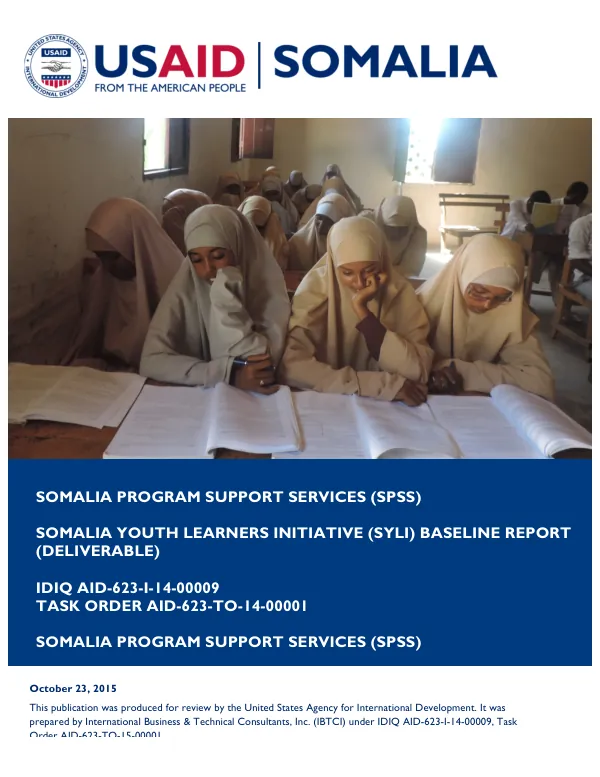
SOMALIA YOUTH LEARNERS INITIATIVE (SYLI) BASELINE REPORT (DELIVERABLE)
The Somalia Youth Learners Initiative (SYLI) is a program aimed at improving education outcomes for young people in Somalia.
2015 · 34 pages
Sign in to readA free account is required to download.
Abstract
The initiative is part of the Somalia Program Support Services (SPSS) project, which is funded by the United States Agency for International Development (USAID). The program focuses on secondary education, with the goal of increasing access to quality education for Somali youth. The baseline study for the SYLI program was conducted in 2015 to assess the current state of secondary education in Somalia. The study aimed to identify key challenges and opportunities for improving education outcomes, as well as to inform the development of the SYLI program. The baseline study was designed to provide a comprehensive understanding of the education sector in Somalia, including the performance of students, the competency of teachers, and the learning outcomes of students. The study found that student performance in secondary schools in Somalia is a major concern. The results of the study indicate that students are performing poorly in mathematics and language arts, with many students failing to meet the minimum standards for passing these subjects. The study also found that teacher competency is a significant issue, with many teachers lacking the necessary skills and knowledge to effectively teach their students. In terms of learning outcomes, the study found that students in Somalia are not achieving the desired outcomes in terms of literacy and numeracy. The study also found that there are significant disparities in learning outcomes between boys and girls, with girls performing poorly in mathematics and science. The study identified several factors that influence learning outcomes, including school-level factors such as the availability of resources and the quality of teaching, as well as community-level factors such as poverty and conflict. The study also found that female student enrollment is a major concern, with many girls dropping out of school due to early marriage and other social and cultural factors. The study made several recommendations for the SYLI program, including the need to improve teacher competency, increase access to quality education for girls, and address the disparities in learning outcomes between boys and girls. The study also recommended that the program focus on improving the quality of education, rather than just increasing access to education. The baseline study provides a comprehensive understanding of the education sector in Somalia and informs the development of the SYLI program. The study's findings and recommendations will be used to guide the implementation of the program and to ensure that it is effective in improving education outcomes for Somali youth. The study's results highlight the need for a comprehensive approach to improving education outcomes in Somalia, one that addresses the multiple challenges facing the education sector. The study's findings also emphasize the importance of addressing the disparities in learning outcomes between boys and girls, as well as the need to improve teacher competency and increase access to quality education for girls. Overall, the baseline study provides a critical foundation for the SYLI program and will inform the development of the program's end-line evaluation. The study's findings and recommendations will be used to guide the implementation of the program and to ensure that it is effective in improving education outcomes for Somali youth.