DELOITTE CONSULTING, LLP
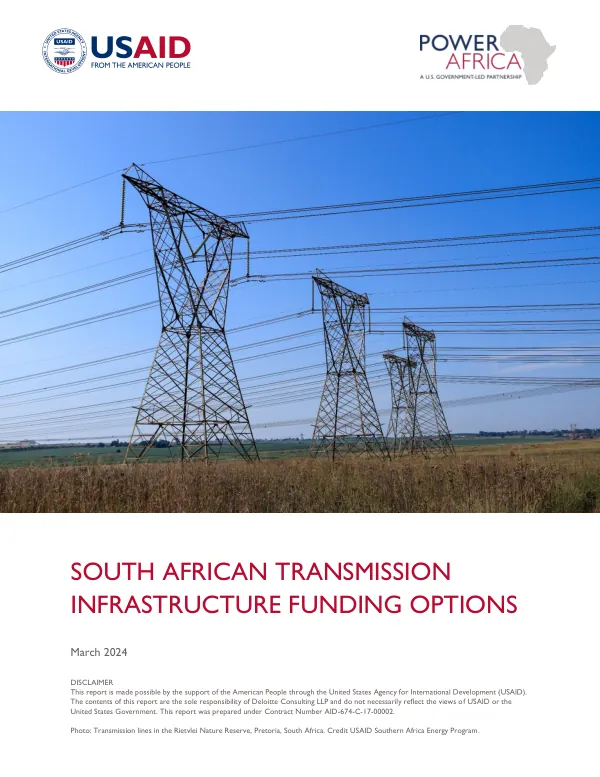
South African Transmission Infrastructure Funding Options
The South African transmission infrastructure in need of significant investment to meet the country's growing energy demands.
2024 · 66 pages
Sign in to readA free account is required to download.
Abstract
The current transmission system is constrained, with a high risk of power outages and a lack of reliability. The Southern Africa Energy Program (SAEP) has identified the need for innovative funding mechanisms to address this challenge. The SAEP has conducted a comprehensive review of the transmission infrastructure in South Africa, highlighting the need for investment in new transmission lines, substations, and other infrastructure. The review has also identified the following key challenges: * The current transmission system is constrained, with a high risk of power outages and a lack of reliability. * The transmission infrastructure is aging, with many assets nearing the end of their lifespan. * The current funding model for transmission infrastructure is inadequate, relying heavily on government funding and public-private partnerships. * There is a lack of private sector investment in transmission infrastructure, due to the high risk and complexity of the sector. To address these challenges, the SAEP has identified several innovative funding mechanisms that could be used to finance transmission infrastructure projects in South Africa. These mechanisms include: * Public-Private Partnerships (PPPs): PPPs involve the private sector investing in a project in exchange for a share of the revenue. This can provide a stable source of funding for transmission infrastructure projects. * Green Bonds: Green bonds are a type of bond that is specifically used to finance environmentally friendly projects, such as renewable energy projects. They can provide a low-cost source of funding for transmission infrastructure projects. * Infrastructure Funds: These are specialized funds that invest in infrastructure projects, including transmission infrastructure. They can provide a stable source of funding for transmission infrastructure projects. * Private Equity: Private equity firms can invest in transmission infrastructure projects, providing a source of funding for these projects. The SAEP has also identified several case studies from other regions that demonstrate the effectiveness of these funding mechanisms. These case studies include: * Brazil: The Brazilian government has established a program to finance transmission infrastructure projects through PPPs. This program has been successful in attracting private sector investment and improving the reliability of the transmission system. * Chile: The Chilean government has established a program to finance transmission infrastructure projects through green bonds. This program has been successful in attracting private sector investment and reducing the cost of borrowing for transmission infrastructure projects. * India: The Indian government has established a program to finance transmission infrastructure projects through infrastructure funds. This program has been successful in attracting private sector investment and improving the reliability of the transmission system. The SAEP has also conducted a detailed analysis of the transmission development plan of Eskom, the state-owned utility company in South Africa. The analysis has identified several projects that could be funded through innovative funding mechanisms, including: * The construction of new transmission lines to connect the Western Cape to the Eastern Cape. * The upgrade of existing substations to improve the reliability of the transmission system. * The construction of new substations to improve the reliability of the transmission system. The SAEP has also identified several structural requirements for the proposed innovative funding mechanism, including: * The establishment of a national transmission fund to provide a stable source of funding for transmission infrastructure projects. * The development of a risk mitigation strategy to mitigate the risks associated with transmission infrastructure projects. * The establishment of a regulatory framework to govern the use of innovative funding mechanisms for transmission infrastructure projects. The SAEP has also identified several recommendations for the proposed innovative funding mechanism, including: * The use of risk mitigation strategies, such as the Hydra Corridor Strengthening project, to mitigate the risks associated with transmission infrastructure projects. The SAEP has also identified several potential impacts of the proposed innovative funding mechanism, including: * Improved reliability of the transmission system. * Increased private sector investment in transmission infrastructure projects. * Reduced cost of borrowing for transmission infrastructure projects. * Improved access to electricity for households and businesses. Overall, the SAEP has identified several innovative funding mechanisms that could be used to finance transmission infrastructure projects in South Africa. These mechanisms have been successful in other regions and could provide a stable source of funding for transmission infrastructure projects in South Africa.