USAID DEC
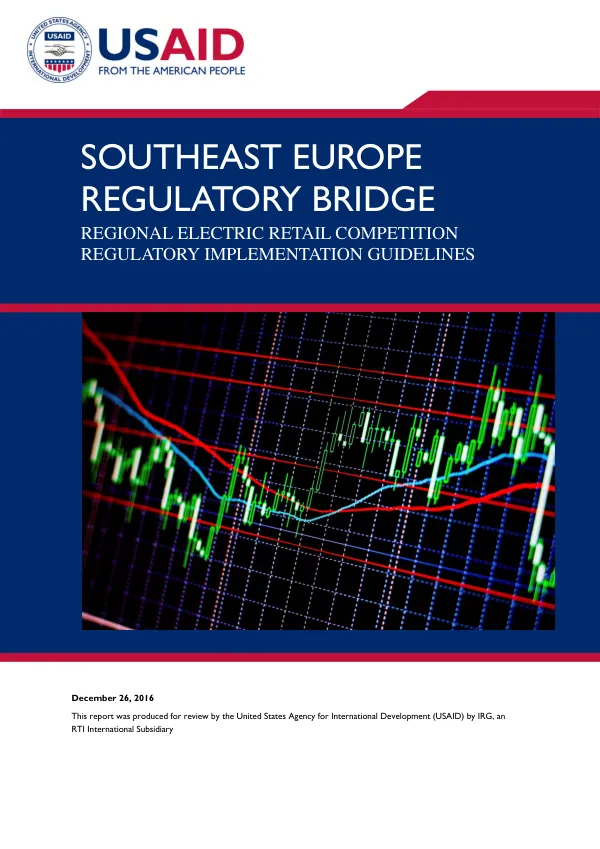
SOUTH EAST EUROPE REGULATORY BRIDGE REGIONAL ELECTRIC RETAIL COMPETITION REGULATORY IMPLEMENTATION GUIDELINES
Sign inRTI INTERNATIONAL
SOUTH EAST EUROPE REGULATORY BRIDGE REGIONAL ELECTRIC RETAIL COMPETITION REGULATORY IMPLEMENTATION GUIDELINES
SOUTH EAST EUROPE REGULATORY BRIDGE REGIONAL ELECTRIC RETAIL COMPETITION REGULATORY IMPLEMENTATION GUIDELINES The regulatory framework for competitive retail electricity markets in South East Europe is a critical component of the region's energy sector development.
2016 · 77 pages
Sign in to readA free account is required to download.
Abstract
The Third Energy Package, implemented in 2011, introduced significant changes to the European Union's energy market rules, requiring member states to establish competitive retail markets. Competitive retail markets involve the separation of the distribution system operator (DSO) from the supply function, allowing multiple suppliers to compete for customers. The DSO is responsible for maintaining the distribution network, while suppliers purchase and sell electricity to customers. The regulatory framework for competitive retail markets is designed to ensure a level playing field for all market participants, promoting fair competition and protecting consumer interests. The DSO plays a crucial role in the competitive retail market, responsible for maintaining the distribution network, managing network access, and ensuring system security. The DSO's functions in a competitive market include network management, metering, and data sharing with retail market participants. Regulations governing the DSO's functions include the Distribution Network Code, Market Operation Rules, Metering Code, and DSO License. The supplier's role in the competitive retail market involves purchasing and selling electricity to customers. Regulations governing supplier functions include market rules, supply license, consumer protection regulations, and cost comparability among suppliers. Suppliers must also comply with service quality standards, regulatory monitoring, and customer switching requirements. Public service obligations, such as the role of the supplier of last resort, are also critical components of the regulatory framework. Suppliers of last resort are responsible for providing electricity to customers who are unable to switch to another supplier. Protection of vulnerable customers, including those with disabilities or low incomes, is also a key aspect of the regulatory framework. Licensing issues are a critical component of facilitating competitive retail markets. General requirements for issuance of a license include compliance with primary and secondary legislation, metering and metering data, system planning, access to the distribution system, pricing issues, prohibition of subsidies, accounting and reporting requirements, preservation and confidentiality of information, and dispute resolution. The regulatory framework for competitive retail markets in South East Europe is designed to promote fair competition, protect consumer interests, and ensure a level playing field for all market participants. Effective implementation of the regulatory framework is critical to the success of the competitive retail market, requiring close cooperation between regulators, market participants, and other stakeholders. The regulatory framework for competitive retail markets in South East Europe is based on the Third Energy Package, which introduced significant changes to the European Union's energy market rules. The package requires member states to establish competitive retail markets, separating the distribution system operator from the supply function and allowing multiple suppliers to compete for customers. Implementation of the regulatory framework for competitive retail markets in South East Europe is a complex process, requiring close cooperation between regulators, market participants, and other stakeholders. Effective implementation is critical to the success of the competitive retail market, ensuring fair competition, protecting consumer interests, and promoting a level playing field for all market participants.