USAID DEC
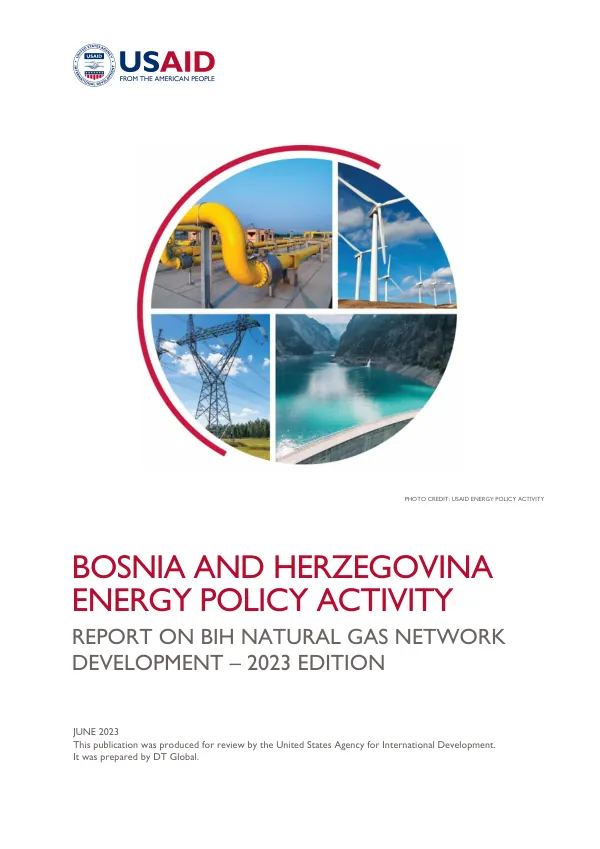
Report on the progress of transmission pipelines that will transport gas from sources other than Russia, along with other pipelines bringing Russian gas to Europe
Sign inDT GLOBAL
Report on the progress of transmission pipelines that will transport gas from sources other than Russia, along with other pipelines bringing Russian gas to Europe
The European gas transmission pipeline network is a critical infrastructure for the continent's energy security.
2023 · 24 pages
Sign in to readA free account is required to download.
Abstract
The top ten natural gas-producing countries in recent years are the United States of America, Russia, Iran, China, Qatar, Canada, Australia, Norway, Saudi Arabia, and Algeria. However, the ranking of leading gas exporting countries is slightly different, with Russia, the United States, Qatar, Norway, and Australia being the top five. In the European Union, the main gas suppliers are Russia, Norway, and Algeria. Between January and November 2022, Russia accounted for less than a quarter of all gas imports, Norway accounted for another quarter, and Algeria accounted for 11.6%. LNG imports from the United States, Qatar, and Nigeria (excluding Russia) had a market share of 25.7%. Since the war in Ukraine, EU countries have significantly reduced gas imports from Russia. This reduction has been compensated for by a diversification of gas suppliers, particularly an increase in LNG imports from the United States. Between January and November 2022, LNG imports from the United States accounted for more than twice the LNG imports in the whole of 2021. The European gas transmission pipeline network is a complex system, with various projects at different stages of development. The report focuses on the progress of transmission pipeline projects that will transport gas from sources other than Russia, as well as other pipelines bringing Russian gas to Europe. The projects are categorized into three stages: Transport Projects in Advanced Stage (TRA-A), Transport Projects with Final Investment Decision Made (TRA-F), and Transport Projects in Less-Advanced Stage (TRA-N). TRA-A projects are those that have reached an advanced stage of development, with a high level of investment and planning. These projects include the Interconnection Bulgaria - Serbia (TRA-F-137), the Ionian Adriatic Pipeline (TRA-A-68), and the Interconnection Croatia - Bosnia and Herzegovina (TRA-A-66). These projects are critical for the development of the European gas transmission pipeline network, as they will enable the transportation of gas from non-Russian sources to European markets. TRA-F projects are those that have reached a final investment decision, indicating a high level of commitment from investors. These projects include the Interconnection Croatia - Serbia (TRA-A-70) and the LNG evacuation pipeline Zlobin – Bosiljevo – Sisak – Kozarac (TRA-N-75). These projects are significant, as they will enable the transportation of gas from non-Russian sources to European markets. TRA-N projects are those that are in the early stages of development, with a lower level of investment and planning. These projects include the Gas pipeline Brod – Zenica (TRA-N-224) and the Interconnection Croatia - Bosnia and Herzegovina (West) (TRA-N-303). These projects are important, as they will enable the development of new gas transmission infrastructure in the region. The report provides an overview of the progress of transmission pipeline projects in the European Union, with a focus on the projects that will transport gas from sources other than Russia. The report highlights the importance of these projects for the development of the European gas transmission pipeline network and the diversification of gas suppliers.