ICRC
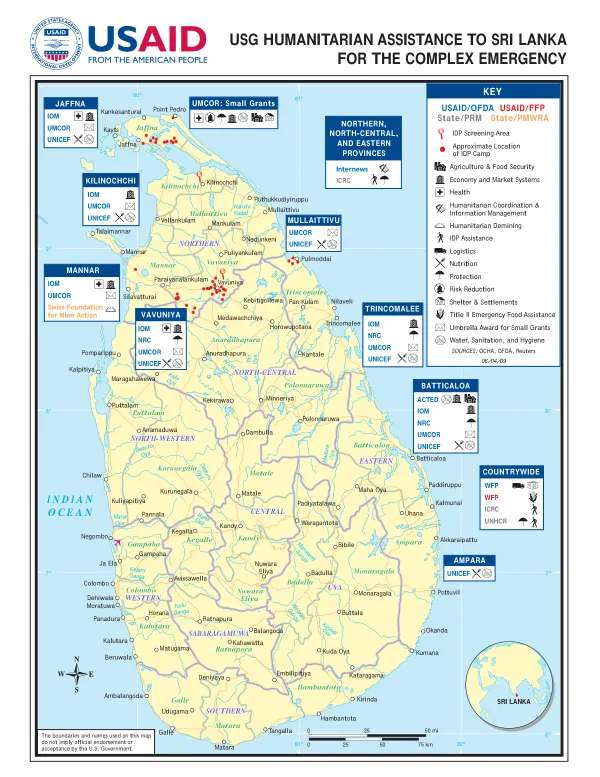
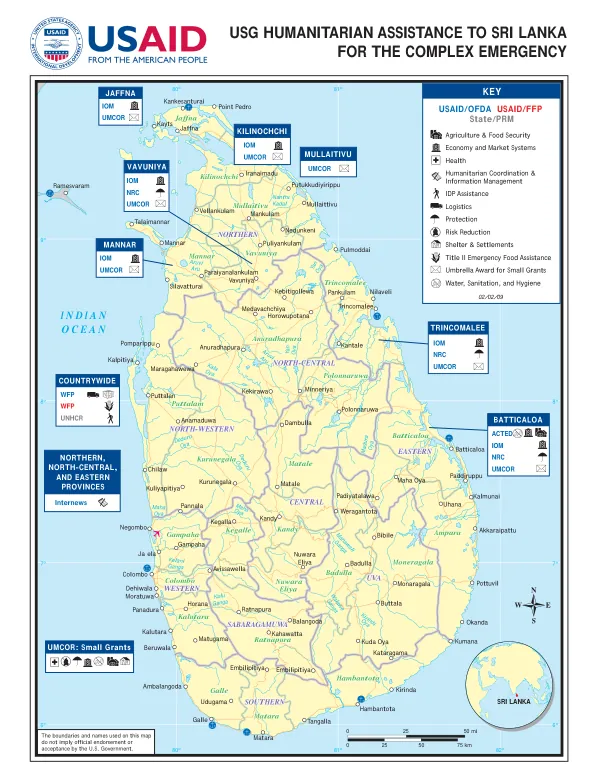
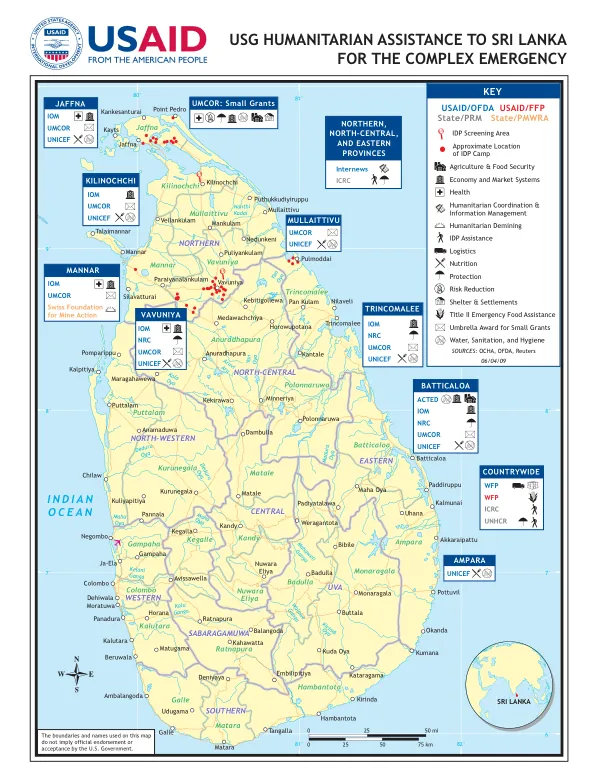
Sri Lanka Program Map 6/4/2009
The complex emergency in Sri Lanka began in 2008, with the conflict zone located in the northern and eastern provinces.
2009 · 2 pages
Sign in to readA free account is required to download.
Abstract
The humanitarian situation worsened in 2009, with an estimated 276,785 internally displaced persons (IDPs) escaping the conflict zone from October 27 to May 27. The majority of IDPs were displaced from the northern and eastern provinces, with the largest numbers coming from the districts of Jaffna, Mannar, Trincomalee, and Vavuniya. The IDPs were displaced to various locations, including camps in the districts of Jaffna, Mannar, Trincomalee, and Vavuniya. As of June 4, 2009, there were approximately 274,468 IDPs in camps, with the majority residing in the northern and eastern provinces. The IDPs were displaced due to the conflict between the government and the Liberation Tigers of Tamil Eelam (LTTE), which resulted in significant human suffering and displacement. The humanitarian response to the crisis involved multiple organizations, including the United Nations, non-governmental organizations (NGOs), and government agencies. The response focused on providing emergency assistance, including food, shelter, and healthcare, to the affected populations. The organizations involved in the response included the United Nations Children's Fund (UNICEF), the United Nations High Commissioner for Refugees (UNHCR), the International Organization for Migration (IOM), and the Norwegian Refugee Council (NRC). The humanitarian situation in Sri Lanka was complex, with multiple challenges facing the response efforts. The conflict had resulted in significant damage to infrastructure, including roads, bridges, and buildings, making it difficult to access affected areas. The response efforts were also hindered by the lack of access to certain areas, particularly in the northern and eastern provinces. The humanitarian response in Sri Lanka was coordinated by the United Nations Office for the Coordination of Humanitarian Affairs (OCHA), which worked closely with the government and other stakeholders to ensure a coordinated response. The response efforts were also supported by the United States Agency for International Development (USAID), which provided funding and technical assistance to support the humanitarian response. The IDPs in Sri Lanka faced significant challenges, including limited access to basic services such as healthcare, education, and sanitation. The IDPs were also at risk of exploitation and abuse, particularly women and children. The humanitarian response efforts focused on providing protection services to the IDPs, including psychosocial support and counseling. The humanitarian situation in Sri Lanka continued to evolve in 2009, with the conflict zone shrinking and the number of IDPs decreasing. However, the humanitarian response efforts remained critical to supporting the affected populations and addressing the ongoing needs of the IDPs.
Related documents