ICRC
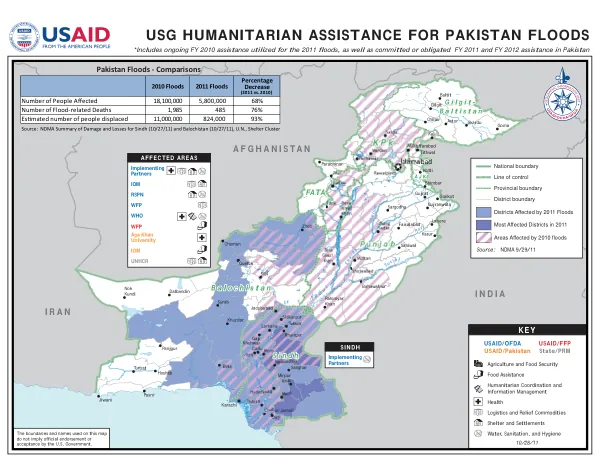
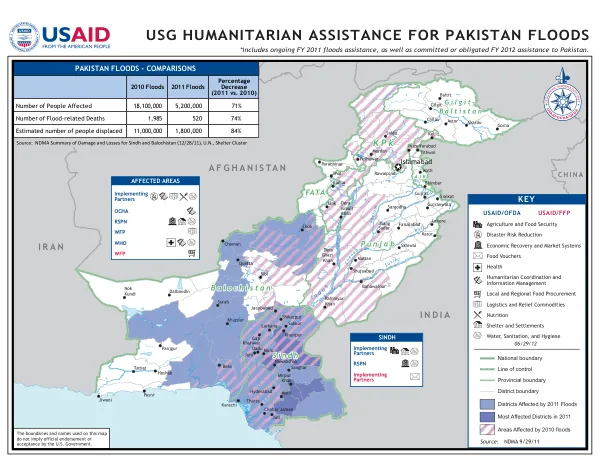
USG HUMANITARIAN ASSISTANCE FOR PAKISTAN FLOODS
Pakistan's 2010 and 2011 floods had a devastating impact on the country, affecting millions of people and causing widespread destruction.
2012 · 2 pages
Sign in to readA free account is required to download.
Abstract
The floods resulted in significant loss of life, displacement of people, and damage to infrastructure and agriculture. According to the National Disaster Management Authority (NDMA), the 2011 floods affected 18.1 million people, with 5.2 million people displaced and 1,985 deaths reported. The floods also had a significant impact on the country's economy, with estimated losses of billions of dollars. The agriculture sector was particularly affected, with crop yields and livestock production severely impacted. The floods also led to a shortage of food, with many people relying on food aid to survive. The humanitarian response to the floods was led by the United Nations, with support from the United States Agency for International Development (USAID) and other international organizations. The floods also highlighted the need for disaster risk reduction and management in Pakistan. The country has a long history of natural disasters, including floods, earthquakes, and landslides. The floods of 2010 and 2011 were particularly devastating, and the government and international community have since taken steps to improve disaster preparedness and response. This includes the establishment of early warning systems, evacuation plans, and emergency response teams. The humanitarian response to the floods also highlighted the importance of coordination and collaboration among different stakeholders. The floods affected multiple provinces, including Sindh, Punjab, and Khyber Pakhtunkhwa, and required a coordinated response from the government, international organizations, and local communities. The response included the provision of food, shelter, and medical aid, as well as support for the affected communities to rebuild their lives. The floods also had a significant impact on the country's infrastructure, with many roads, bridges, and buildings damaged or destroyed. The government and international community have since taken steps to repair and rebuild the affected infrastructure, including the construction of new roads, bridges, and buildings. The floods also highlighted the need for sustainable and resilient infrastructure that can withstand natural disasters. The humanitarian response to the floods also highlighted the importance of supporting the affected communities to rebuild their lives. This includes providing support for livelihoods, education, and healthcare, as well as promoting economic recovery and market systems. The floods also highlighted the need for disaster risk reduction and management, including the establishment of early warning systems, evacuation plans, and emergency response teams. The floods of 2010 and 2011 were a major humanitarian crisis in Pakistan, affecting millions of people and causing widespread destruction. The humanitarian response to the floods highlighted the importance of coordination and collaboration among different stakeholders, as well as the need for disaster risk reduction and management. The floods also highlighted the importance of supporting the affected communities to rebuild their lives, including providing support for livelihoods, education, and healthcare, as well as promoting economic recovery and market systems.
Related documents