AFGHAN MINISTRY OF RURAL REHABILITATION AND DEVELOPMENT
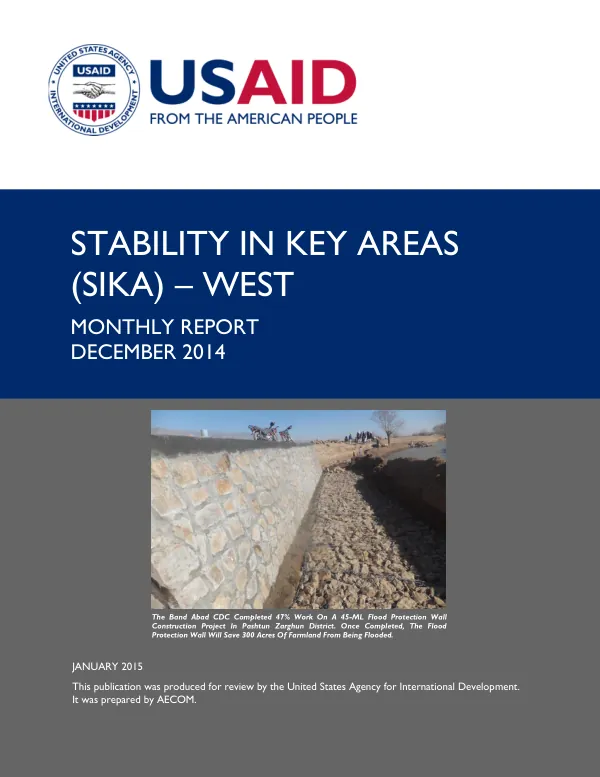
Stability In Key Areas (SIKA) – West / Monthly Report – December 2014
The Stability in Key Areas (SIKA) – West program is a USAID-funded initiative aimed at promoting stability in key areas of Afghanistan.
2014 · 16 pages
Sign in to readA free account is required to download.
Abstract
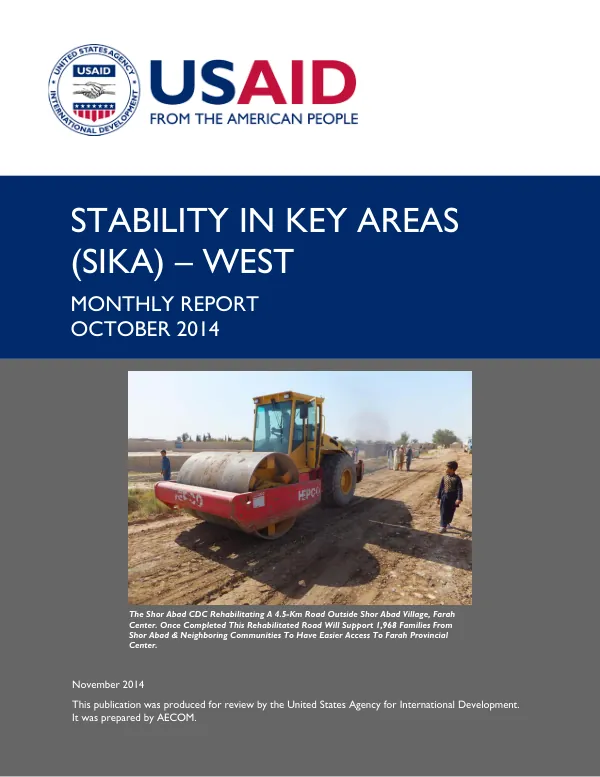
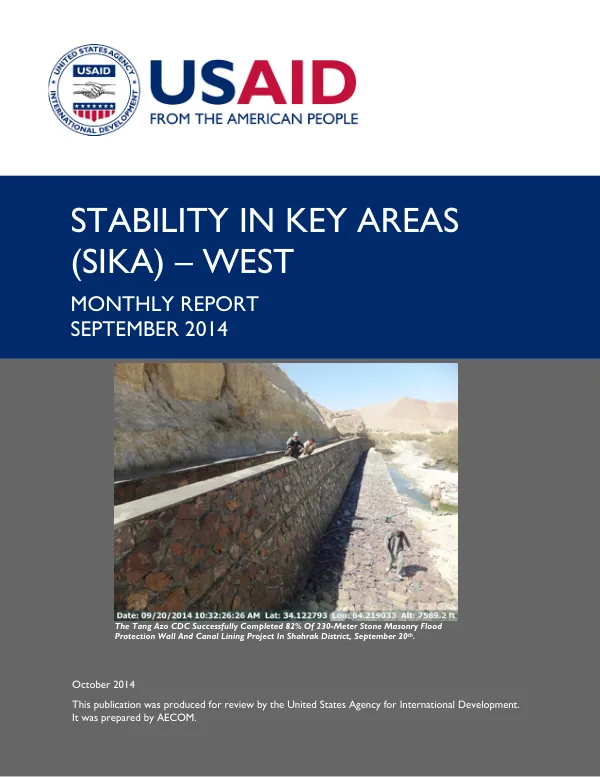
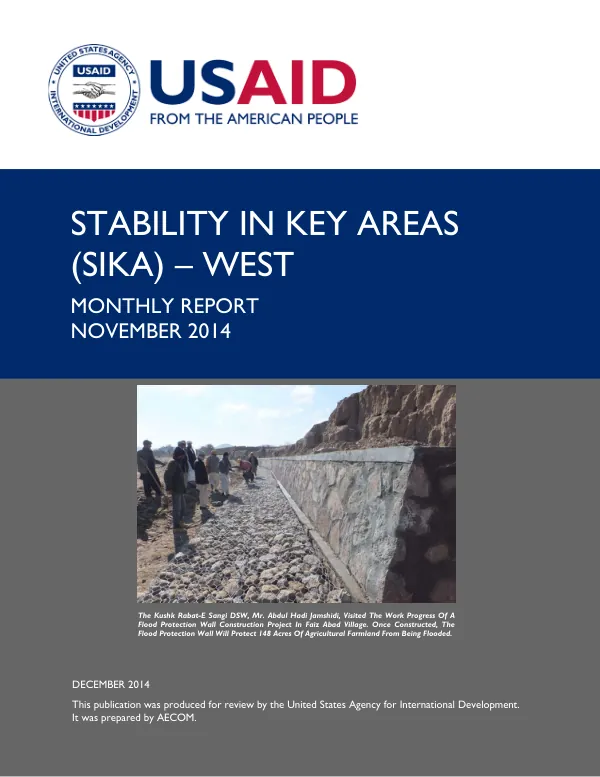
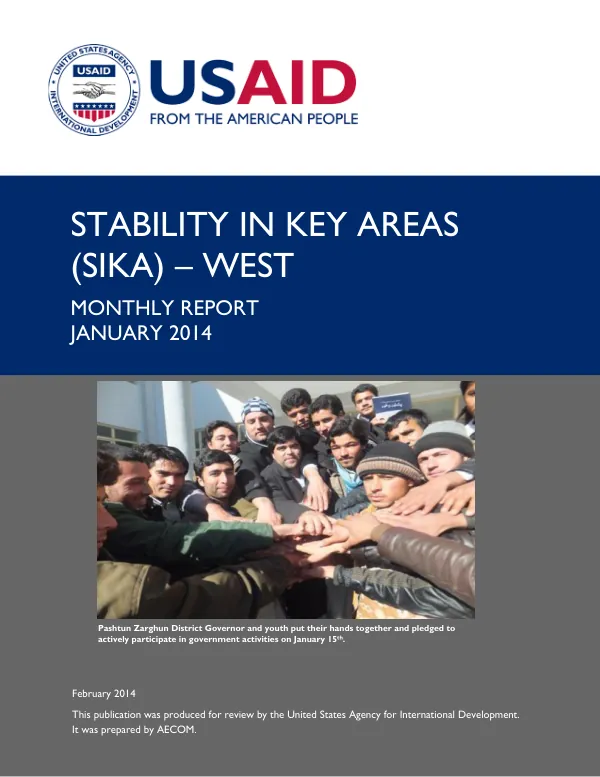
The program, led by the Ministry of Rural Rehabilitation and Development (MRRD) and the Independent Directorate of Local Governance (IDLG), began on January 29, 2012, and is scheduled to end on August 31, 2015. The program's primary objective is to assist provincial authorities and district-level government entities in improving governance programming and increasing the provision of priority basic services, ultimately increasing citizen confidence in and support for the Government of the Islamic Republic of Afghanistan (GIRoA). The SIKA-West program is active in four provinces: Farah, Badghis, Herat, and Ghor, incorporating 16 target districts. During the reporting period, 11 GIRoA-led Komite Sobate Woleswali (KSW) meetings were held, providing a forum for district residents and sub-national government entities to discuss current problems and grievances affecting residents within the districts. Participants in these KSWs included Provincial & District Governors, District Development Assemblies, MRRD District Social Workers, and community elders. As part of the transition, provision of lunches was removed at the KSW meetings to ensure sustainability of the KSWs after the SIKA-West program ends. The respective District Governors successfully organized and led the KSW meetings without provision of lunches. The KSWs' members discussed their community major problems, including insufficient government support to tackle illiteracy, provision of employment opportunities, and improved flood protection measures. Both Provincial and District Government leadership acknowledged the role of government in addressing these grievances and approved 45 new projects, including roads and schools rehabilitation, irrigation canals construction, and provision of school equipment to four schools. An important component of these KSWs was the inclusion of the views and needs of female district residents. In Lash Wa Juwayn, a separate KSW for women was conducted, where women discussed their community problems, including poor educational facilities, lack of potable water, and poor condition of roads. With support from the Gender Mainstreaming Unit, these grievances were shared with the District Government-led KSW, and the district government agreed to address these conditions by provision of school equipment, rehabilitation of road, and water supply network. Community gatherings were held to obtain feedback from communities on the effect of SIKA-West's programming to date and the support provided for Provincial and District Government Service Delivery. Farmers in Shor Abad village highlighted that the rehabilitated road enabled them to transport their agricultural produce to the Farah Provincial markets timely. Women in Rabat Sangi Sharqi village noted that the constructed flood protection wall safeguards the Kushk-e Rabat Sangi District Center Girls' High School from being flooded and now 1,247 students have a safer educational environment. And residents in Abgarmi village in Pashtun Zarghun District noted improvement in their transportation network and highlighted that they can now travel to the District Center and use the available government services. The SIKA-West program has made significant progress in promoting stability in key areas of Afghanistan. The program's focus on governance programming, community development, and gender mainstreaming has led to improved service delivery and increased citizen confidence in the government. The program's efforts to engage with local communities and address their grievances have also contributed to its success.