HARVARD UNIVERSITY. HARVARD INSTITUTE FOR INTERNATIONAL DEVELOPMENT (HIID)
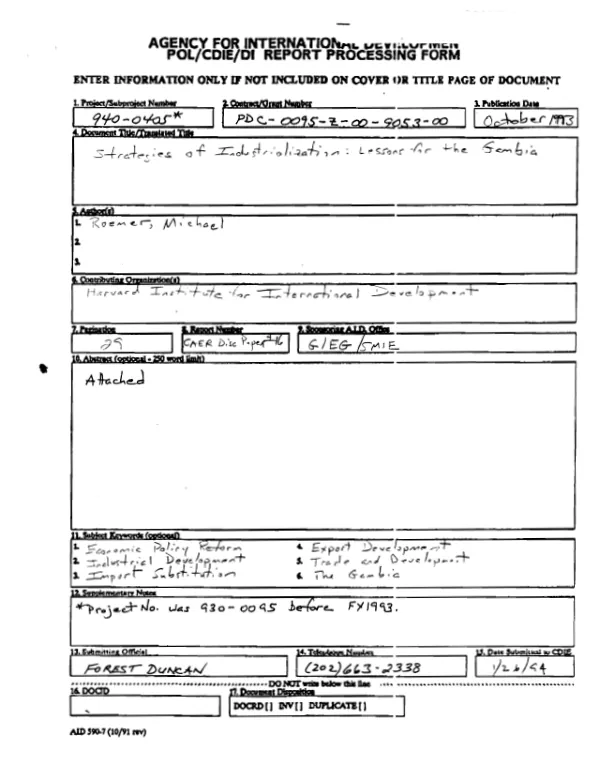
Strategies of industrialization : lessons for The Gambia
With the success of its structural adjustment program, the Government of The Gambia has been inspired to consider additional measures to promote industrialization.
Roemer, Michael · 1993
Sign in to readA free account is required to download.
Abstract
This paper explores the lessons of industrial development from other countries, primarily the successful industrializers in East and Southeast Asia, and applies those lessons to the special circumstances of The Gambia. Three broad industrialization strategies are examined: resource-based industrialization; import substitution; and outward-looking industrialization. Given its small size, The Gambia"s only alternative is to remain a completely open economy, producing for export and re-exporting goods to neighboring countries. Specifically, the paper recommends that The Gambia pursue its goal of becoming an export enterprise by: (1) focusing principally on the products of its natural resource base, especially groundnuts, horticulturals, fish, and tourism; (2) moving cautiously into manufacturing goods that could be substitutes for the existing re-exports of imported goods such as candy, footwear, and clothing; and (3) attracting foreign investors, especially from East Asia, to utilize The Gambia as an export platform for selling textiles, clothing, and other light manufactures to Europe. The Government of the Gambia has already taken important steps on the road to export-led development; however, several additional steps should be taken. These include: (1) maintaining macroeconomic stability, (2) reducing profit taxes, (3) lowering the premium on domestic bank loans, (4) imposing only modest export surcharges if infant industry protection is to be granted, and (5) attracting investors from East and Southeast Asia. (Author abstract)
Related documents