USAID DEC
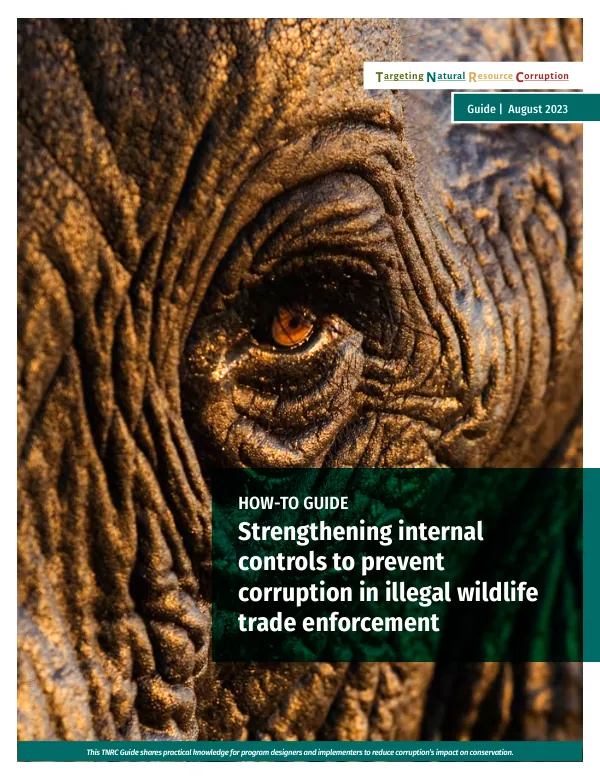
Strengthening internal controls to prevent corruption in illegal wildlife trade enforcement
Sign inUSAID
Strengthening internal controls to prevent corruption in illegal wildlife trade enforcement
Strengthening internal controls to prevent corruption in illegal wildlife trade enforcement is a critical step in protecting wildlife and natural resources.
2023 · 27 pages
Sign in to readA free account is required to download.
Abstract
Practitioners can use this guide to identify strengths and weaknesses in internal controls related to IWT and anti-corruption. Understanding the design and implementation of a country's internal control system can inform decisions about how to provide assistance and support to strengthen wildlife and natural resource agencies. A robust system of internal controls can help foster accountability, reduce corrupt behavior, and enhance law enforcement. It can also identify gaps in performance and opportunities to improve, and enable oversight by government and civil society. The Committee of Sponsoring Organizations of the Treadway Commission (COSO) model offers a model for internal control systems, emphasizing the importance of identifying and mitigating risks. Assessing the control structure and understanding how it supports conservation goals allows practitioners to identify vulnerabilities that can be exploited intentionally or unintentionally. This assessment can also support the use of good practices to protect wildlife and enhance the integrity of government efforts to address IWT. By encouraging systems thinking and awareness of the value of internal controls, this approach can help develop a framework for future efforts and provide input for prioritizing projects and activities. An effective system of internal controls can provide agencies with an outside perspective on their policies, procedures, and practices. It can identify blind spots that increase corruption risks and amplify the voices of those who choose to behave ethically. By focusing practitioner resources on problem areas that can be solved, this approach can enhance effectiveness and provide small wins that point to the potential for larger improvements. The guide provides detailed steps and guidance for program designers and implementers to reduce corruption's impact on conservation. It shares practical knowledge for practitioners to assess the strength of internal control functions in government agencies responsible for enforcing laws against IWT. The methodology presented assumes a basic understanding of internal controls, anti-corruption, and auditing, and is not intended for self-implementation by those without a background in internal controls or risk management. The guide focuses on IWT, but the same approach can be useful in other areas of natural resource management, such as forests and fisheries. It provides a framework for understanding and assessing the strength of internal control functions in government agencies responsible for enforcing laws against IWT. By strengthening internal controls, practitioners can reduce corruption's impact on conservation and enhance the effectiveness of government efforts to protect wildlife and natural resources. The guide is based on experience implementing assessments of internal controls, and provides detailed steps and guidance for program designers and implementers. It is intended for program managers and donors who seek to understand and assess the strength of internal control functions in government agencies responsible for enforcing laws against IWT. The guide can also be helpful for conservation practitioners who want to understand how internal controls systems work to reduce risks posed by corruption. The guide provides a framework for understanding and assessing the strength of internal control functions in government agencies responsible for enforcing laws against IWT. It emphasizes the importance of identifying and mitigating risks, and provides practical knowledge for practitioners to assess the strength of internal control functions. By strengthening internal controls, practitioners can reduce corruption's impact on conservation and enhance the effectiveness of government efforts to protect wildlife and natural resources.