USAID DEC
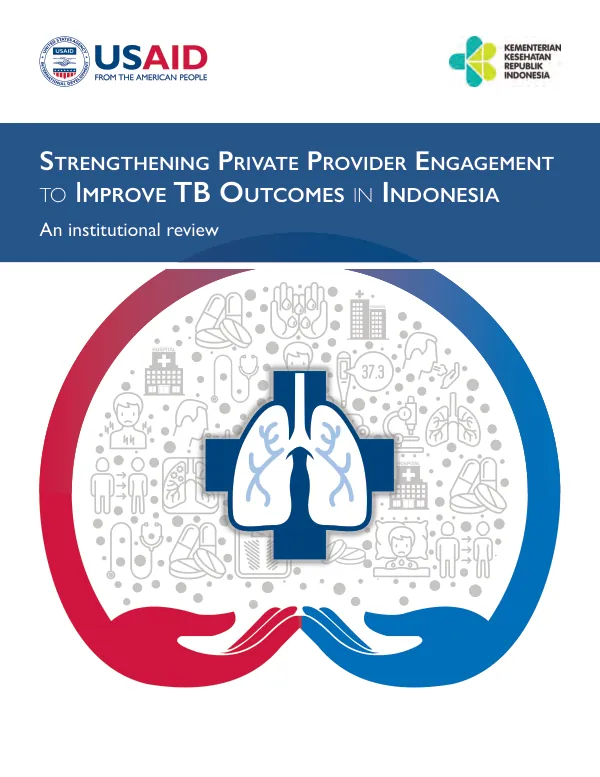
Strengthening Private Provider Engagement to Improve TB Outcomes in Indonesia: An Institutional Review
Sign inUSAID
Strengthening Private Provider Engagement to Improve TB Outcomes in Indonesia: An Institutional Review
Tuberculosis (TB) continues to be a pressing health problem in Indonesia, ranking third highest in global TB burden in 2017.
2018 · 116 pages
Sign in to readA free account is required to download.
Abstract
The Global TB Report 2018 estimated a total of 842,000 new and relapse TB cases per year in Indonesia, while only 53% of estimated cases in 2017 were reported to the National Tuberculosis Program (NTP). Indonesia's National Tuberculosis Prevalence Survey (NPS) in 2014 indicated that 74% of initial care-seeking for TB and nearly half of all TB treatment occurs in the private sector among general practitioners, clinics, and hospitals operating outside the public healthcare system. Despite the large role of the private sector in TB treatment, only 13% of TB cases reported to the NTP in 2017 originated from private providers. The rapid expansion of Indonesia's JKN (Jaminan Kesehatan Nasional) insurance coverage is impacting diagnostic pathways and client and provider behaviors. The NTP's district-based public-private mix (DPPM) is prioritizing TB connections at two levels: between GPs and Puskesmas; and between hospitals and Dinas Kesehatan (the District Health Office, or DHO). In response to this situation, the US Agency for International Development (USAID) commissioned this review to deepen understanding of the institutional relationships and incentives of private sector health facilities and organizations in TB care in Indonesia. The objective of this review was to more fully understand the behaviors and underlying motivations of private sector institutions in order to identify potential ways to improve the quality of TB services in the private sector. The review addressed five study objectives: understanding the business case for providing TB services and drugs in the private sector, understanding attitudes among private sector providers toward participation in JKN and potential interventions that could be implemented through JKN, developing district-level estimates of unreported TB cases treated in the private sector, developing a landscape of key district-level actors, and socializing findings with Dinas Kesehatan. The review found that the private sector plays a significant role in TB treatment in Indonesia, with 74% of initial care-seeking for TB and nearly half of all TB treatment occurring in the private sector. However, only 13% of TB cases reported to the NTP in 2017 originated from private providers. The review also found that the rapid expansion of JKN insurance coverage is impacting diagnostic pathways and client and provider behaviors. The review identified several key findings, including the need to improve the quality of TB services in the private sector, the importance of understanding the business case for providing TB services and drugs in the private sector, and the need to develop district-level estimates of unreported TB cases treated in the private sector. The review also identified several potential solutions, including the use of JKN as a lever to change the behaviors of private sector providers, the development of a landscape of key district-level actors, and the socialization of findings with Dinas Kesehatan. The review used a mixed-methods approach, combining both qualitative and quantitative data collection and analysis methods. The review involved interviews with private sector providers, Dinas Kesehatan officials, and other stakeholders, as well as the analysis of secondary data sources, including TB treatment data and JKN insurance claims data. The review also involved the development of district-level estimates of unreported TB cases treated in the private sector and the creation of a landscape of key district-level actors. The review's findings and recommendations will inform USAID's upcoming Tuberculosis Private Sector (TBPS) activity, which will serve as USAID's main investment in supporting Indonesia in improving TB services in the private sector. The review's findings and recommendations will also inform the development of future initiatives to improve the quality of TB services in the private sector and to increase uptake and improve the quality of TB services, particularly opportunities to use JKN as a lever to change the behaviors of private sector providers.