USAID DEC
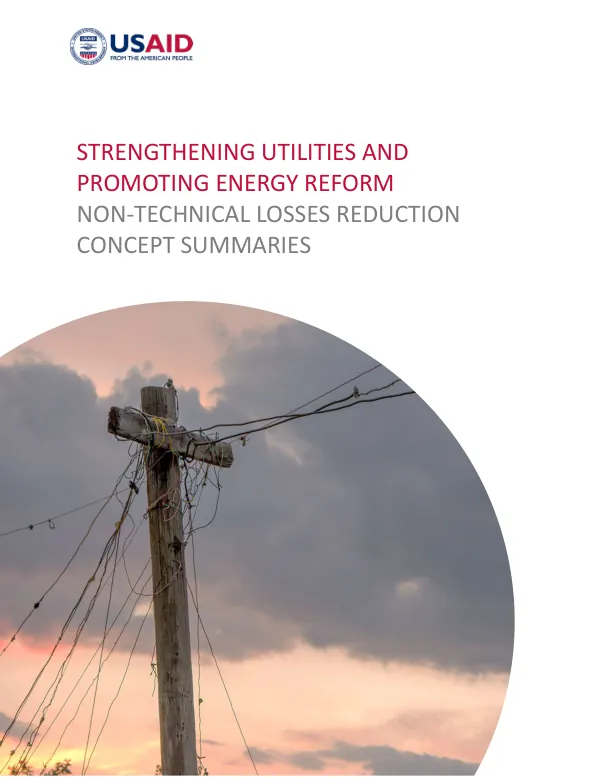
Strengthening Utilities and Promoting Energy Reform: Non-Technical Losses Reduction Concept Summaries
Sign inDELOITTE INC.
Strengthening Utilities and Promoting Energy Reform: Non-Technical Losses Reduction Concept Summaries
In Jamaica, non-technical losses account for approximately 18.03% of losses, with about 70% resulting from illegal consumers.
2021 · 13 pages
Sign in to readA free account is required to download.
Abstract
Theft burdens legal ratepayers with the financial costs of theft, threatening the sustainability of the power sector. JPS faces ratepayers seeking off-grid alternatives to meet their electricity needs due to the decreased reliability and increased cost of power stemming from the high level of losses. Stakeholders in Jamaica's power sector, including MSET, JPS, JSIF, USAID/Deloitte, IDB, and OUR, met to discuss electricity losses and identify systemic drivers, discuss priorities for resolving the issue, and jointly brainstorm different options to help improve the situation for the sector and country. The stakeholders agreed on several potential areas for collaboration, including energy efficiency, minimum appliance standards, and education campaigns. Energy efficiency is a key area of focus, with stakeholders recommending the development of minimum energy efficiency standards for appliances commonly found in high-loss communities. The Bureau of Standards should be engaged to establish efficiency standards and determine a methodology and laboratory for testing. Training and enforcement methods for importers, port agencies, and retail outlets need to be part of any new standard. International donor support could be provided to develop appliance standards by offering policy expertise and advising on international best practices for appliance market regulation, standards creation, and incentive development. Education campaigns are also a crucial aspect of reducing non-technical losses. JPS currently provides energy management education to customers through virtual community meetings and Energy Conservation Flyers, but these programs are short-term in nature and tied to other ongoing programming in the communities. Stakeholders agreed that additional education campaigns should be developed and implemented to deliver consistent messaging informing electricity consumers on methods to reduce their consumption. Special emphasis should be placed on communicating the effect of non-technical losses on all consumer's electricity rates and the impact on Jamaican society.