USAID DEC
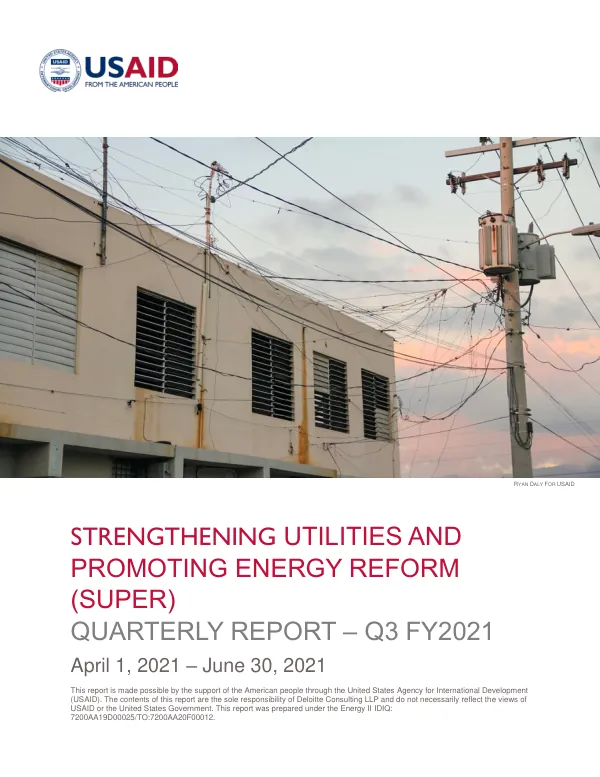
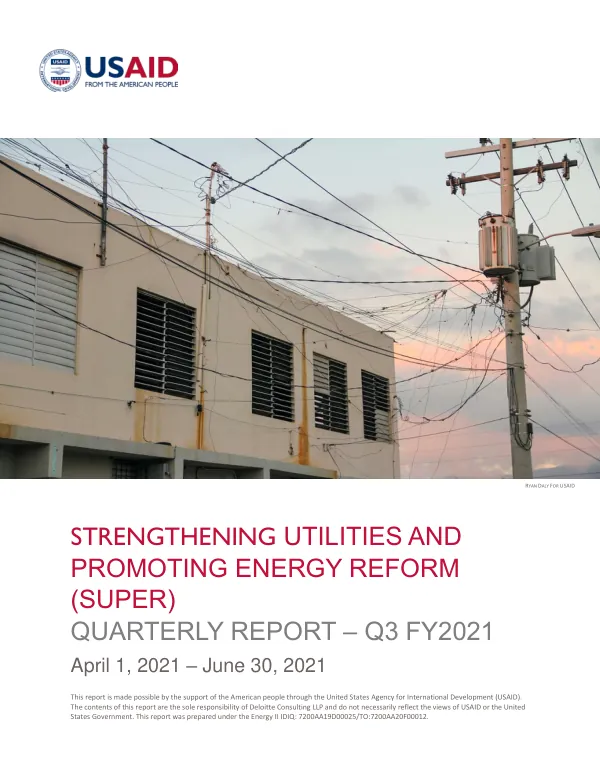
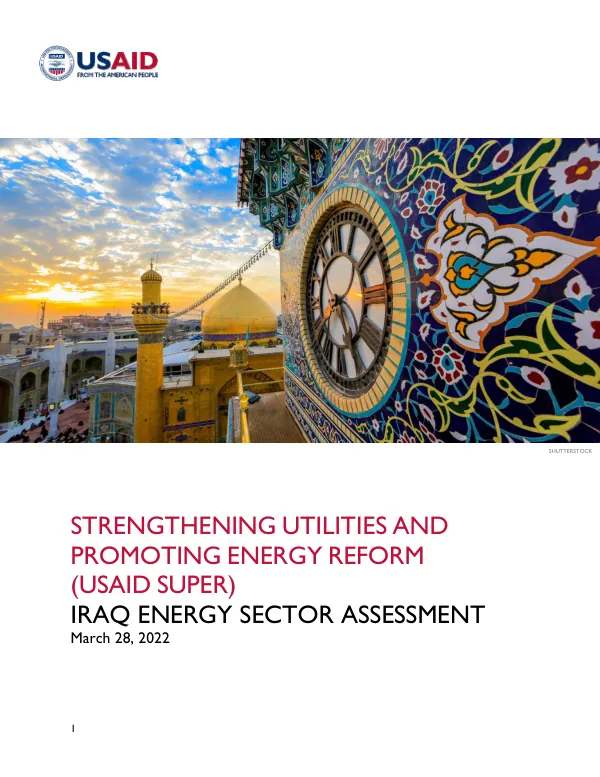
Strengthening Utilities and Promoting Energy Reform (USAID SUPER) Iraq Energy Sector Assessment
Sign inUSAID
Strengthening Utilities and Promoting Energy Reform (USAID SUPER) Iraq Energy Sector Assessment
The USAID SUPER program in Iraq aims to strengthen the country's utilities and promote energy reform.
2022 · 68 pages
Sign in to readA free account is required to download.
Abstract
The program's primary objective is to improve the energy sector's efficiency, reliability, and sustainability. Initial assessments conducted in 2022 identified key challenges, including high technical and commercial losses, institutional barriers, and a lack of institutional trust and public awareness. Implementation of the program focused on four key areas: supporting government reform, capacity development, pilot programs and partnerships, and raising awareness. The program's methodology involved conducting a comprehensive assessment of the energy sector, identifying key challenges, and developing recommendations for USAID program activities. The assessment revealed that the energy sector in Iraq faces significant challenges, including high technical and commercial losses, institutional barriers, and a lack of institutional trust and public awareness. One of the primary challenges facing the energy sector in Iraq is the high level of technical and commercial losses. Technical losses refer to the energy lost during transmission and distribution, while commercial losses refer to the energy not paid for by consumers. The assessment found that technical losses in Iraq averaged 15.6% in 2021, while commercial losses averaged 23.4%. The high level of losses is attributed to outdated infrastructure, inadequate maintenance, and a lack of transparency in the sector. The program's recommendations for USAID program activities focus on supporting government reform, capacity development, pilot programs and partnerships, and raising awareness. In the area of supporting government reform, the program recommends that USAID work with the government to develop and implement policies and regulations that promote energy efficiency and reduce losses. In the area of capacity development, the program recommends that USAID provide training and technical assistance to utilities and other stakeholders to improve their capacity to manage and operate the energy sector. The program also recommends the implementation of pilot programs and partnerships to test new approaches and technologies in the energy sector. For example, the program recommends the implementation of a pilot program to test the use of smart meters in reducing energy losses. In addition, the program recommends that USAID work with private sector companies to develop and implement energy-efficient technologies and practices. Raising awareness about the importance of energy efficiency and the need to reduce losses is also a key component of the program. The program recommends that USAID work with civil society organizations and the media to raise awareness about the importance of energy efficiency and the need to reduce losses. The program also recommends that USAID provide training and technical assistance to utilities and other stakeholders to improve their capacity to communicate with consumers and other stakeholders about energy efficiency and loss reduction. Overall, the USAID SUPER program in Iraq aims to strengthen the country's utilities and promote energy reform by improving the energy sector's efficiency, reliability, and sustainability. The program's recommendations focus on supporting government reform, capacity development, pilot programs and partnerships, and raising awareness. By implementing these recommendations, the program aims to reduce energy losses, improve energy efficiency, and promote sustainable development in Iraq.