THE WORLD FOOD PROGRAMME
The Syrian Humanitarian Crisis Four Years Later, No End in Sight
The Syrian Humanitarian Crisis has been ongoing for four years, with the conflict having a profound impact on the country's demographics and infrastructure.
2015 · 6 pages
Sign in to readA free account is required to download.
Abstract
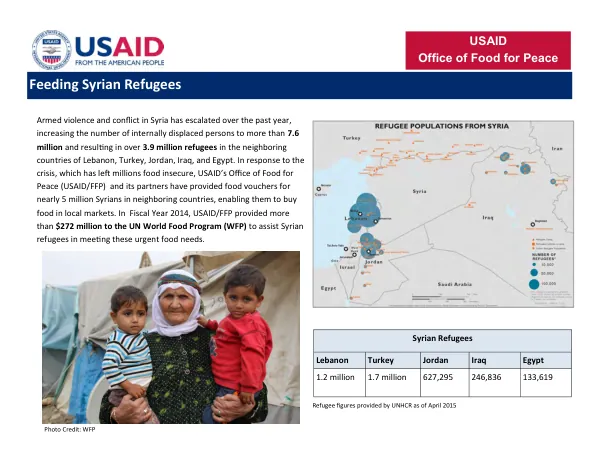
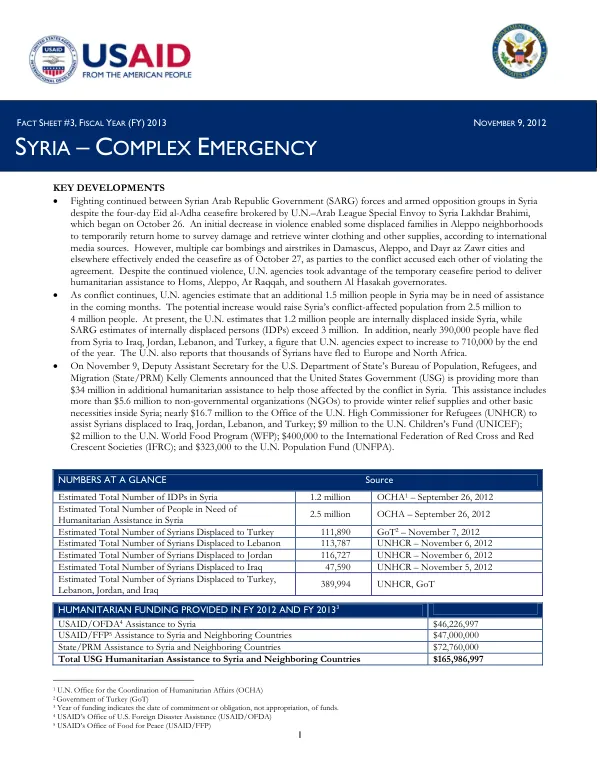
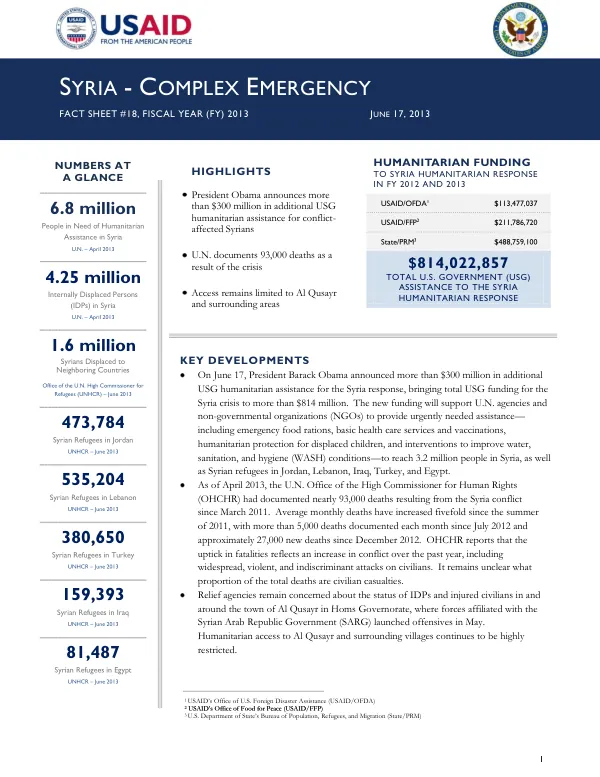
The crisis has resulted in over 12.2 million Syrians in need of humanitarian assistance, with more than half of the country's pre-war population displaced. This represents the largest and most complex humanitarian emergency of our time. The conflict has led to a significant increase in the number of refugees, with Syrians now accounting for one-quarter of Lebanon's population and at least 10 percent of Jordan's. The influx of refugees has put a strain on the host countries' resources, including water systems, hospitals, and schools. The crisis has also led to a radical reshaping of the region's ethnic and religious balance, with scarce resources exacerbating the situation. The United States is the single largest donor of humanitarian assistance to people affected by the Syrian crisis, providing over $3 billion to date. The U.S. government has deployed four Disaster Assistance Response Teams (DARTs) and activated three Response Management Teams (RMTs) concurrently to coordinate the response. Partners are working through all possible channels to deliver food, medicine, relief supplies, and sanitation services in regime, opposition, and ISIL-controlled areas. The U.S. response has focused on providing emergency care to those caught in the crossfire, with nearly two million patients treated for trauma wounds, received vaccines, and undergone surgeries at over 300 U.S.-supported hospitals, clinics, and mobile medical units across Syria. The U.S. has also trained 3,100 Syrian volunteers to provide emergency care and supported an aggressive response to a polio outbreak in Syria, which helped bring polio cases down to zero in January. In addition to providing emergency care, the U.S. has improved water and sanitation for 1.3 million Syrians in all 14 governorates. Partners have organized hygiene awareness sessions and trucked water to ensure access to clean water, and the U.S. is carrying out emergency repairs of water networks as well as repairs and upgrades to water sources and bathrooms in communal shelters. The harsh winter weather has exacerbated the living conditions of Syrians, but the U.S. is working tirelessly to support those enduring another harsh winter away from home. Preparations for winter began last spring, and partners have reached almost half a million people so far this winter through distributions of winter kits, blankets, and clothing. The U.S. is also providing plastic sheeting and other supplies to weather-proof makeshift homes and tents. The U.S. is also taking measures to prevent disease outbreaks that can arise from cold, wet weather. With U.S. support, health facilities have received 300,000 flu vaccines and antibiotics to treat common winter infections. The UN World Health Organization and other partners have provided water heaters to hospitals in eight governorates, serving more than two million people, and distributed air heaters to 800,000 people in nine governorates in Syria. The U.S. is the largest food donor in the Syrian crisis, providing over $1.1 billion to date. With U.S. help, more than 4.8 million people in Syria and 1.7 million refugees have food to eat. The U.S. takes a locally appropriate and cost-effective approach to meet the diverse needs of Syrians in and out of Syria, supporting family rations and flour-to-bakery programs inside Syria and food voucher debit cards in neighboring countries. Protecting women and children is a priority for the U.S. government in all humanitarian settings, and nowhere is this more important than in the Syrian crisis. The U.S. has provided $26 million in humanitarian protection activities to ensure maximum safety and dignity for women, including distributing hygiene and infant supplies, installing separate toilets and showers for women, and building latrines near tents. The U.S. is also supporting mobile clinics to increase access to reproductive health services and clinical care for survivors of Gender-Based Violence (GBV).