USAID DEC
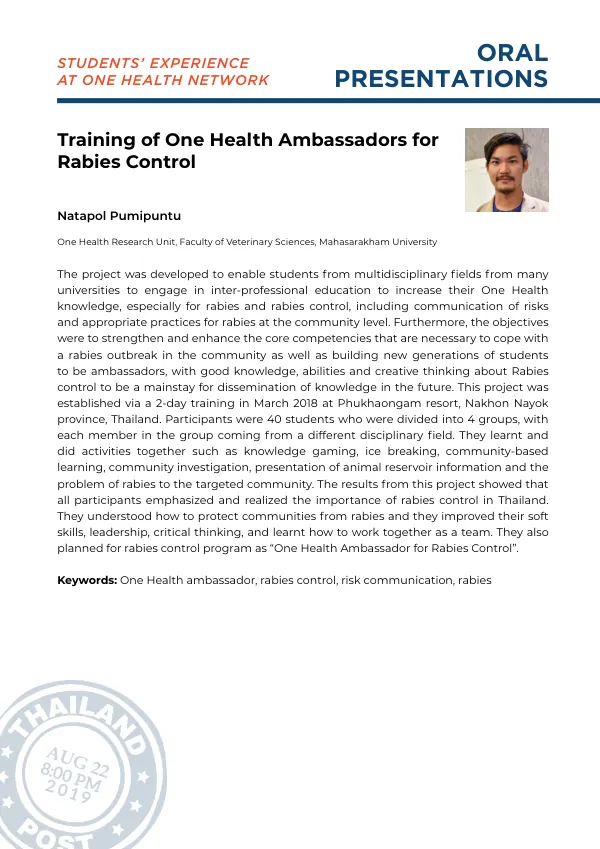
STUDENTS’ EXPERIENCE AT ONE HEALTH NETWORK Training of One Health Ambassadors for Rabies Control
Sign inUSAID DEC
STUDENTS’ EXPERIENCE AT ONE HEALTH NETWORK Training of One Health Ambassadors for Rabies Control
The One Health initiative was launched to enhance students' knowledge of rabies and rabies control, particularly in communication of risks and community-level practices.
2018 · 1 pages
Sign in to readA free account is required to download.
Abstract
The project aimed to strengthen core competencies necessary for rabies control in communities and build a new generation of students as ambassadors for rabies control. These ambassadors would possess knowledge, abilities, and creative thinking to disseminate information on rabies control in the future. The project was conducted through a 2-day training session in March 2018 at Phukhaongam, Nakhon Nayok province, Thailand. Forty students from various disciplines participated, divided into four groups. The training included activities such as knowledge gaming, ice breaking, community-based learning, community outreach, and presentation of animal reservoirs and rabies problems to the targeted community. The students learned and worked together, developing soft skills, leadership, critical thinking, and problem-solving abilities. The results of the project showed that all participants recognized the importance of rabies control in Thailand. They understood how to protect communities from rabies and improved their skills in risk communication, leadership, and community engagement. The students also developed a plan for a rabies control program, which they referred to as the "One Health Ambassador for Rabies Control" initiative. This initiative aimed to promote rabies control and prevention in communities through education, awareness, and community-based interventions. The project demonstrated the effectiveness of inter-professional education in enhancing students' knowledge and skills in rabies control. The students' participation in the project showed that they can work together, develop leadership skills, and apply their knowledge to real-world problems. The project's outcomes suggest that the students are well-equipped to become ambassadors for rabies control, promoting rabies awareness and prevention in their communities. The project's success can be attributed to the collaborative approach, which brought together students from various disciplines to work on a common goal. The training activities and community-based learning approach helped the students to develop essential skills, knowledge, and knowledge-sharing abilities. The project's outcomes have the potential to contribute to the development of a rabies control program in Thailand, promoting community-based interventions and education on rabies prevention.