ENCOMPASS, LLC
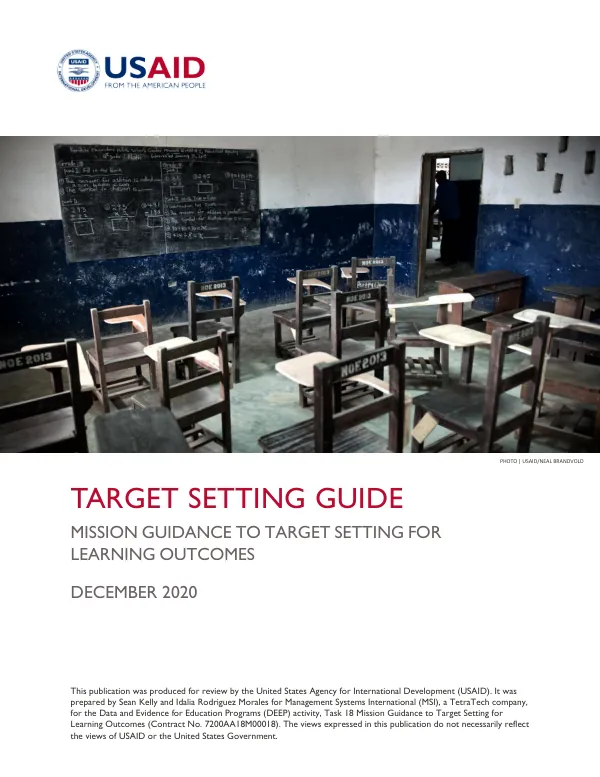
Target Setting Guide: Mission Guidance to Target Setting for Learning Outcomes
Mission Guidance to Target Setting for Learning Outcomes is a critical component of the Program Cycle, as it enables USAID Operating Units (OUs) to appraise progress relative to expectations established during planning.
2020 · 41 pages
Sign in to readA free account is required to download.
Abstract
Targets serve as an important accountability mechanism for OUs and are an essential tool for managing strategic, project, and activity objectives. According to ADS 201, targets must be set at the activity level, while they are optional at the strategic and project levels. The framework for setting targets outlined in this guidance note is based on three key principles. First, collaboration with key stakeholders on relevant documentation and information prior to the target-setting process is essential. This involves reviewing the relevant theory of change and statement of work to identify indicators for measurement. Second, the target-setting process must be documented, including any decisions, analyses, and assumptions made during the process. Finally, the results of each stage of the target-setting process must be socialized with stakeholders to ensure transparency and accountability. The first stage of the target-setting process involves setting the indicators. This stage requires reviewing the relevant theory of change and statement of work to identify indicators for measurement. After indicators are identified, staff should think through the ramifications of each indicator, including the potential data sources and likely baseline scenarios. This stage also involves assessing potential stakeholders and gathering available data to determine the baseline. The third stage of the target-setting process is setting the target. This stage involves planning a process for setting the target, analyzing the data, and consulting and agreeing on the target with stakeholders. Staff should also document the target-setting process, including any decisions, analyses, and assumptions made during the process. The final stage of the target-setting process is reviewing and revising. This stage involves monitoring progress, diagnosing targets, and resolving any issues that arise during the target-setting process. Staff should also review and revise the target-setting process as necessary to ensure that it remains effective and efficient. The Data and Evidence for Education Programs (DEEP) activity, Task 18, has provided critical support for the development of this guidance note. The authors would like to thank Christopher Ying and Deborah Greebon at USAID for their support throughout the research and work on the Target Setting Guide. The authors would also like to acknowledge the contributions of Elena Walls, Anjuli Shivshanker, Benjamin Sylla, Leah Maxson, and the other members of the USAID Aggregate Reporting and Target Setting Working Group.