KNCV TUBERCULOSIS FOUNDATION
TB CARE Annual Work Plan and Budget
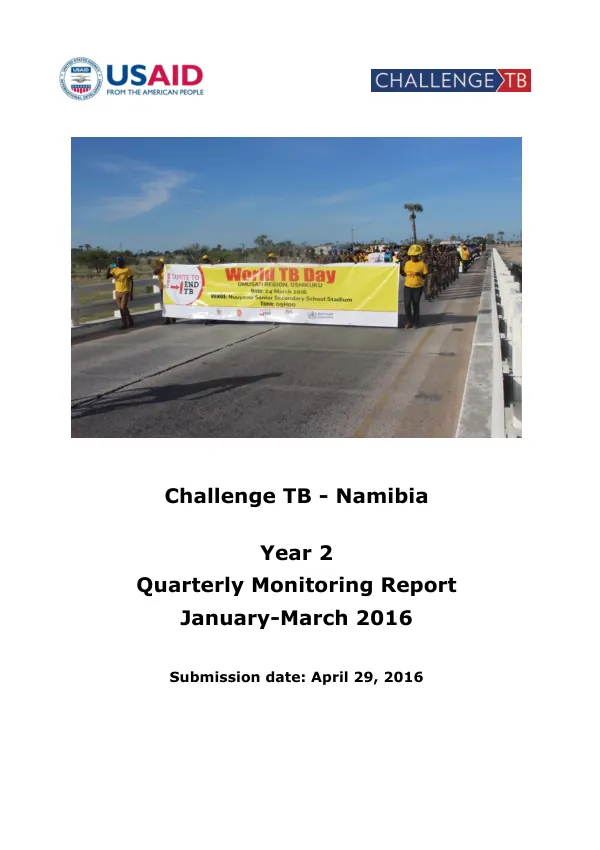
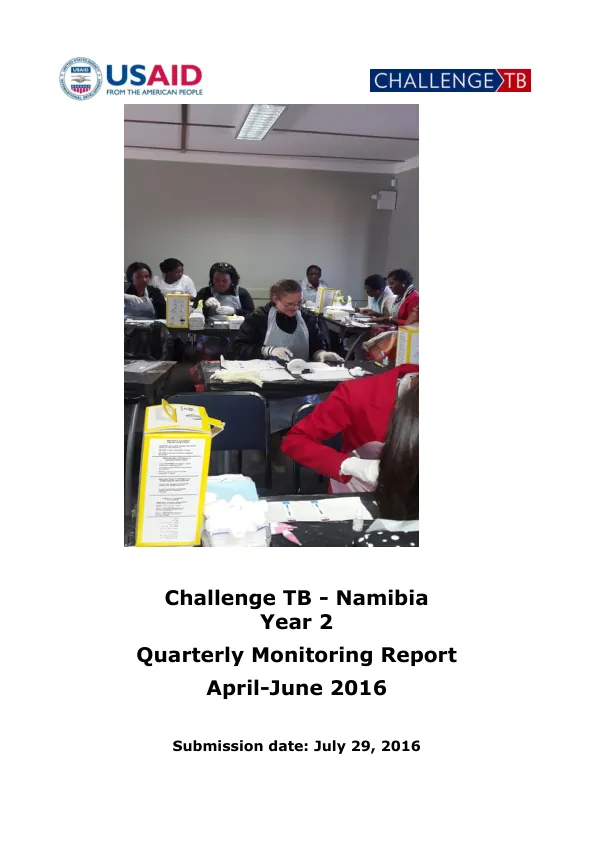
The Challenge TB program in Namibia, led by the KNCV Tuberculosis Foundation (KNCV), has made significant progress in Year 2 of the program.
2016 · 37 pages
Sign in to readA free account is required to download.
Abstract
The program's main objective is to improve TB and HIV services in Namibia, with a focus on decentralization of ART for stable patients to TB DOT containers. One of the key achievements of the program is the decentralization of ART for stable patients to TB DOT containers. In Engela district, a total of 2,721 stable PLHIV who originally received their ART at Engela District Hospital are now receiving it from TB DOT points in the district. This approach will be rolled out in three more CTB districts in Q4 and APA3. The program has also conducted training for 139 Community Health Workers and Field Promoters to strengthen TB/HIV collaborative activities in 5 CTB districts. This training empowered them to provide integrated TB/HIV care services to dually infected patients. The program is promoting this model in the sites it supports. Recruitment of key staff, including TB/HIV coordinators and an M&E assistant, was concluded during the quarter, easing data collection from the regions significantly. However, the program faced challenges in recruiting an M&E officer, which was partially addressed by adjusting the organogram based on available funding for Year 3. The program has also made progress in training HCWs, including CHWs, on TB and HIV guidelines. A total of 3 trainings of CHWs were conducted, and job aids for diagnosing TB and treating TB were printed and will be disseminated in Q4. Assessments for establishing DOT points were conducted, and procurement commenced, with delivery and installation to be done in Q4. In addition, the program has supported community education sessions in CTB districts, with a total of 150 meetings conducted. However, some activities were cancelled due to competing priorities, including a sensitization and consultation meeting with players in the fishing industry, a training for HCWs and peer educators in correctional settings, and an assessment of TB and HIV in the fishing industry. The program has also made progress in integrating HIV care into TB DOT points, with initial discussions with MoHSS and other partners beginning on this activity, which will be implemented based on results of facility assessments and further consultations. Overall, the Challenge TB program in Namibia has made significant progress in Year 2, with a focus on decentralization of ART for stable patients, training of HCWs, and community education. However, some challenges remain, including the need to address competing priorities and adjust the program's organogram based on available funding. The program's success in decentralizing ART for stable patients has resulted in improved access to care for PLHIV, with a total of 2,721 patients now receiving their ART from TB DOT points in Engela district. This approach has the potential to improve health outcomes for PLHIV in Namibia and reduce the burden on the healthcare system. The program's training of HCWs, including CHWs, on TB and HIV guidelines has also been successful, with a total of 3 trainings conducted. This training has empowered HCWs to provide integrated TB/HIV care services to dually infected patients, which is critical for improving health outcomes in Namibia. The program's support for community education sessions in CTB districts has also been successful, with a total of 150 meetings conducted. This has helped to raise awareness about TB and HIV among community members and promote behavior change. However, the program faces challenges in recruiting an M&E officer, which has impacted its ability to collect and analyze data. The program has adjusted its organogram based on available funding for Year 3, but this may impact its ability to implement some activities.