ELIZABETH GLASER PEDIATRIC AIDS FOUNDATION
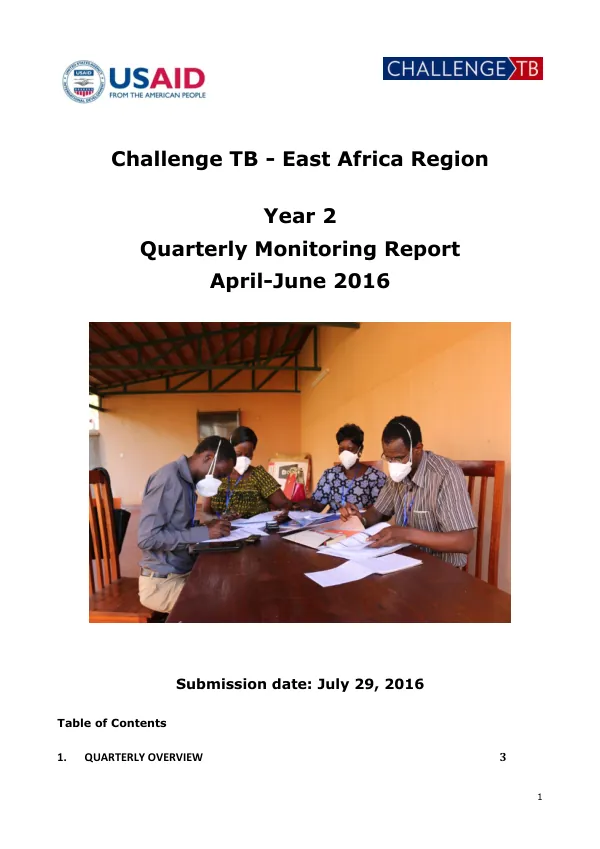
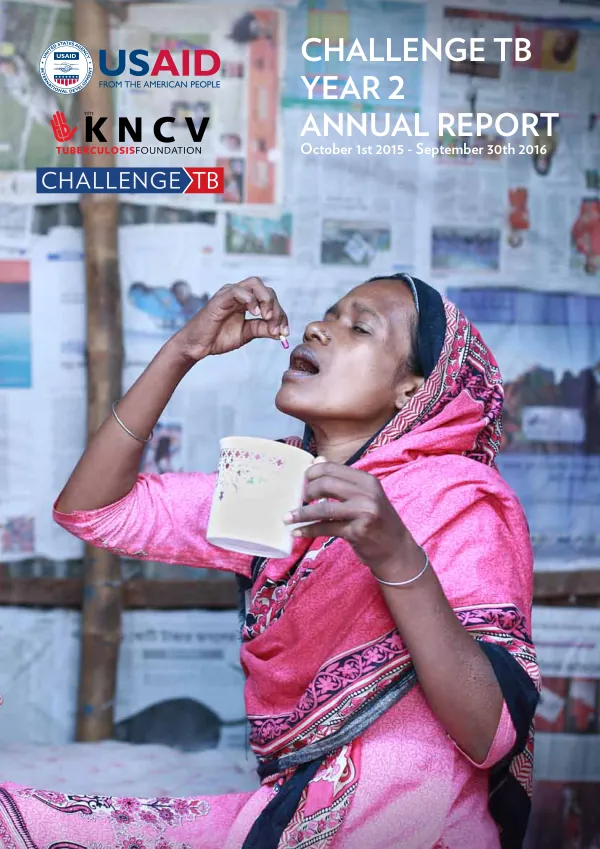
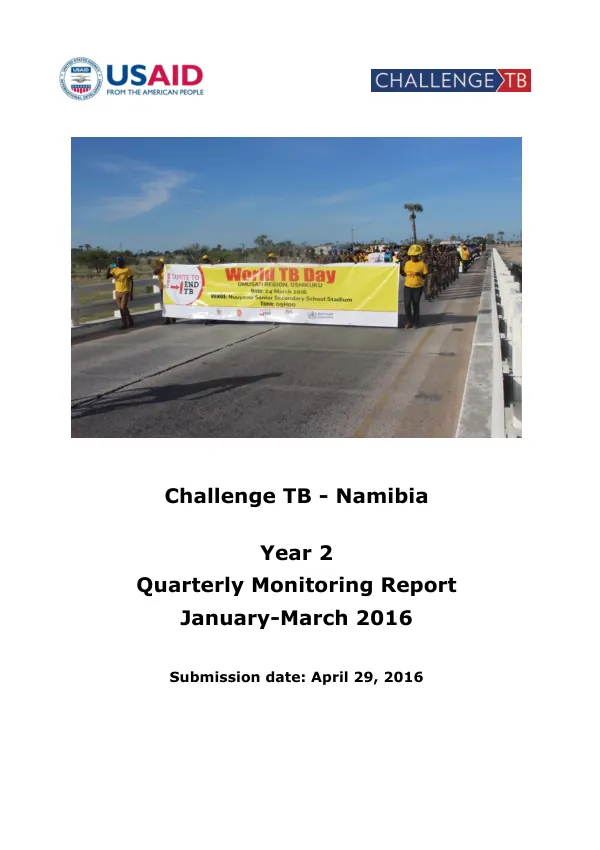
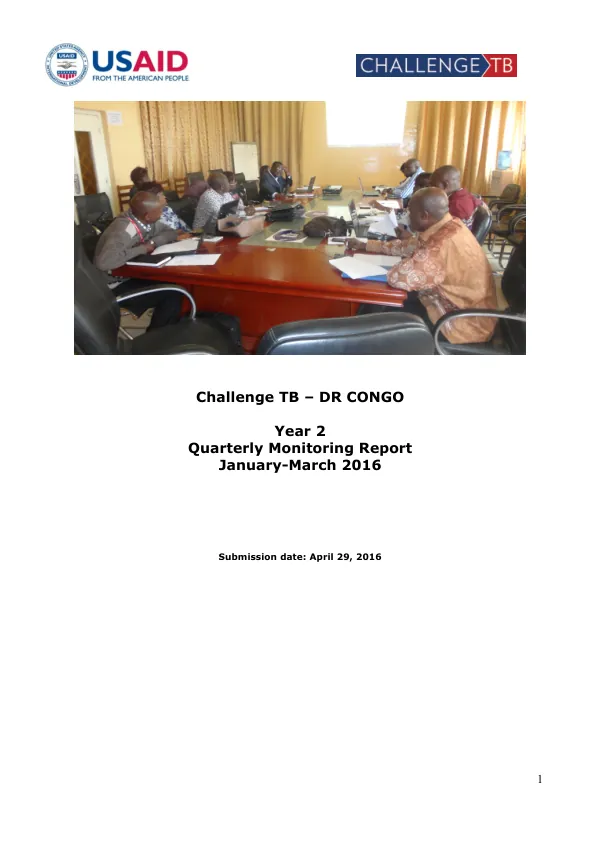
Quarterly Monitoring Report: Challenge TB – DR CONGO Year 2 January-March 2016
The Democratic Republic of Congo (DRC) is experiencing a significant challenge in managing tuberculosis (TB) and HIV co-infection.
2016 · 24 pages
Sign in to readA free account is required to download.
Abstract
The Challenge TB (CTB) project, led by The Union, aims to strengthen coordination between HIV/AIDS and TB programs and implement collaborative TB/HIV activities. The project has organized four coordination meetings with USAID PEPFAR partners and other stakeholders to address the interface between TB and HIV epidemics. The meetings have focused on several key areas, including the development of a mapping exercise and assessment of HIV care in 48 sites in Lualaba, 60 sites in Kinshasa, and 106 sites in Haut Katanga. The exercise aims to highlight differences in support currently provided by implementing partners (Ips) and to optimize the use of X-ray machines and cartridges. Additionally, the Ips are on track with the implementation of isoniazid preventive therapy (IPT) and cotrimoxazole prophylaxis (CTX) in their respective sites. However, several challenges have been identified, including a shortage of trained manpower and high workload on existing staff, difficulty in integrating TB and HIV services at service delivery points, and weak or non-existent infection control measures. To address these challenges, the CTB project will provide training and additional staff, strengthen the capacity of providers to manage TB/HIV cases, and ensure the formation of staff per site for infection control measures. The project has also organized three coordination meetings in the three focus provinces, bringing together stakeholders from the Division Provincial de Santé (DPS), Provincial Health Inspectors (IPS), Coordination Provincial de Lutte contre la Tuberculose (CPLT), and Bureau de Coordination Provincial de lutte contre le Sida (BPC Sida). The meetings have addressed joint strategic planning, implementation of joint TB/HIV activities, and a summary of the situation analysis. The project has identified several challenges, including the lack of a coordinating body for TB/HIV activities in the province, unknown prevalence of HIV among TB patients and TB prevalence among PLHIV, and considerable discrepancies in TB/HIV co-infection data between CPLT and DPS. The project will accompany the intermediary level to address these challenges and ensure the integration of TB/HIV activities. The CTB project has made significant progress in strengthening coordination between HIV/AIDS and TB programs and implementing collaborative TB/HIV activities. However, several challenges remain, including a shortage of trained manpower, difficulty in integrating TB and HIV services, and weak infection control measures. The project will continue to provide training and support to health workers and stakeholders to address these challenges and ensure the successful implementation of TB/HIV activities. The project has also identified the need for stakeholders' engagement to facilitate integration at the service delivery level and provide incentives to health workers. Additionally, intensive and continuous training and supportive supervision of health workers are necessary to ensure the effective management of TB/HIV cases. Effective and constant supply of HIV test kits, drugs, and other important commodities is also crucial to maintain. The CTB project will support the capacity building of health workers at different levels of health services and for TB/HIV patient management. The project will also ensure the formation of staff per site for infection control measures and provide training and additional staff to address the shortage of trained manpower.
Related documents