USAID DEC
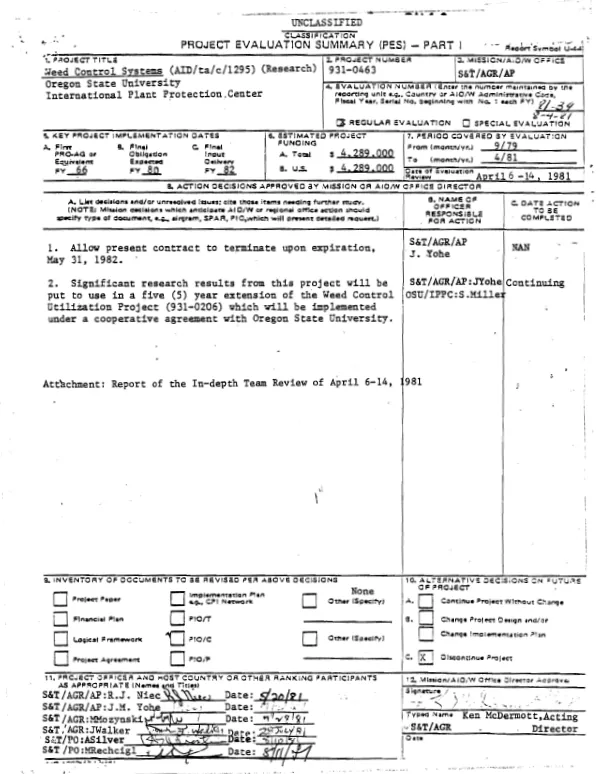
Team review of weed control systems (931-0463) and weed control utilization (931-0206) projects of Oregon State University International Plant Protection Center; Corvallis, Oregon
Sign inUSAID. BUR. FOR DEVELOPMENT SUPPORT. OFC. OF AGRICULTURE
Team review of weed control systems (931-0463) and weed control utilization (931-0206) projects of Oregon State University International Plant Protection Center; Corvallis, Oregon
Evaluates two projects (9310206 and 9310463) to develop and utilize weed control systems.
1981
Sign in to readA free account is required to download.
Abstract
Special evaluation covers the period 9/79-4/81 and is based on site visits and discussions with project personnel in the Philippines. The International Plant Protection Center (IPPC) is becoming recognized as a worldwide disseminator of weed control information and technical assistance (TA). IPPC staff continue to develop small farm application equipment and to train researchers and extensionists. In addition, project staff have presented papers at scientific meetings and maintained contact with other weed science organizations. In Costa Rica, IPPC staff developed, tested, and are now introducing to small farmers a new weed control technology -- chemical mulch. While progress in the Philippines has been hampered by staff turnovers and a lack of support from Regional Crop Protection Centers (RCPC), weed control research for upland rice and maize has progressed. However, it is too soon to study farmers" adoption of the new practices (e.g., economic analysis of improved upland rice weed control techniques failed to show a consistent advantage over farmers" standard methods). Progress has also been made in training and involving local counterparts at RCPC"s. Requests for information from the aquatic program"s information retrieval center at the University of Florida are increasing, but technical consultation has been hampered by personnel turnover. It is recommended that: (1) the IPPC program not become part of a Title XII project or of the Integrated Crop Protection contract but be separately funded for 5 years to maintain and strengthen present activities; (2) the IPPC research and TA components be combined; (3) the aquatic weed subcontract be thoroughly reviewed so IPPC can continue providing TA on aquatic weed problems; (4) USAID/Philippines establish that Government of the Philippines" counterpart funds earmarked for RCPC"s are in fact being made available; (5) IPPC staff produce the AID-mandated final project report but place most emphasis on making available all possible technical information useful to extension personnel, small farmers, and the scientific community.