ABT ASSOCIATES
Technical Brief - Hospital Assessment - Karnali Province
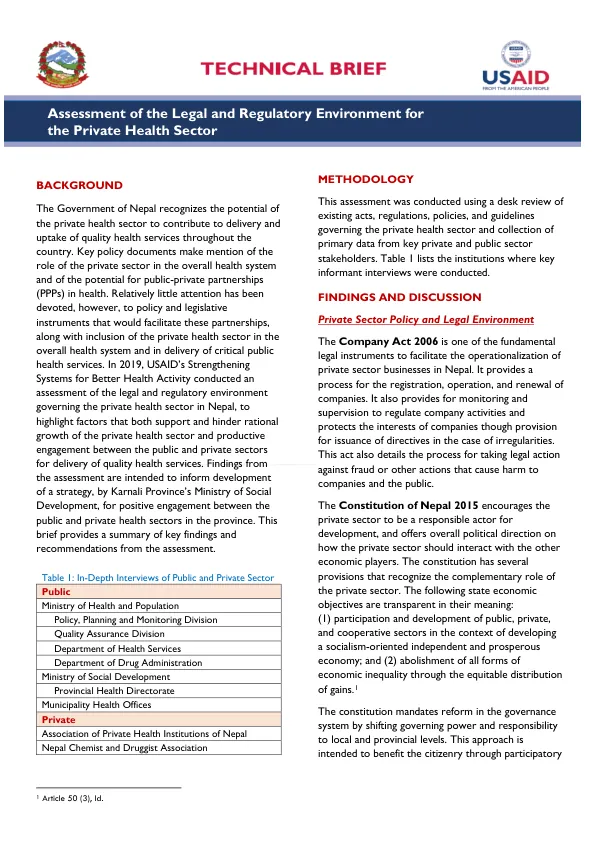
The Ministry of Social Development (MoSD) in Karnali Province, Nepal, conducted an assessment of 11 hospitals in the province in early 2019.
2023 · 2 pages
Sign in to readA free account is required to download.
Abstract
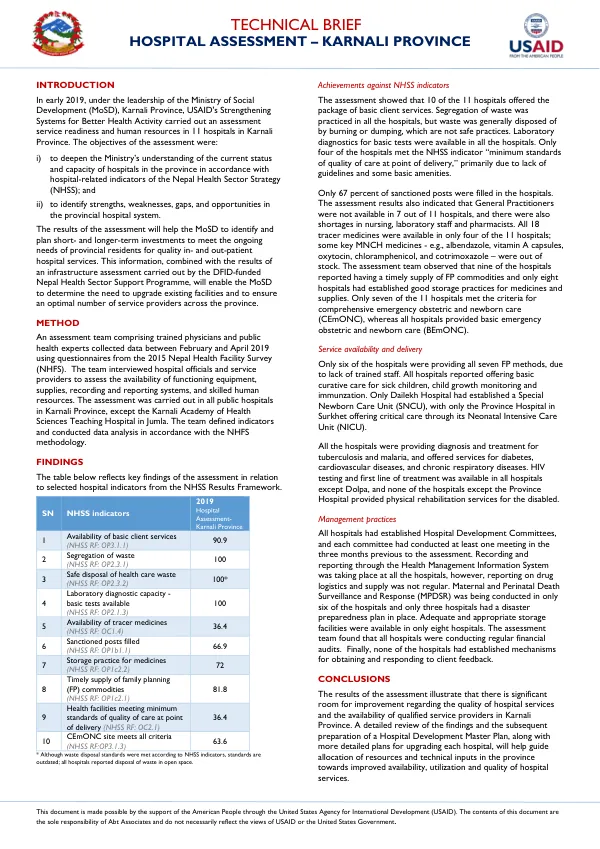
The assessment aimed to evaluate the service readiness and human resources in the hospitals, with the objectives of deepening the Ministry's understanding of the current status and capacity of the hospitals and identifying strengths, weaknesses, gaps, and opportunities in the provincial hospital system. The assessment team, comprising trained physicians and public health experts, collected data between February and April 2019 using questionnaires from the 2015 Nepal Health Facility Survey (NHFS). The team interviewed hospital officials and service providers to assess the availability of functioning equipment, supplies, recording and reporting systems, and skilled human resources. The assessment was carried out in all public hospitals in Karnali Province, except the Karnali Academy of Health Sciences Teaching Hospital in Jumla. The assessment results showed that 10 of the 11 hospitals offered the package of basic client services, with segregation of waste practiced in all the hospitals. However, waste disposal standards were not met, as all hospitals reported disposing of waste by burning or dumping. Laboratory diagnostics for basic tests were available in all the hospitals, but only four of the hospitals met the NHSS indicator "minimum standards of quality of care at point of delivery." The assessment also found that only 67 percent of sanctioned posts were filled in the hospitals, with shortages in nursing, laboratory staff, and pharmacists. The assessment results also indicated that General Practitioners were not available in 7 out of 11 hospitals, and there were also shortages in nursing, laboratory staff, and pharmacists. All 18 tracer medicines were available in only four of the 11 hospitals, and some key medicines were out of stock. The assessment team observed that nine of the hospitals reported having a timely supply of FP commodities, and only eight hospitals had established good storage practices for medicines and supplies. Only seven of the 11 hospitals met the criteria for comprehensive emergency obstetric and newborn care (CEmONC), whereas all hospitals provided basic emergency obstetric and newborn care (BEmONC). The assessment also evaluated service availability and delivery, finding that only six of the hospitals were providing all seven FP methods due to lack of trained staff. All hospitals reported offering basic curative care for sick children, child growth monitoring, and immunization. Only Dailekh Hospital had established a Special Newborn Care Unit (SNCU), with only the Province Hospital in Surkhet offering critical care through its Neonatal Intensive Care Unit (NICU). All the hospitals were providing diagnosis and treatment for tuberculosis and malaria, and offered services for diabetes, cardiovascular diseases, and chronic respiratory diseases. HIV testing and first-line treatment were available in all hospitals except Dolpa, and none of the hospitals except the Province Hospital provided physical rehabilitation services for the disabled. The assessment also evaluated management practices, finding that all hospitals had established Hospital Development Committees, and each committee had conducted at least one meeting in the three months previous to the assessment. Recording and reporting through the Health Management Information System was taking place at all the hospitals, but reporting on drug logistics and supply was not regular. Maternal and Perinatal Death Surveillance and Response (MPDSR) was being conducted in only six of the hospitals, and only three hospitals had a disaster preparedness plan in place. Adequate and appropriate storage facilities were available in only eight hospitals. The assessment team found that all hospitals were conducting regular financial audits, but none of the hospitals had established mechanisms for obtaining and responding to client feedback. The results of the assessment illustrate that there is significant room for improvement regarding the quality of hospital services and the availability of qualified service providers in Karnali Province. A detailed review of the findings and the subsequent preparation of a Hospital Development Master Plan, along with more detailed plans for upgrading each hospital, will help guide the allocation of resources and technical inputs in the province towards improved availability, utilization, and quality of hospital services.