USAID. MISSION TO TUNISIA
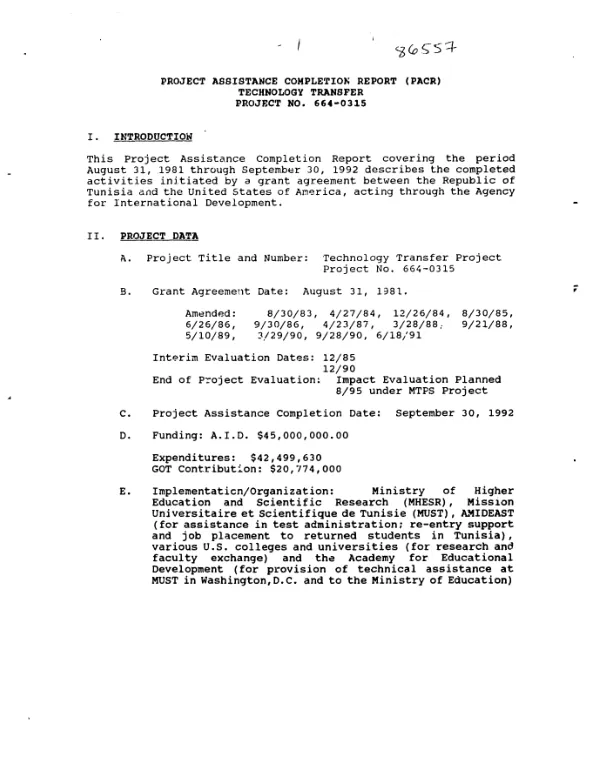
Technology transfer project
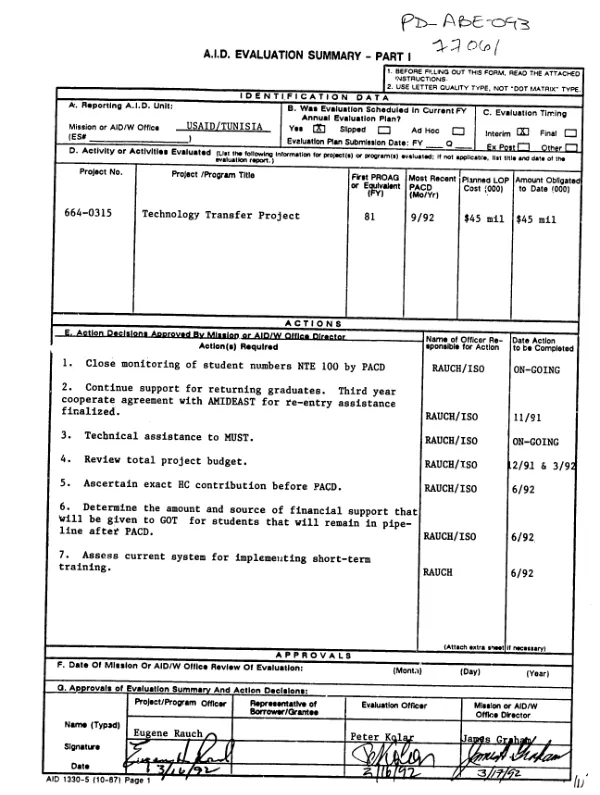
Summarizes interim evaluation (XD-ABE-093-A) of a project to provide long- and short-term U.S.
1992
Sign in to readA free account is required to download.
Abstract
training to Tunisians in technical and management fields. The evaluation covered the period 1986-1990. The project"s purpose has been partially accomplished. The initially projected number of 1,000 students to obtain advanced degrees will be more likely 700, of which an estimated 400-500 (60%-70) will return to assume jobs in Tunisia. Despite repeated calls for improvement, the government agency responsible for the program (MUST), has not provided the services expected and has granted numerous extensions to students in the United States without USAID/T approval. Participant selection and placement have not adequately considered characteristics such as financial need and predisposition toward success and toward returning to Tunisia. Students are also allowed the option of remaining in the United States during the summer semester, which is costly and may contribute to the high rate of non-returnees. Moreover, MUST has not supplied adequate information to calculate costs and to monitor student progress. Additionally, the process of identifying short-term training activities and then of securing the necessary approvals is very timely and cumbersome. Three major lessons were learned. (1) It is extremely difficult to reintegrate into Tunisian life students who have been overseas for 8-10 years, having left at age 18. (2) The program"s original emphasis on engineering degrees should be reconsidered in light of Tunisia"s transition to a market-based economy. (3) The Tunisian business community has found that U.S. graduates possess important leadership qualities and the potential to hold key positions as managers and directors. The Mission accepted the evaluation, delayed for release by more than a year in order to correct gross errors, despite the continuing presence of some inaccuracies. Despite the latter, the Mission believes that the evaluation contains recommendations and lessons learned of great value to the Government of Tunisia as it continues to revise its methods of financing overseas training.