USAID DEC
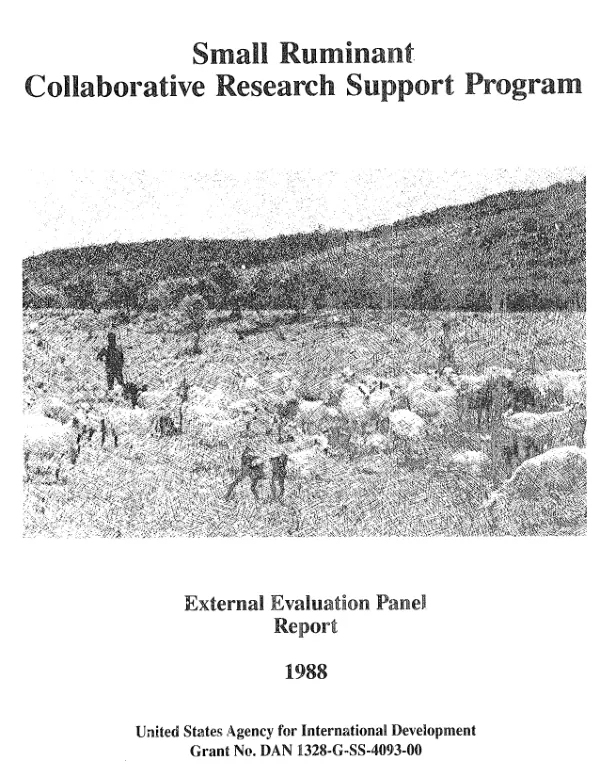
Tenth report of the external evaluation panel : small ruminant collaborative research support program
Sign inUNIVERSITY OF CALIFORNIA. SMALL RUMINANT COLLABORATIVE RESEARCH SUPPORT PROGRAM
Tenth report of the external evaluation panel : small ruminant collaborative research support program
Evaluates 10 years of research and training under A.I.D.'s Small Ruminant Collaborative Research Support Project.
1987
Sign in to readA free account is required to download.
Abstract
The following major accomplishments of the project have immediate implications for small ruminant production in developing countries. (1) Substantial progress has been made in genetic control of prolificacy. (2) The identification of the comparative and interactive grazing behavior of sheep, alpacas, and llamas on Peruvian highland ranges is a major step toward sustainable production systems. (3) The identification and control of caprine arthritis encephalitis viral infection in Kenya, Peru, and elsewhere could represent a worldwide savings of US$20 million. (4) The upgrading of Criolla sheep in Peru is expected to increase the production of carcass meat by 8,000 MT and grease wool by about 20 million kg per year. (5) The development and placement of dual-purpose goats in Kenya with the corresponding increase in forage production should increase the income of small farmers by an estimated US$52 per ha. (6) The identification of nutritional myopathy among sheep in Morocco, a condition previously unrecognized in this region, was determined to be caused by a dietary deficiency of selenium. (7) Research in Indonesia revealed that unsupplemented tropical grasses impose severe restrictions on the growth and reproduction of Javanese Thin Tail sheep and the growth of Kacang goats is similarly affected. (8) In Brazil, researchers found that thinning the tree canopy resulted in significantly more forage biomass produced beneath the trees. (9) Research in Peru revealed that a large proportion of the livestock produced by highland peasant communities is raised in agropastoral communities and not exclusively by pastoral communities as had been previously thought. Furthermore, the research established that these communities value livestock more for the dung they provide for fertilizers than for their meat, fiber, or cash value. (10) Increased alpaca fiber yields in Peru from 6-17 pounds per animal should add incomes of US$40-$50 per animal. (11) The development and validation of computer simulation models for sheep and goats should have wide application and use for future researchers. (12) Training has been highly successful and has resulted in a long-term contribution to both host countries and U.S. institutions. (13) The collaborative mode has been effective in multiplying the impact of A.I.D. funds through matching contributions from U.S. and host country institutions. (Author abstract, modified)