USAID DEC
The Abidjan Aquatic Wildlife Partnership (AAWP): COMMUNIQUÉ MEETING OF THE PARTNERSHIP
Sign inTHE WORLD BANK
The Abidjan Aquatic Wildlife Partnership (AAWP): COMMUNIQUÉ MEETING OF THE PARTNERSHIP
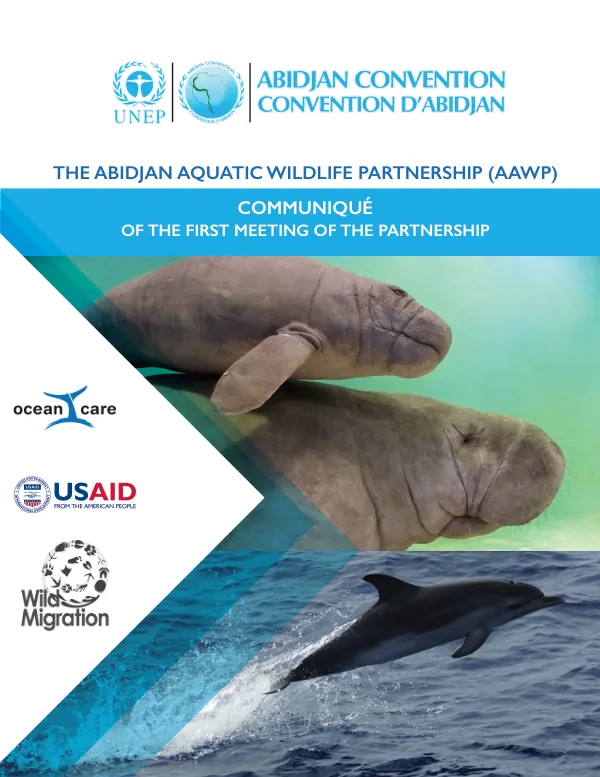
The Abidjan Aquatic Wildlife Partnership (AAWP) is a non-binding, multi-stakeholder partnership established to address the issue of trade, capture, consumption, and other uses of aquatic species, including threatened and/or protected aquatic species across West, Central, and Southern Africa.
2018 · 4 pages
Sign in to readA free account is required to download.
Abstract
The partnership aims to support the implementation of the African Common Strategy on Combating Illegal Exploitation and Illegal Trade in Wild Fauna and Flora in Africa. The AAWP was created in response to the threat of extinction faced by numerous fauna species in the West African, Central African, and Southern African subregions due to consumption, illegal exploitation, and illegal trade. The partnership recognizes the importance of protecting wild aquatic fauna and flora species, which form an integral part of humanity's natural heritage. The AAWP is supported by OceanCare, West Africa Biodiversity and Climate Change (WA BiCC) program, Wild Migration, and The World Bank, with funding from the United States Agency for International Development (USAID). The partnership's mission is to address the issue of trade, capture, consumption, and other uses of aquatic species through coordinated, collaborative, and effective action at local, regional, and international levels. The AAWP will focus on increasing awareness and action among governments, relevant industries, and local communities to slow and reverse the over-harvesting of aquatic species, including Aquatic Threatened and/or Protected (A-TP) species. The partnership's objectives include developing a plan of action to combat illegal trade, illicit trafficking, consumption, and other uses of protected, endangered, and/or vulnerable marine and coastal fauna and flora. The AAWP will also promote the partnership, fund its action plan, and address other issues related to the conservation of aquatic species. The partnership will collaborate with relevant organizations, including the Convention on International Trade in Endangered Species of Wild Fauna and Flora (CITES), the African-Eurasian Waterbird Agreement (AEWA), and the Convention on the Conservation of Migratory Species of Wild Animals (CMS). The AAWP will be guided by a steering committee, which will be responsible for developing the partnership's scope, species targeted, operating mechanisms, and resources mobilization. The steering committee will also finalize the partnership's Action Plan and Communication Plan. The partnership will involve non-coastal countries, such as Niger, Burkina Faso, and Mali, to address freshwater catchment area issues. The AAWP will also establish cooperation with relevant organizations to promote the conservation of aquatic species. The partnership's success will depend on the collaboration and commitment of its members, including governments, relevant industries, and local communities. The AAWP will play a crucial role in addressing the threat of extinction faced by numerous fauna species in West, Central, and Southern Africa, and promoting the conservation of aquatic species for future generations.
Related documents