USAID
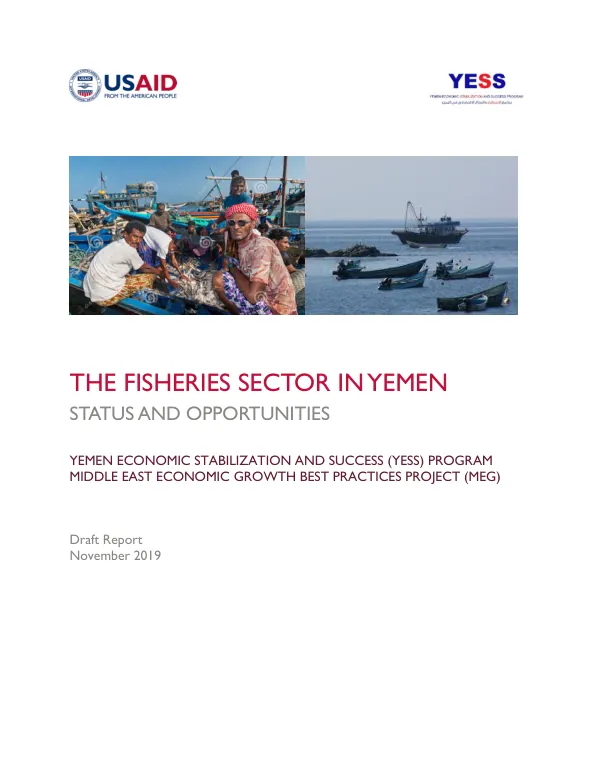
The Fisheries Sector in Yemen: Status and Opportunities
The fisheries sector in Yemen is a vital component of the country's economy, with the majority of the population relying on fishing and fish processing for their livelihood.
2019 · 53 pages
Sign in to readA free account is required to download.
Abstract
The sector is characterized by a diverse range of fish species, with over 200 species found in the Gulf of Aden and the Gulf of Arabia. The most common species include sardines, mackerel, and tuna. The Ministry of Fish Wealth (MFW) is the primary government agency responsible for managing the fisheries sector. The MFW is responsible for implementing policies and regulations to ensure the sustainable management of fish resources, as well as providing support to fishermen and fish processing industries. The MFW also works closely with other stakeholders, including fisheries regional authorities, laboratories, cooperatives, and associations, to promote the development of the sector. The fisheries management system in Yemen is currently facing several challenges, including inadequate compliance and enforcement mechanisms, as well as a lack of effective monitoring and control systems. The sector is also plagued by illegal, unregulated, and unreported (IUU) fishing, which poses a significant threat to the sustainability of fish resources. In addition, the quality of fish products is often compromised due to inadequate handling and processing practices. Industrial fisheries in Yemen are primarily focused on fish processing and export. The country has a number of fish processing plants, which produce a range of products, including canned fish, frozen fish, and fishmeal. However, the sector is facing several challenges, including a lack of investment in modern processing technologies and inadequate quality control measures. The small-scale fisheries sector in Yemen is also an important component of the country's economy. The sector is characterized by a large number of small-scale fishermen, who operate in the Gulf of Aden and the Gulf of Arabia. The majority of these fishermen are engaged in artisanal fishing practices, using traditional fishing gear and techniques. However, the sector is facing several challenges, including a lack of access to modern fishing gear and technologies, as well as inadequate support from government agencies and other stakeholders. A SWOT analysis of the fisheries sector in Yemen reveals several strengths, including the country's rich fish resources, a large and skilled workforce, and a favorable geographical location. However, the sector is also facing several weaknesses, including inadequate management and regulation, a lack of investment in modern technologies, and inadequate quality control measures. Opportunities for the sector include the development of new markets and the expansion of export activities, as well as the implementation of sustainable fishing practices and the promotion of eco-tourism. Threats to the sector include climate change, overfishing, and the impact of IUU fishing on the sustainability of fish resources.