USAID DEC
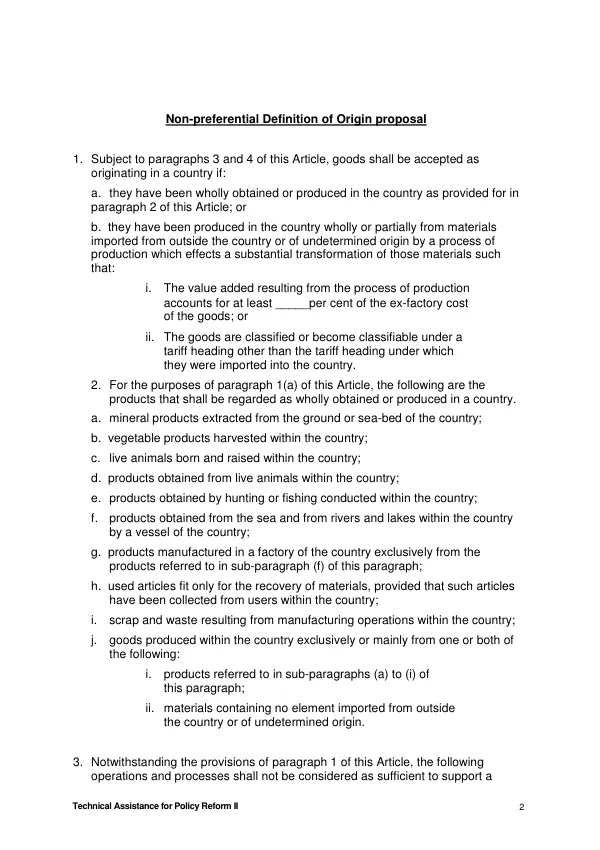
The Harmonized Commodity Description and Coding System and the Egyptian Customs Tariff
Sign inWORLD CUSTOMS ORGANIZATION
The Harmonized Commodity Description and Coding System and the Egyptian Customs Tariff
The Harmonized System of commodity classification was established in 1952 by the Customs Cooperation Council (CCC), which was later renamed the World Customs Organization (WCO) in 1995.
2009 · 148 pages
Sign in to readA free account is required to download.
Abstract
The system's history dates back to the establishment of the CCC in 1952, followed by the creation of the BTN in 1955, which was later renamed the CCCN in 1976. The HS Committee was established in 1973, and the HS nomenclature was published in 1983. The Harmonized System was implemented in 1988, with significant updates in 1996, 2002, and 2007. The Harmonized System was established to address the inconsistencies in individual country tariffs, which were characterized by inconsistent numbering structures, descriptions, and interpretations. This made it difficult for importers, exporters, governments, and other stakeholders to navigate the complex system. The Harmonized System aimed to provide a standardized and harmonized system of commodity classification, eliminating non-tariff barriers and facilitating international trade. The Harmonized System is structured into 21 sections, each covering a specific category of commodities. Section I covers live animals and animal products, while Section II covers vegetable products. Section III covers animal or vegetable fats and oils, and Section IV covers prepared foodstuffs and beverages. The system continues with sections covering mineral products, chemical and allied industries, plastics and rubber, and other categories. Each section is further divided into chapters, with Section XV covering base metals and articles of base metals. This section is divided into chapters, including Chapter 72, which covers iron and steel, and Chapter 76, which covers aluminium and articles thereof. Chapter 76 is further divided into headings, with Heading 7608 covering aluminium tubes and pipes. This heading is then divided into subheadings, with Subheading 7608.10 covering aluminium tubes and pipes of unalloyed aluminium. The Harmonized System provides a standardized and harmonized system of commodity classification, facilitating international trade and eliminating non-tariff barriers. The system's structure, with 21 sections, chapters, headings, and subheadings, provides a clear and consistent framework for classifying commodities. This framework enables importers, exporters, governments, and other stakeholders to navigate the complex system with ease, promoting efficiency and accuracy in international trade.