KNOWLEDGE SUCCESS
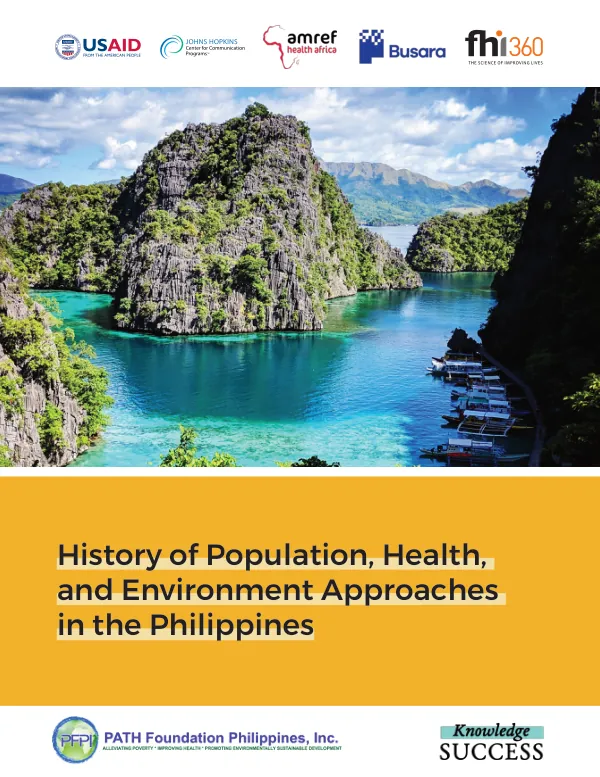
The History of Population, Health, and Environment Approaches in the Philippines
Population, Health, and Environment (PHE) approaches have been a cornerstone of programming in the Philippines for over two decades.
2021 · 5 pages
Sign in to readA free account is required to download.
Abstract
The country has been a pioneer in using the multisectoral PHE approach to improve conservation efforts, family planning, and overall health in communities. This integrated community-based approach recognizes and addresses the complex relationships between people's health and the environment. The Integrated Population and Coastal Resource Management (IPOPCORM) initiative was launched in the Philippines in 2000, marking the beginning of the country's PHE journey. IPOPCORM provided evidence that multi-sectoral approaches could promote community health and environmental conservation more effectively than standalone programs. The initiative demonstrated that PHE approaches could be successful in promoting voluntary family planning and reproductive health, conservation, and natural resource management. Since the launch of IPOPCORM, the Philippines has made significant strides in PHE programming. The country has contributed to the rich evidence and tools available on PHE approaches, and programs have been implemented in various settings, including ecologically rich areas. However, insights, recommendations, and programmatic guidance on PHE approaches have been scattered across multiple resources and project reports, making it challenging for others to access and learn from the Philippines' experience. To address this, Knowledge SUCCESS partnered with PATH Foundation Philippines to curate and compile evidence and experiences from decades of PHE programs in the Philippines. The result is a 75-page booklet that combines a history of PHE in the Philippines with a roundup of themes and programmatic guidance. The booklet provides a comprehensive overview of the benefits of the PHE approach, particularly in vulnerable and marginalized communities, and highlights the value of partnerships among advocates, health workers, policymakers, and community members. The booklet provides guidance and lessons learned for those implementing PHE programs in other settings, including information on communicating about PHE's impact, establishing long-term commitment from PHE champions and communities, working with faith-based groups, and scaling up PHE. The publication also addresses the needs of underserved groups, including youth, and provides insights on addressing gender and integrating programs. The Philippines' experience with PHE approaches has significant implications for other countries and settings. The country's success in promoting community health and environmental conservation through multi-sectoral approaches demonstrates the potential of PHE approaches to meet the holistic needs of families and communities. The publication is a practical resource for program managers, technical advisors, and policymakers interested in PHE implementation, and it provides a valuable contribution to the global conversation on PHE approaches.