FAO
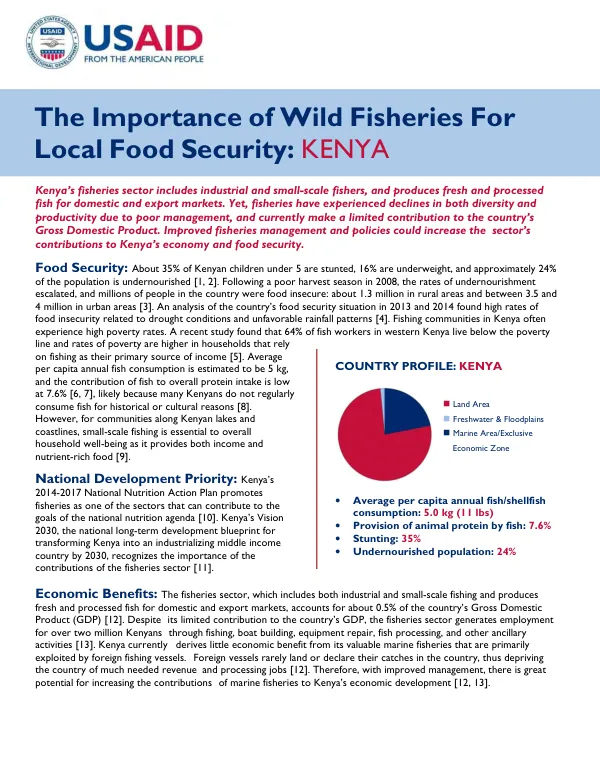
The Importance of Wild Fisheries For Local Food Security: KENYA
The fisheries sector in Kenya plays a crucial role in the country's food security and economic development.
2015 · 2 pages
Sign in to readA free account is required to download.
Abstract
Kenya's fisheries sector includes industrial and small-scale fishers, producing fresh and processed fish for domestic and export markets. However, the sector has experienced declines in diversity and productivity due to poor management, resulting in a limited contribution to the country's Gross Domestic Product (GDP). Kenya's food security situation is a pressing concern, with approximately 35% of children under 5 experiencing stunting, 16% being underweight, and 24% of the population being undernourished. The country's food security situation has been exacerbated by drought conditions and unfavorable rainfall patterns, leading to high rates of food insecurity in rural and urban areas. Fishing communities in Kenya often experience high poverty rates, with 64% of fish workers in western Kenya living below the poverty line. The average per capita annual fish consumption in Kenya is estimated to be 5 kg, with fish contributing only 7.6% to overall protein intake. However, for communities along Kenyan lakes and coastlines, small-scale fishing is essential to overall household well-being, providing both income and nutrient-rich food. The fisheries sector has the potential to contribute significantly to Kenya's economic development, with improved management and policies potentially increasing the sector's contributions to the country's GDP. Kenya's National Nutrition Action Plan 2012-2017 recognizes the importance of the fisheries sector in contributing to the country's nutrition agenda. The plan aims to promote best practices in fisheries management and improve the sector's contribution to food security. Kenya's Vision 2030, the national long-term development blueprint, also recognizes the importance of the fisheries sector in transforming Kenya into an industrializing middle-income country by 2030. The fisheries sector generates employment for over two million Kenyans through fishing, boat building, equipment repair, fish processing, and other ancillary activities. However, the sector currently derives little economic benefit from its valuable marine fisheries, with foreign vessels rarely landing or declaring their catches in the country. Improved management and policies could increase the contributions of marine fisheries to Kenya's economic development. Fishing communities in Kenya face significant challenges, including overfishing, which threatens the diversity and productivity of fisheries. Climate change also poses a significant threat to Kenya's coral reef fisheries, with the country's coral reefs being the most vulnerable among western Indian Ocean countries to climate change-related coral bleaching. Efforts are being made to implement management strategies aimed at preventing the collapse of the small-scale fishing sector, including the establishment of the Agriculture, Fisheries, and Food Authority in 2014. The mobility of fishers has been identified as one of the drivers of high HIV prevalence rates in fishing communities, particularly in the Nyanza region around Lake Victoria. Transactional sexual encounters between fishermen and socioeconomically vulnerable female traders contribute to this epidemiological pattern. Addressing these challenges will require a comprehensive approach that involves improving fisheries management, promoting sustainable fishing practices, and addressing the social and economic challenges faced by fishing communities.
Related documents
Documents in this collection
 2014
2014USAID DEC
Using Innovative Land Conservation Tools in Africa to Protect Land, Enhance Resource Management and Improve Community Livelihoods
Open record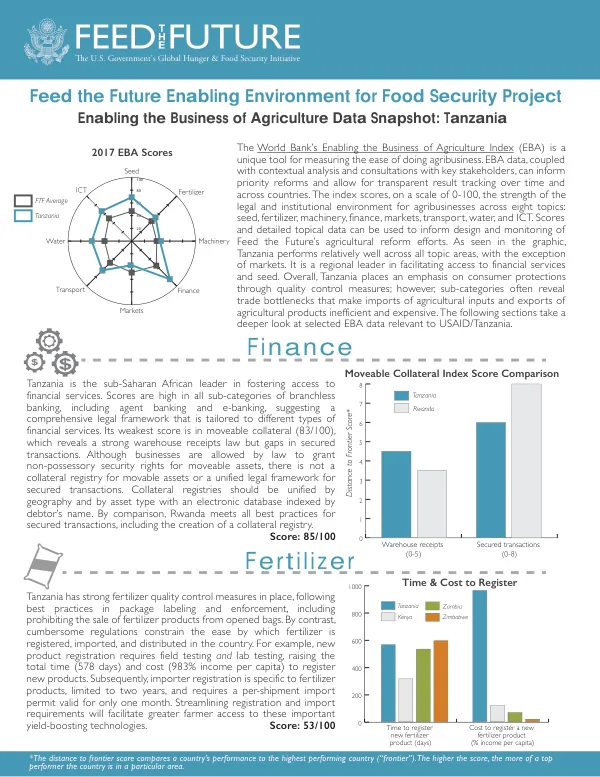 2017
2017USAID DEC
Feed the Future Enabling Environment for Food Security Project Enabling the Business of Agriculture Data Snapshot: Tanzania
Open record