USAID DEC
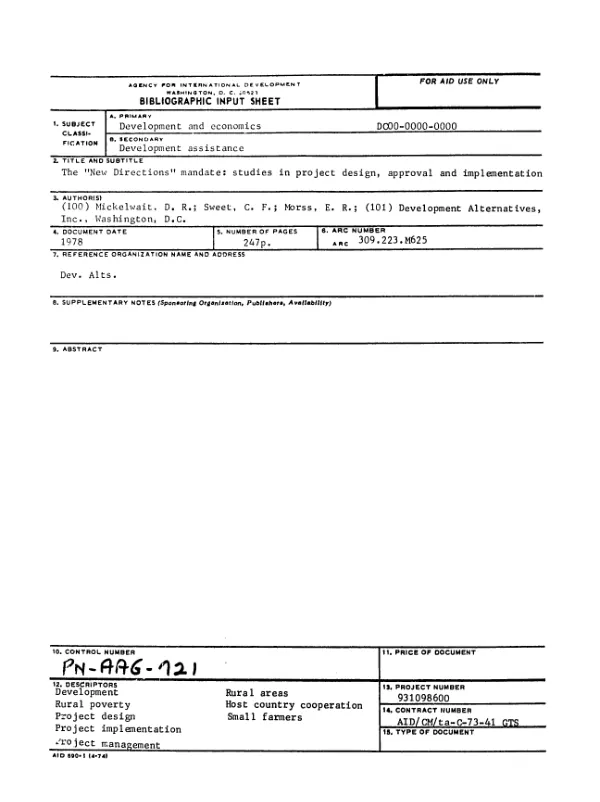
The "new directions" mandate: studies in project design, approval and implementation. Volume 1
Sign inDEVELOPMENT ALTERNATIVES, INC. (DAI)
The "new directions" mandate: studies in project design, approval and implementation. Volume 1
This report discusses the efforts of Development Alternatives, Inc.
Mickelwait, Donald R.; Sweet, Charles F. +1 more · 1970
Sign in to readA free account is required to download.
Abstract
(DAI) to assist in the design of development project strategies intended to benefit the rural poor. AID asked DAI to assist in the design of 12 rural development projects in ten countries. At this writing, about half the projects have reached only the implementation stage. Definitive judgment on the impact of this work must await full implementation of the projects, but the opportunity exists now to draw lessons from the experience with project conceptualization, planning, and design over a period of several years. The report is divided into three parts. Section I relates the story of the 12 projects and the role DAI played in them. Reference documents in this section include official papers of the project, formal and informal memos and cables, and interviews with principal participants. Section II (chapters 6-9) reflects upon the process approach to project development. Chapter six isolates procedural and substantive problems encountered during project design, including information gathering, design team composition, availability and appropriateness of technology, and the need for adaptive field-testing. Chapter seven analyses the potential for, and the limitations on, "experimentation" in rural development projects. Chapter eight examines organizational arrangements for project implementation, arguing that projects more often fail for lack of attention to organizational rather than technical details. Chapter nine examines the current AID project review and approval system, contending that the system frequently cannot distinguish good projects from bad. This chapter emphasizes current initiatives to devolve greater authority to the field in order to rationalize and speed up project review and approval. Part III synthesizes the findings and recommendations presented in earlier chapters.