CARE
The Park Project
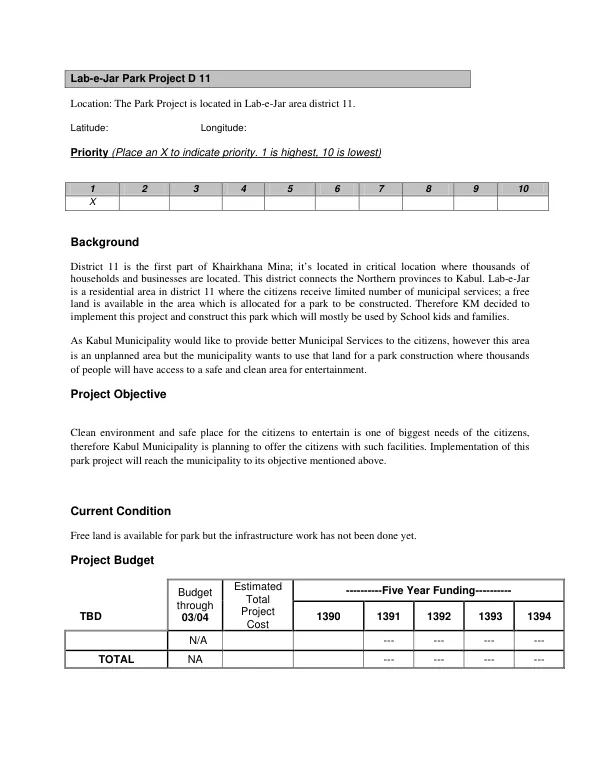
The Park Project is located in 315 area in district 11.
2 pages
Sign in to readA free account is required to download.
Abstract
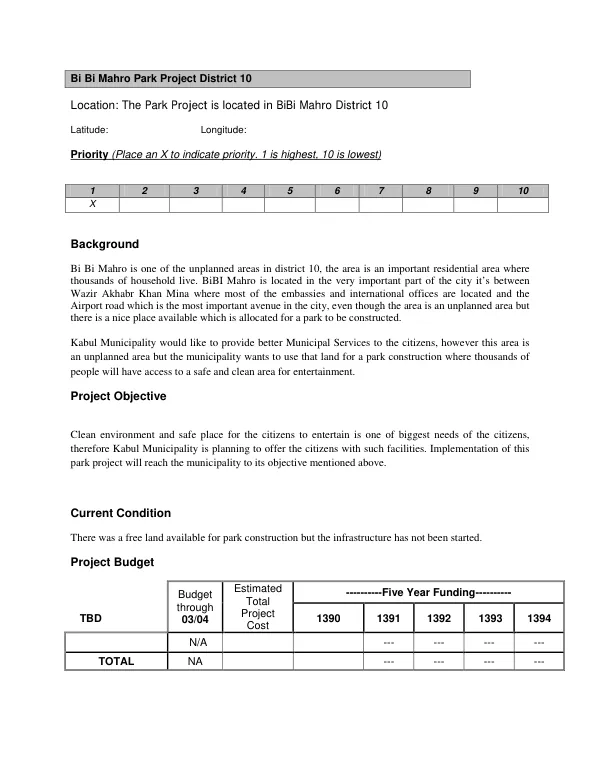
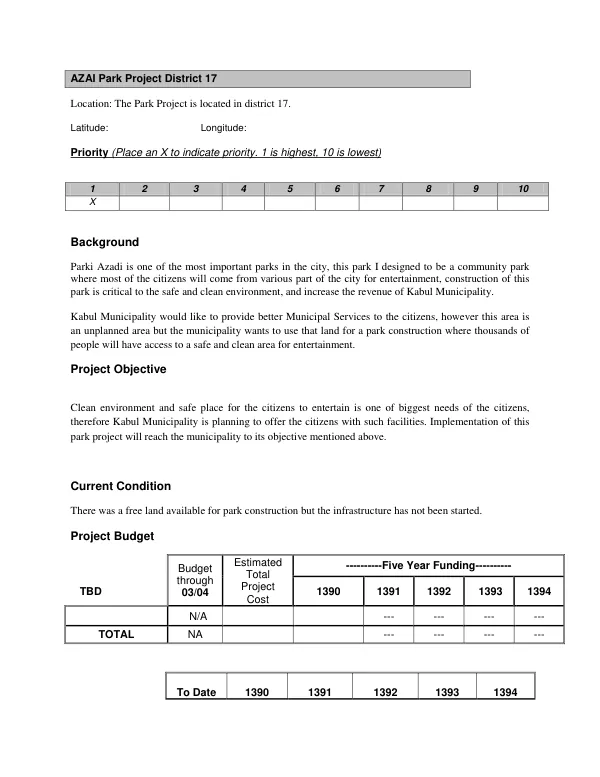
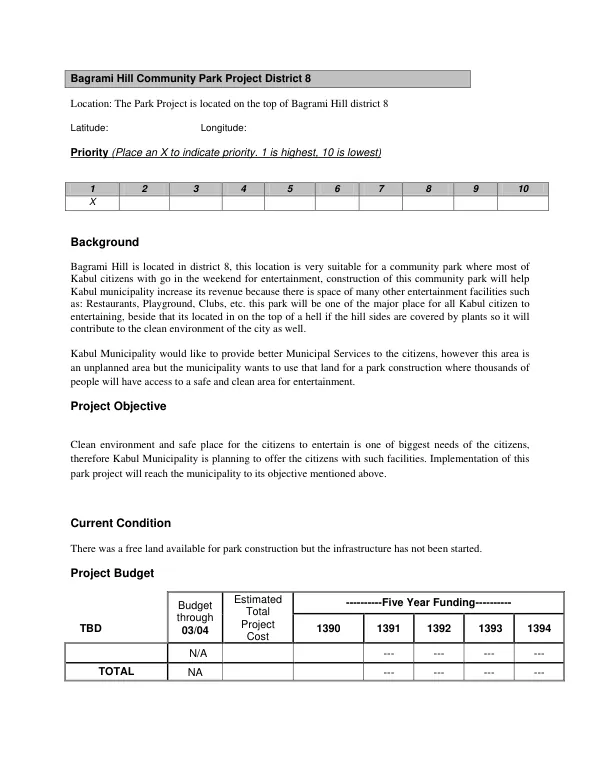
The area is characterized by a high population rate, with 315 area being one of the residential areas in the district. This area is an unplanned region, but the Kabul Municipality has allocated land for park construction to meet the basic needs of the residents. The park will primarily serve school kids and families, making it a crucial facility for the community. Kabul Municipality aims to provide better municipal services to the citizens, particularly in this unplanned area. The municipality has decided to construct the park to offer a safe and clean environment for entertainment, which is one of the biggest needs of the citizens. The project's objective is to provide a clean environment and a safe place for citizens to entertain, aligning with the municipality's goal. The land for the park was available, but the infrastructure work had not been completed. The project budget is not specified, but it is estimated to be funded over a five-year period, with the total project cost to be determined. The phasing of the project indicates that Phase 1 will be completed in 1390, followed by Phase 2 and Phase 3 in 1391. Parks are essential facilities that contribute to a safe and clean environment, providing citizens with a safe place for entertainment. However, the land mafia in Kabul city poses a significant threat to the construction of parks, as they seek to misuse unused land for commercial and residential purposes. The Kabul Municipality considers this issue a top priority and welcomes interested parties and donors to participate in the project. The implementation of the Park Project is a collaborative effort between the Kabul Municipality and CARE International. The project's success will depend on the timely completion of the infrastructure work and the allocation of sufficient funds to meet the project's objectives. The project's impact will be significant, providing a safe and clean environment for the residents of district 11 and meeting their basic needs for entertainment.
Related documents