SAVE THE CHILDREN FUND
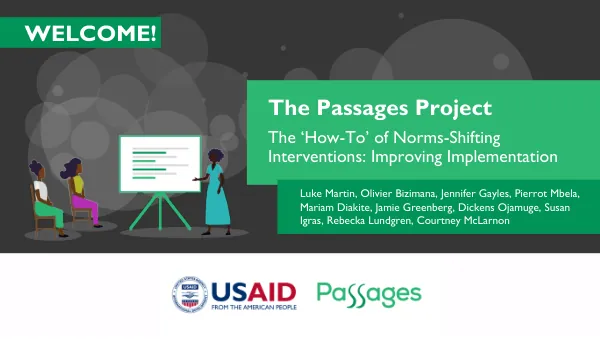
The Passages Project: Improving Implementation of Norms-Shifting Interventions
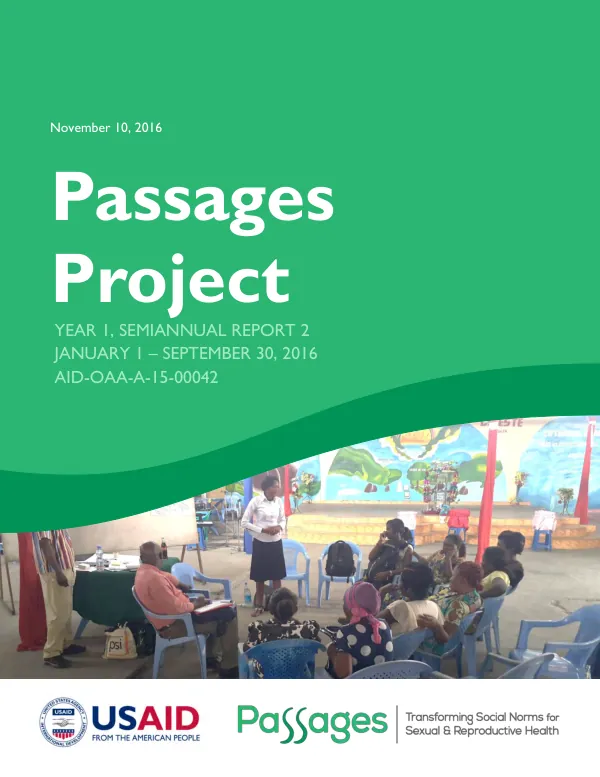
The Passages Project aims to improve family planning use and reproductive health among youth, particularly newly married couples, first-time parents, and very young adolescents.
2022 · 45 pages
Sign in to readA free account is required to download.
Abstract
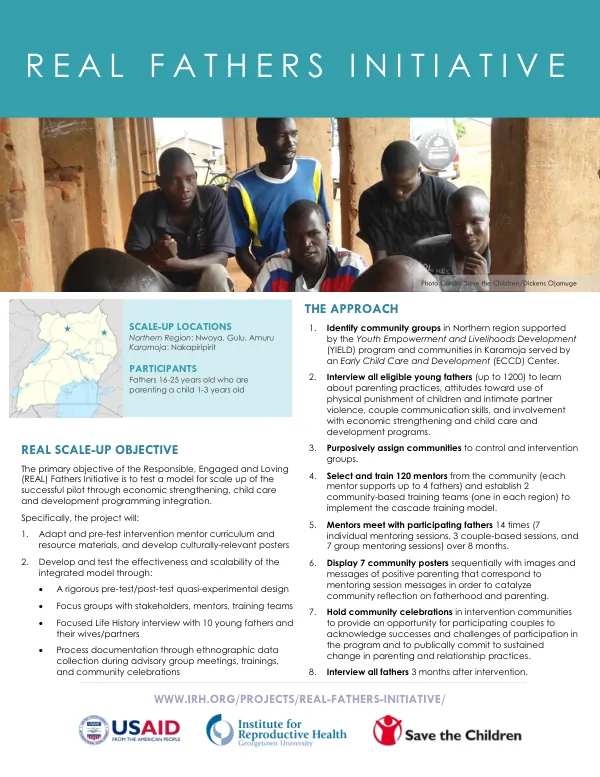
The project's strategic objective is to build and widely share the evidence base and strengthen the capacity of the global reproductive health community to develop normative environments that support reproductive health and family planning among youth. To achieve this goal, the Passages Project has helped programs develop a common social norms language, diagnose social norms, design approaches and support scale-up, monitor and evaluate norms, and access timely and high-quality evidence and tools. The project has added to the knowledge base by assessing program strategies to shift norms, developing program design tools, and providing technical assistance to guide practitioners in improving the implementation of norms-shifting approaches. Social norms are unwritten rules of behavior shared by members of a given group or society. They are context-specific and defined in relation to a reference group, which is those who matter to an individual in a specific situation. Understanding social norms is crucial for improving implementation of norms-shifting interventions, as they are what individuals believe others do, approve of, and expect. The Passages Project has worked on four norms-shifting interventions: Growing Up Great and Masculinite, FAMILLE, ET FOI, Real Fathers, and Terikunda Jekulu. These interventions aim to shift social norms related to family planning and reproductive health among youth. The project has also provided technical assistance to guide practitioners in improving the implementation of norms-shifting approaches. Improved implementation of norms-shifting interventions requires a deep understanding of social norms and their context-specific nature. It also requires the development of effective program design tools and the provision of technical assistance to guide practitioners. The Passages Project has made significant contributions to the knowledge base on norms-shifting interventions and has helped programs improve their implementation of these approaches. The project's work has focused on advancing understanding, strengthening scale-up, enhancing evaluation, and improving implementation of norms-shifting interventions. By building and sharing the evidence base and strengthening the capacity of the global reproductive health community, the Passages Project aims to improve family planning use and reproductive health among youth.
Related documents