USAID
Increasing Adolescent-Competency in Service Providers
Increasing adolescent-competency in service providers is crucial for meeting the family planning and reproductive health (FP/RH) needs of adolescents.
2022 · 2 pages
Sign in to readA free account is required to download.
Abstract
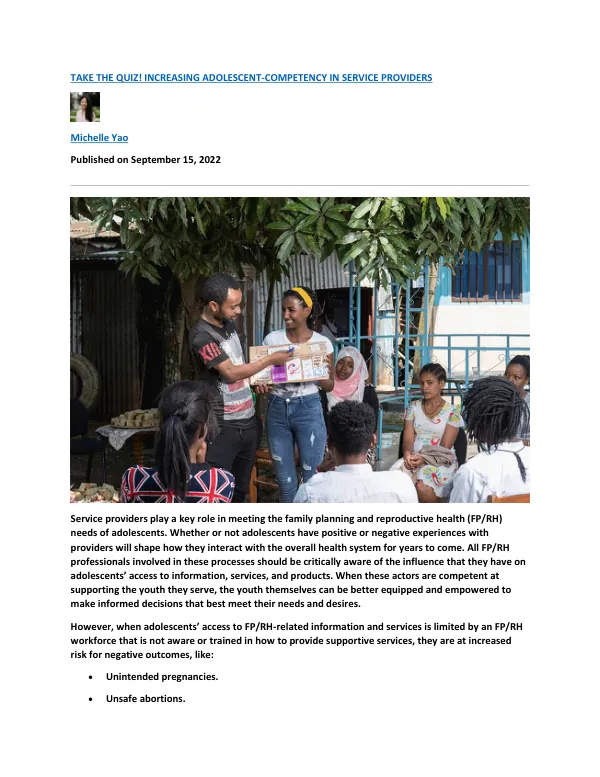
FP/RH professionals play a pivotal role in shaping adolescents' access to information, services, and products. When these professionals are competent in supporting the youth they serve, adolescents can make informed decisions that best meet their needs and desires. However, when adolescents' access to FP/RH-related information and services is limited by an FP/RH workforce that is not aware or trained in how to provide supportive services, they are at increased risk for negative outcomes such as unintended pregnancies, unsafe abortions, and sexually transmitted and blood-borne infections (STBBIs). Providers can also impose or reinforce biases regarding FP/RH that lead to early sexual debuts, child, early, forced marriages (CEFM), and gender-based violence (GBV). Providers must be prepared to proactively address these concerns and respond to the harmful social norms and practical barriers that undermine adolescent agency across all regions and cultures. To maximize adolescent responsiveness and build competencies in the FP/RH workforce, it is essential to prioritize the development of adolescent-related competencies. This includes understanding the needs and wants of adolescents, being aware of the social and cultural context in which they live, and being able to provide supportive services that are tailored to their needs. Providers should also be able to respond to the practical barriers that adolescents face in accessing FP/RH information and services. The FP/RH workforce can benefit from educational resources and references that are tailored to their empowerment goals. These resources can help providers to develop the skills and knowledge they need to provide high-quality services to adolescents. By prioritizing adolescent-competency and building the capacity of the FP/RH workforce, we can create health services and programs that are responsive to the needs and wants of adolescents. In order to build adolescent-competency, providers should focus on developing their skills in areas such as communication, counseling, and referral. They should also be able to provide information and services that are tailored to the needs of adolescents, including information on FP/RH options, STBBIs, and GBV. By prioritizing adolescent-competency and building the capacity of the FP/RH workforce, we can improve the health and well-being of adolescents and help them to make informed decisions about their reproductive health.