USAID
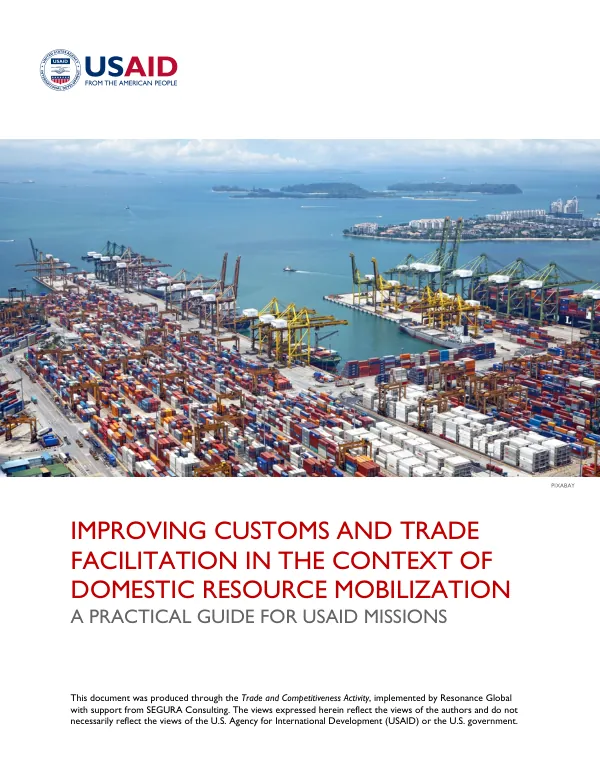
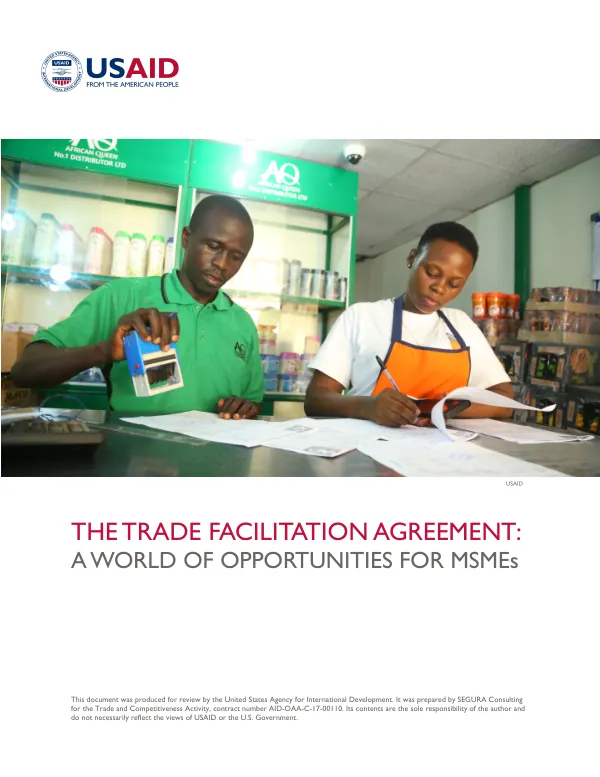
The Trade Facilitation Agreement: A World of Opportunities for MSMEs
The Trade Facilitation Agreement (TFA) aims to make it easier for traders of all WTO Members to participate in international trade.
2021 · 44 pages
Sign in to readA free account is required to download.
Abstract
Trade costs are significantly higher in low-income countries, and they are falling at a slower pace. This reflects a vicious circle, whereby limitations in human and financial resources make it more difficult to develop sophisticated production and trade, which in turn limits resources. Micro, small and medium-sized enterprises (MSMEs) are prevalent in terms of both numbers and employment, especially in developing and least developed countries. Compared with larger firms, MSMEs tend to incur higher costs and spend more time in obtaining market, regulatory, and other information. Their smaller size makes these businesses more vulnerable to inefficient systems, making trade facilitation measures especially beneficial to their development. The TFA includes provisions that address some of the challenges faced by MSMEs, such as providing greater levels of transparency regarding the rules and regulations of trade and reducing the time and cost to trade. Since its entry into force in 2017, implementation of the TFA has been progressing, but many countries, particularly developing ones, continue to face challenges with implementation of the reforms and modernization of customs and border agency procedures called for within the agreement. The TFA's implementation is intended to raise awareness among policymakers, the private sector, and other stakeholders about the importance of the TFA to the MSME community. The agreement has the potential to unleash the private sector, including MSMEs, to expand their ability to engage in international trade, and thereby contribute to national economic growth and prosperity. The growth in digitalization has markedly transformed production and trade, with Global Value Chains (GVCs) breaking up the production cycle across countries and accounting for an astounding 80 percent of trade. GVCs are seen as access points into international trade for MSMEs because individual countries can specialize in specific stages of production, making it easier for MSMEs to participate in international trade. The TFA's provisions, such as reducing documentation requirements, lowering guarantees, and streamlining declarations and procedures, are especially beneficial to MSMEs. Transparency measures help make trade more predictable, and investing in them is key to expanding trade benefits for MSMEs. The TFA's implementation has the potential to improve the competitiveness of all firms, including MSMEs, and contribute to national economic growth and prosperity.