USAID DEC
The What, Why, and How of Social and Behavior Change for DRG
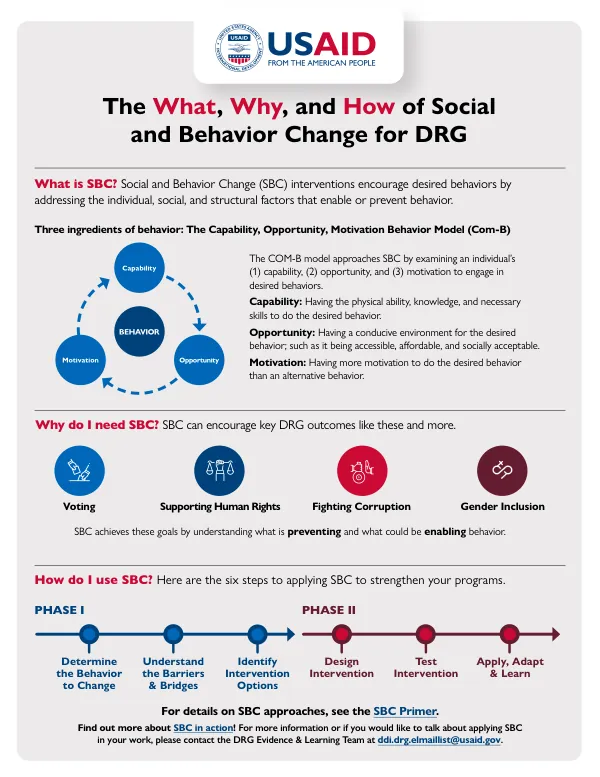
Social and Behavior Change (SBC) interventions aim to encourage desired behaviors by addressing individual, social, and structural factors that enable or prevent behavior.
2022 · 1 pages
Sign in to readA free account is required to download.
Abstract
These interventions focus on promoting behaviors such as voting, supporting human rights, fighting corruption, and gender inclusion. The COM-B model serves as a framework for understanding the factors that influence behavior, comprising capability, opportunity, and motivation. Capability refers to an individual's physical ability, knowledge, and necessary skills to engage in desired behaviors. Opportunity encompasses the environment's conduciveness to the desired behavior, including accessibility, affordability, and social acceptability. Motivation is the driving force behind an individual's decision to engage in a desired behavior over alternative behaviors. The COM-B model provides a comprehensive approach to understanding the complex factors that influence behavior. The six-step process for applying SBC to strengthen programs involves determining the behavior to change, understanding the barriers and bridges to that behavior, identifying intervention options, designing an intervention, testing the intervention, and applying, adapting, and learning from the results. This structured approach enables organizations to develop effective SBC strategies that address the unique needs and challenges of their target populations. The Capability, Opportunity, Motivation Behavior (COM-B) model serves as a foundation for SBC interventions, highlighting the importance of understanding the interplay between an individual's capability, opportunity, and motivation to engage in desired behaviors. By addressing these factors, SBC interventions can create an environment that supports and encourages positive behavior change. SBC can be a powerful tool for promoting key Development Response to Global Gag Rule (DRG) outcomes, including voting, supporting human rights, fighting corruption, and gender inclusion. By applying SBC principles and strategies, organizations can develop effective programs that address the complex factors influencing behavior and promote positive change.