USAID DEC
Timor-Leste Plastic Upcycling Alliance (PUA) Quarterly Report 1: August 2019 – December 2019
Sign inMERCY CORPS INTERNATIONAL
Timor-Leste Plastic Upcycling Alliance (PUA) Quarterly Report 1: August 2019 – December 2019
The Plastics Upcycling Alliance (PUA) is a 3-year initiative aimed at sustainably addressing plastic waste management in Timor-Leste.
2019 · 15 pages
Sign in to readA free account is required to download.
Abstract
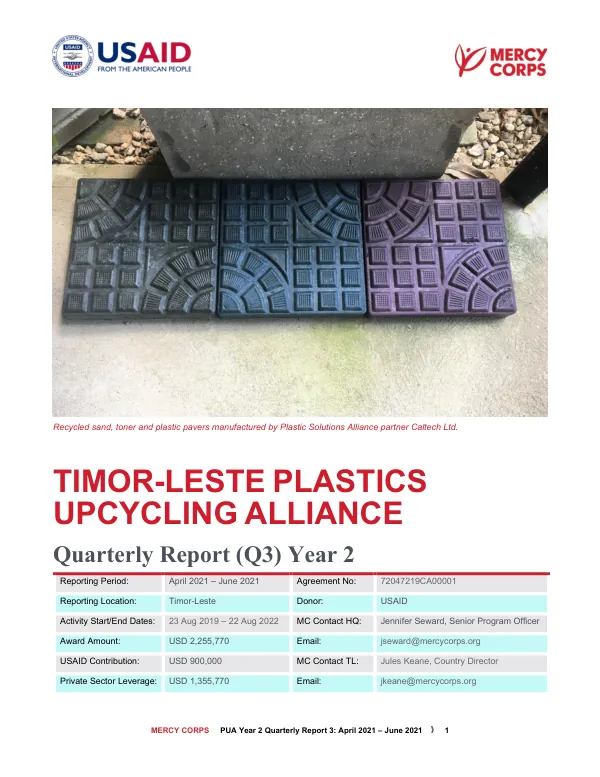
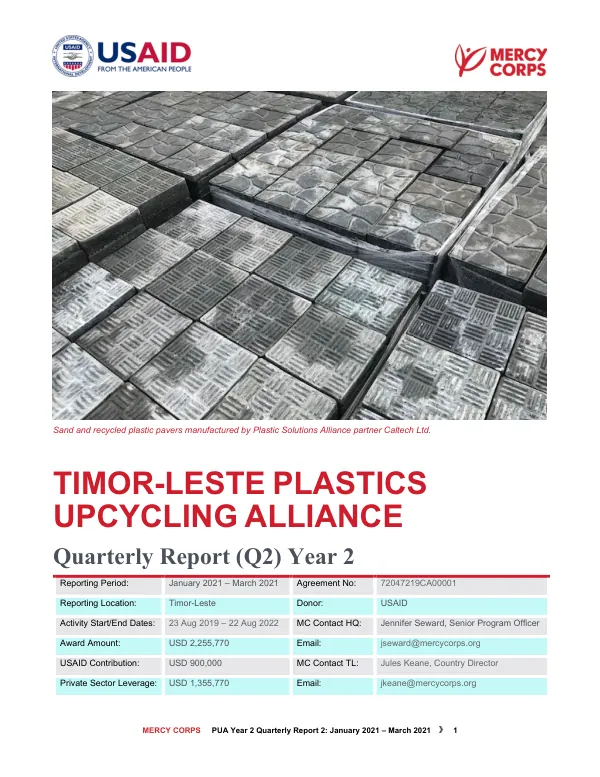
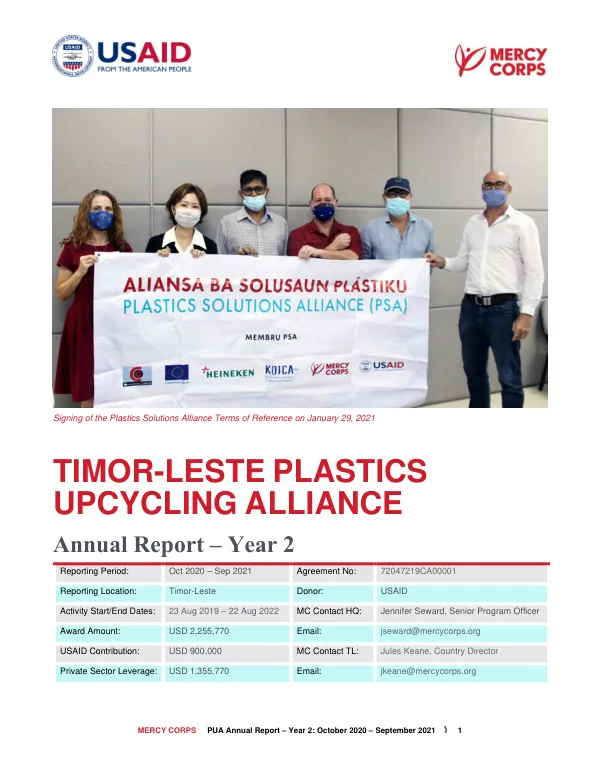
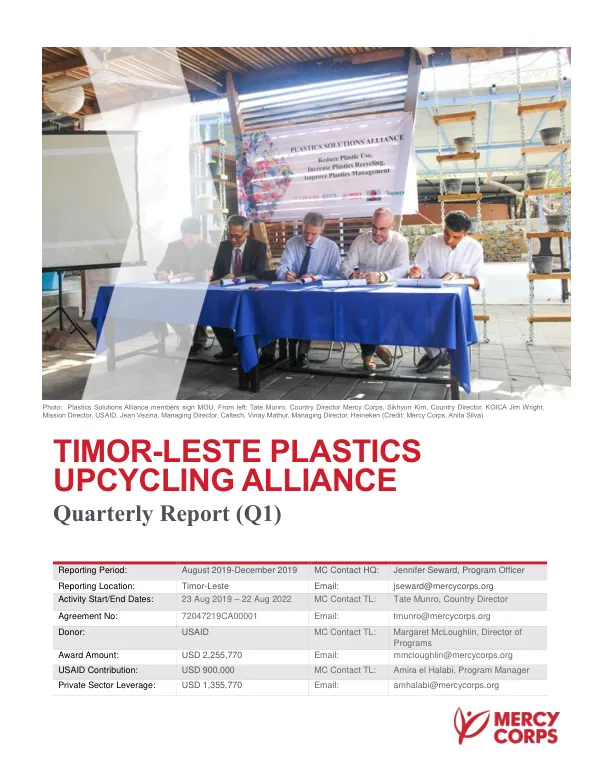
The program is a partnership between Mercy Corps, the United States Agency for International Development (USAID), and private sector partners Heineken and Caltech. The PUA is funded through a $900,000 investment from USAID, with an additional $1.355 million leveraged from private sector investment. The program's goal is to catalyze the growth of a plastics recycling industry, creating and expanding valuable employment and entrepreneurship opportunities. This will help improve the natural beauty of Timor-Leste and protect the health and safety of its people. The PUA aims to assist Timor-Leste in achieving 'plastic neutral' status, where unnecessary plastic use is curtailed and replaced, and up to 20% of Dili's plastic waste is collected and recycled into locally sought-after products. The program's implementation is guided by three Activity Objectives (AO): (1) Reduce Plastic Use, (2) Increase Plastics Recycling, and (3) Improve Plastics Management. Key activities in the first quarter included start-up processes, such as recruitment and onboarding of teams, stakeholder mapping, and the formal launch of the workplan, MEL Plan, Environmental Impact Evaluation, and GIDAP. The program has achieved several key achievements in the first quarter. Caltech has successfully prototyped two distinct designs of recycled plastic pavers, which can be purchased for use in walkways, parking lots, gardens, and gardens. These pavers reduce the number of plastic bottles that go to the sea by an estimated 1,000 bottles per meter square of production. Additionally, the Plastics Solutions Alliance (PSA) was signed, representing a shared commitment to address plastic waste management in Timor-Leste. The program has also highlighted the importance of addressing plastic waste management in Timor-Leste. The country's capital, Dili, faces the urgent challenge of managing its plastic waste, which poses risks to human health and safety, as well as its nascent but promising tourism industry. Factors impeding the growth of a promising new sector around recycling stifle the creation of employment and entrepreneurship opportunities. The PUA is a significant step towards addressing Timor-Leste's plastic waste challenge and promoting a sustainable market initiative to help the government achieve its Zero Plastics efforts. The program's goal is to advance Timor-Leste towards 'plastic neutral' status, where unnecessary plastic use is curtailed and replaced, and up to 20% of Dili's plastic waste is collected and recycled into locally sought-after products. The program's implementation is guided by a workplan, MEL Plan, Environmental Impact Evaluation, and GIDAP. The program's key activities include stakeholder mapping, recruitment and onboarding of teams, and the formal launch of the workplan and MEL Plan. The program's achievements in the first quarter include the successful prototyping of recycled plastic pavers and the signing of the Plastics Solutions Alliance (PSA) MOU. The program's goal is to create and expand valuable employment and entrepreneurship opportunities in the plastics recycling industry. This will help improve the natural beauty of Timor-Leste and protect the health and safety of its people. The program's implementation is guided by a workplan, MEL Plan, Environmental Impact Evaluation, and GIDAP. The program's key activities include stakeholder mapping, recruitment and onboarding of teams, and the formal launch of the workplan and MEL Plan. The program's achievements in the first quarter include the successful prototyping of recycled plastic pavers and the signing of the Plastics Solutions Alliance (PSA) MOU. The program's goal is to advance Timor-Leste towards 'plastic neutral' status, where unnecessary plastic use is curtailed and replaced, and up to 20% of Dili's plastic waste is collected and recycled into locally sought-after products.
Related documents